Why Nintendo Raised the Switch 2 Price After Saying "No Decision"
In February, Nintendo's president said no price decision had been made. In May, the company raised the Switch 2 price, and its own documents show what changed, what it risks and what remains unproven
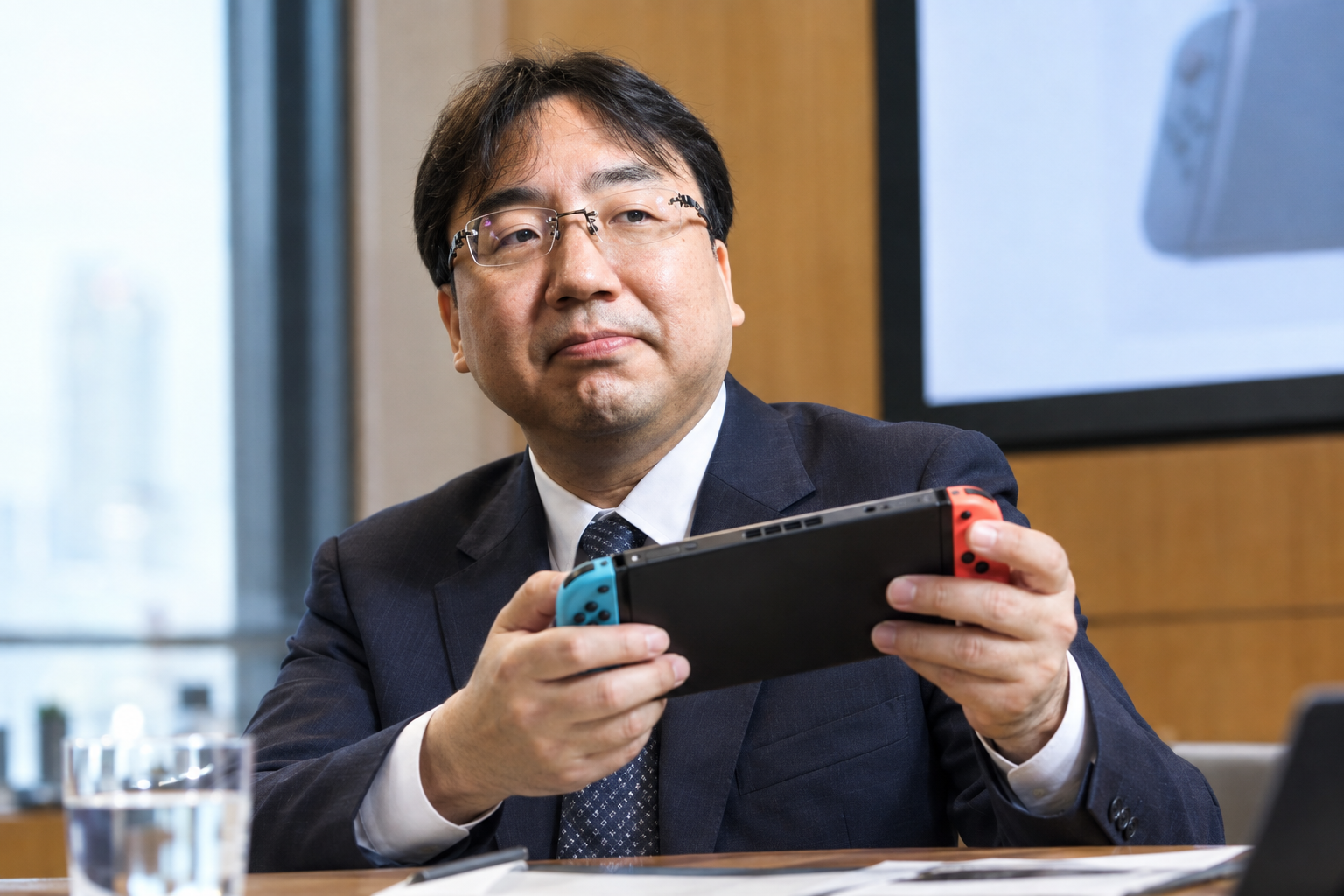
On February 3, 2026, a questioner on Nintendo's earnings call raised the obvious worry. Memory chip prices were climbing fast. If component costs stayed high, would the Switch 2 get more expensive? Shuntaro Furukawa, Nintendo's president, answered carefully. On any change to the console's price, Nintendo's English Q&A summary records him saying, "no decision has been made at this time."
Ninety-four days later, on May 8, Nintendo announced the Nintendo Switch 2 price increase: higher prices in Japan, the United States, Canada and Europe. In the US, the console would go from $449.99 to $499.99.
That is not a reversal in the strict sense. Furukawa never promised to hold the line, and his February answer left the door open. But the gap between those two dates is where the story sits. It shows what a company with a hit console weighs before asking its own customers to pay more.
What did Nintendo announce, and when does it take effect?
The May 8 notice pointed to "changes in market conditions" and the company's global business outlook.
The increase is neither uniform nor simultaneous. In Japan, the Japanese-language Switch 2 went from ¥49,980 to ¥59,980 on May 25, a rise of 20%. The original Switch family rose the same day, while Nintendo Switch Online subscription prices in Japan followed on July 1. Outside Japan, the console changes took effect on September 1. The US price rose by $50, about 11%. Canada moved from $629.99 to $679.99. Europe went from €469.99 to €499.99, roughly 6%. The notice closed with an apology to customers and stakeholders.
Asked why the size of the increase differs by region, Furukawa said each region is affected to a different degree by market changes. The Q&A summary does not explain why the US and European increases waited about four months after the announcement. That gap matters, and it comes up again below.
What Furukawa actually said in February
His February answers were conditional, and the conditions are worth reading closely.
Nintendo, he said, works to secure stable memory supply through long-term talks with its partners. The recent rise had not significantly affected hardware profitability in the October to December quarter, and he did not expect a significant effect in the next one. But if the rise lasted longer than expected and ran through that year and beyond, profitability could come under pressure. Any price decision would weigh profitability alongside the installed base, sales trends and the market environment.
Another questioner pressed on the tension at the center of the business. Nintendo has generally tried not to sell hardware at a loss, yet this was the moment to grow the Switch 2 audience. Which would win? Furukawa said memory prices were rising faster than expected. Then came a line that reads differently with hindsight. He did not think it appropriate to be excessively swayed by short-term trends, because the second and third years of the console were very important, and a larger installed base would let Nintendo sell far more software.
He also disclosed a pressure unrelated to memory. Nintendo buys hardware mainly in US dollars. With the yen weak, Japan's better-than-expected hardware sales were pulling down gross and operating profit, and overseas sales were somewhat weaker than planned.
Why did Nintendo raise the Switch 2 price?
The most direct answer comes from the May 8 Q&A, which is more specific than the press notice.
Furukawa said the decision did not rest on one factor. It reflected market changes that Nintendo expects to affect its console business over the medium to long term. He then described the option the company turned down. If the cost increase had looked temporary, Nintendo could have held hardware prices and worked on productivity and installed-base growth. It did not look temporary. Memory and other component prices, exchange rates and oil prices were all expected to stay elevated. Holding the price, he said, would have hurt hardware profitability significantly. He called the outcome a "difficult decision to reflect a portion of our costs in the selling price."
"A portion" is easy to skim past. Nintendo has not said how large that portion is, and it has not claimed the new prices cover the full increase in costs.
The forecast shows the scale of the pressure. For the year ending March 2027, Nintendo built in roughly ¥100 billion of extra cost from higher component prices, particularly memory, combined with tariffs. Furukawa clarified that the tariff element is an absolute amount, not a year-on-year difference, and that memory and other components had not done major damage to hardware profitability the year before but would press on it gradually from this year onward. Nintendo does not disclose how the figure is calculated. It should not be quoted as Nintendo's memory bill. It covers components plus tariffs, and the company has not separated them.
Even with that cost built in, Nintendo forecasts operating profit of ¥370 billion, 2.7% above last year's ¥360.1 billion. It does not break down how it expects to offset the pressure. The forecast was issued alongside the price revisions and assumes ¥150 to the dollar, while the first quarter's actual average was ¥159.38.
The strategy itself did not change. Furukawa repeated that the approach is to expand the hardware base first and then drive software sales. What changed was the price of entry.
A pricier doorway, a smaller hardware year
Price of entry is the whole tension. If the console is the way into the software business, a more expensive console narrows the doorway.
Furukawa did not pretend otherwise. Asked about the effect on sales amid a rising cost of living, he declined to discuss specifics but said the increase raises the barrier to purchase to a certain extent. His answer was strategy: offer fun worth more than the price, through titles unique to the Switch 2.
The forecast carries part of the cost. Nintendo sold 19.86 million Switch 2 units in the year ended March 2026, against an initial forecast of 15 million and a revised forecast of 19 million. For the current year it forecasts 16.5 million, about 17% fewer, tied to current momentum and the second-year performance of past Nintendo systems. An analyst quoted by CNBC thought that was cautious and expected closer to 19 million.
Investors were not reassured. On May 11, Nintendo shares fell 8.4% to ¥7,020, their lowest since August 2024, according to CNBC. By early August the stock was down 28% for the year, a wire report said.
A big quarter, read carefully
On August 6, Nintendo reported April to June results. Net sales were ¥517.8 billion, down 9.5%. Operating profit was ¥142.5 billion, up 150.5%. Net profit was ¥147.4 billion, up 53.5%.
Read quickly, that looks like a company that raised prices and got richer. It is not that simple.
Two items in Nintendo's results materials explain much of the jump. The first is about $300 million booked as a reduction of cost of sales from refunds of IEEPA tariffs, which the company says it had mostly borne itself rather than passed on through prices. That is a one-off, and a separate development from the price increase. Nintendo gave no yen figure, but at its own quarterly average rate of ¥159.38 per dollar, $300 million is roughly ¥48 billion. The second is the weaker yen, which Nintendo says added about ¥22 billion to operating profit.
Remove both and operating profit lands near ¥72 billion. That is still above last year's ¥56.9 billion, and it is close to the ¥70.3 billion average analysts had expected, according to the wire report. The arithmetic is mine and rough, since the two effects may overlap, but the direction is clear.
What did change is the mix. Hardware fell from 78.8% to 55.3% of platform sales as software grew, and gross margin rose 22 points to 54.3%, a gain Nintendo credits to software and the refunds together.
The hardware numbers need the same care. Switch 2 sold 3.82 million units in the quarter, 34.4% fewer than a year earlier, but the year-earlier quarter contained the June 2025 launch. Nintendo said that for a second-year system, sales compare favorably with the original Switch's path. The wire report quoted analyst Hideki Yasuda as expecting Nintendo to beat its own forecast, since the first quarter normally accounts for about 15% of annual units. Some of that may be buyers moving early to beat the September increase, an effect Nintendo has not measured. And a quarter ending June 30 says little about September, because by then only Japan had a new price.
Japan's numbers, and a September sale
Japan is the market where public weekly data lets us look at a period after an increase. Nintendo's own line is that sell-through there "remained solid" after May 25. Famitsu's charts show Switch 2 selling roughly 214,000 and 218,000 units in the two weeks ending May 17, just before the increase. In the weeks of August 31 and September 7, it sold 24,281 and 28,341, still the top-selling console in Japan.
Those figures cannot settle the question. The May weeks were likely inflated by buyers rushing in ahead of the deadline, and the data I reviewed has no clean baseline for a normal week. Japanese demand did not stop. Whether it settled at a healthy level is unproven.
In the West, the first evidence arrives with Nintendo's next quarterly report, expected in early November.
Meanwhile, Nintendo of America ran a Customer Appreciation Sale from mid-September to September 26, with 30% off dozens of Switch games, accessories and amiibo. The company said it was "made possible in part by tariff-related refunds". The console was not discounted, and Nintendo has not linked the sale to the price increase. The timing, cheaper software in the month hardware became dearer, is my observation, not Nintendo's explanation.
The software bet
Nintendo's plan works only if software carries the weight. That is interpretation, but the company's forecast table points the same way, and it is easy to misread.
Nintendo forecasts 60 million Switch 2 software units this year against 48.71 million last year, which looks like a 23% jump. It is not. A footnote says last year's figure includes about 12.6 million bundled units, and this year's forecast excludes bundles. Without them, last year's Switch 2 figure is about 36.1 million. The original Switch forecast falls from roughly 136 million to 105 million on the same basis. Together, Nintendo expects about 165 million software units against about 172 million last year, my arithmetic from its table.
So the plan is not more software overall. It is a shift from Switch to Switch 2, and that only happens if Switch owners buy the new console. That is exactly where a higher price bites.
The first quarter gave some support. Switch 2 software sold 9.46 million units, up 9.2%, and Switch software 33.81 million, up 38.6%. Nintendo pointed to Tomodachi Life: Living the Dream, a Switch title that sold 7.94 million units, and Pokémon Pokopia at 1.27 million. Furukawa said about 40% of Tomodachi Life players own a Switch 2.
The risk sits on the other side. If the biggest hit is a Switch game that Switch 2 owners can also play, there is less reason to upgrade, and Furukawa acknowledged that development time has grown. Nintendo's materials list Fire Emblem: Fortune's Weave for September 17, Nintendo Switch Sports Resort for October 22 and Ocarina of Time this year, with Pokémon Winds and Pokémon Waves due in 2027.
How we will know
Four things will tell us more than any headline.
First, Western hardware sales after September 1 against the 16.5 million forecast. Second, whether operating profit holds near ¥370 billion once the tariff refund stops flattering the quarters. Third, Switch 2 software units on the forecast's own definition, without bundles. Fourth, component costs. Furukawa said they could weigh on next year as well and that Nintendo would prepare to respond flexibly. That is not a promise of another increase, and it is not a promise of none.
What could go wrong is simple to state. Buyers who might have joined at $449.99 wait, and the installed base grows more slowly than the software plan assumes. Or costs ease and the higher price turns out to have been more than the situation needed.
What other executives can take from it
The most useful part is the test Furukawa applied. Is the cost pressure temporary or structural? If temporary, hold the price and improve productivity. If structural, share part of the cost with customers. Many pricing decisions turn on that one classification.
The second is sequencing. Nintendo moved in Japan first and elsewhere months later. Nintendo has not said this was designed to produce data, but it did create a window to watch real behavior.
The third is how to read a good quarter. Nintendo's own materials let outsiders separate the tariff refund and the currency effect from the rest, which shows that a 150% profit jump is not proof that higher prices work.
The last is that a price rise leaves strategy where it was. It only raises the cost of entry, so the product behind it has to carry more weight.
Furukawa's decision is a bet that Nintendo's games are strong enough to justify a pricier doorway, and that a smaller hardware year can still build a base large enough to sell software for years. The first quarter did not test that bet. The next two will.