Novo Nordisk’s $10 Billion Metsera Bid: Why Mike Doustdar Stopped Chasing the Deal
Novo Nordisk CEO Mike Doustdar pursued Pfizer's Metsera deal with an unusual two-step offer worth nearly $10 billion. The FTC raised concerns about the structure, Pfizer matched the price, and Novo stopped bidding.
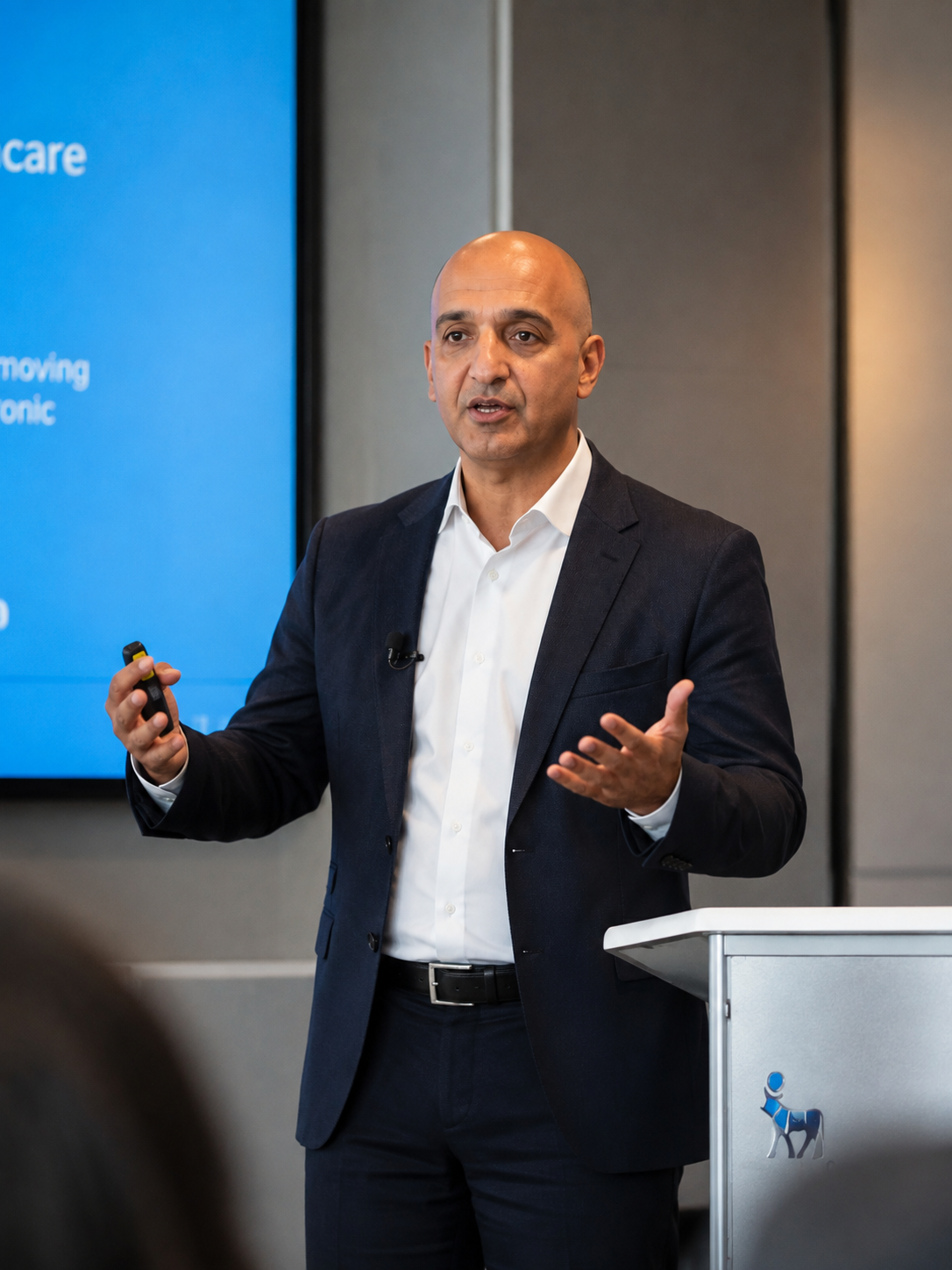
Mike Doustdar’s first job at Novo Nordisk was making copies. TIME reports that he was a teenager living in Austria, having left Iran at 12 amid unrest, when he took a summer position at the company. Novo’s own biography dates his start to 1992, as an office clerk in Vienna. He stayed for more than three decades, moving through finance, logistics, operations and marketing before running the company’s international business. In August 2025, he became chief executive.
The company he took over was already under pressure. On July 29, 2025, the day Novo announced his appointment, it also lowered its 2025 outlook for the second time that year, to sales growth of 8% to 14% from 13% to 21%. It blamed persistent use of compounded GLP-1s, slower-than-expected market expansion and competition for weaker U.S. Wegovy sales. Semaglutide, the molecule behind Ozempic and Wegovy, had become central to Novo’s obesity and diabetes business, which raised the stakes on building the next generation of medicines. Within five weeks of taking over, Doustdar announced roughly 9,000 job cuts. Within three months he was in the most public deal fight of his career, trying to take a nearly $10 billion obesity biotech away from Pfizer.
How that fight ended is the clearest window yet into how Doustdar trades urgency against price and legal risk. It is also messier than either “Novo overpaid” or “Novo was blocked.”
Why did Novo Nordisk go after Metsera?
The July 29 announcement did more than name a CEO. It also made Martin Holst Lange chief scientific officer and said he would work with Doustdar on pipeline development from both inside and outside the company. Six weeks later, on September 10, Novo said it would cut about 9,000 of its roughly 78,400 jobs, aim for savings of around DKK 8 billion a year by the end of 2026, and lower its 2025 operating profit growth outlook to 4–10% from 10–16%.
Cost cutting bought room. It did not fill a pipeline. That is where Metsera came in. The biotech, founded in 2022 and public since a January 2025 IPO, was developing MET-097i, a monthly injectable GLP-1, along with an amylin analog, MET-233i, and oral candidates. Pfizer wanted in. It had ended development of its own oral GLP-1, danuglipron, in April 2025 after a possible drug-induced liver injury in one trial participant. On September 22, 2025, Pfizer agreed to pay $47.50 a share in cash plus a milestone payment of up to $22.50, or up to $70 in all. Metsera had closed at $33.32 the Friday before.
Metsera was not Novo’s only deal that autumn. Metsera’s own filing lists Novo’s October 2025 acquisition of Akero Therapeutics among comparable transactions, a sign that outside assets were already part of the plan. For Novo, the logic was not hard to see. A once-monthly GLP-1 and an amylin drug are exactly the kind of next-generation assets a company leaning on one franchise goes looking for.
How did Novo’s two-step Metsera offer work?
On October 25, Novo sent Metsera an unsolicited proposal, and on October 30 it made it binding. Metsera’s board had already judged the terms superior to Pfizer’s. Novo offered up to $77.75 per share, about $9.1 billion, a 133% premium to Metsera’s price before the Pfizer deal was announced.
The structure is what made it unusual. In step one, at signing, Novo would pay $56.50 a share in cash, roughly $6.5 billion, and receive non-voting preferred stock equal to half of Metsera’s share capital. Metsera would then pay that cash out to its shareholders as a dividend. In step two, after regulatory clearance and a shareholder vote, Novo would buy the rest, and holders would receive a milestone-linked payment of up to $21.25 a share.
The design had a purpose. As Metsera’s own filing describes it, the dividend would be paid promptly after signing without waiting for regulators, so most of the money would reach shareholders early and only the back end would depend on clearance. Metsera’s board was told that Novo’s representatives had a high degree of confidence about winning U.S. antitrust approval. Pfizer’s lawyers disagreed. On October 29, they wrote that the proposal was not superior and was illegal under antitrust law. Two days later, Pfizer sued in Delaware’s Court of Chancery. On November 3 it filed a second suit in federal court, invoking the Sherman Act and the Clayton Act. That same day, FTC staff asked Metsera for a call to discuss the Novo deal, and Metsera answered their questions.
Pfizer, meanwhile, had a clean run of its own. The FTC granted early termination of the waiting period for its deal on October 31.
How high did the bidding go?
On November 4, Novo raised its offer to $62.20 in cash and up to $24 in milestone payments, or $86.20 a share, which Metsera’s filing values at approximately $10.0 billion. The board again judged it superior. Pfizer had by then raised its upfront cash offer from $47.50 to $60.00 and then $62.20, and all of those increases came after Novo’s proposal arrived. The next day, after the Delaware court refused Pfizer’s request for an emergency order, Pfizer matched those terms.
On November 6, Doustdar stood in the Oval Office for a White House drug-pricing announcement and was asked about the contest. Novo’s bid was higher, he said, and if Pfizer wanted the company it should “put your hand in the pocket and bid higher,” Fierce Biotech reported. Novo made its own final move the same day: $65.60 in cash plus up to $20.65 in milestone payments, or $86.25 a share.
The $10 billion figure in most headlines needs a footnote. Nearly a quarter of the final $86.25 was contingent, payable only if the drugs cleared clinical and regulatory milestones.
Why did Novo Nordisk walk away from Metsera?
The short answer is that Metsera’s filings describe several things landing within hours of each other on November 7, and Novo has publicly named only one.
The Hart-Scott-Rodino Act requires companies to notify the FTC of large acquisitions and wait before closing them. Three days earlier, after the Chancery hearing, the FTC had sent a letter to lawyers for Novo and Metsera. It said the structure might violate the procedural provisions of the Hart-Scott-Rodino Act if Novo took its preferred stock without first filing for premerger review. The letter also said, expressly, that the FTC and its staff were taking no position on the deal’s competitive effects or its legality under substantive antitrust law.
On November 7, a senior Novo executive told a Metsera representative by phone that Novo had little or no ability to raise the economics of its November 6 offer. Later that day, the director of the FTC’s Bureau of Competition told Metsera’s lawyers the bureau was inclined to recommend that the commission sue in federal court over the first step of Novo’s proposal. That was an inclination, not a ruling.
That evening, Pfizer sent a proposal matching Novo’s final terms exactly, $65.60 plus up to $20.65, and gave Metsera eight hours to accept. The board weighed the FTC call, the deadline and what it had already learned, and concluded that the Novo transaction carried unacceptably high legal and regulatory risk compared with Pfizer’s. It named the possibility that the initial dividend might never be paid, or might later be challenged or rescinded. The board also noted that no third bidder had appeared, and that Pfizer’s right to match rival offers gave it little reason to pay more than Novo did. Metsera signed with Pfizer.
On November 8, Novo said it would not raise its offer, “consistent with its commitment to financial discipline and shareholder value.” The same statement said Novo believed its structure complied with antitrust law. Doustdar returned to the theme in February 2026, telling Fierce Biotech that Novo had shown the discipline to stop once the price rose.
Metsera’s shareholders approved the Pfizer deal on November 13, with 95,071,667 shares voting in favor and 20,655 against. Pfizer completed the acquisition the same day at $65.60 in cash plus up to $20.65 in milestone payments, an enterprise value of about $7.0 billion.
The two accounts focus on different parts of the decision. Novo’s public explanation is about price. The board’s documented reasoning is about legal risk and the timing of a matched offer, and it also records Novo’s own signal that it had little room left to bid. Those are compatible readings. The filings do not say what Novo would have done had the FTC stayed quiet.
Nor was the substance ever tested. Novo withdrew before the FTC or a court ruled on whether the transaction was lawful. The Delaware court’s only ruling in the sequence was to deny Pfizer’s request for a restraining order.
What happened to Metsera after Pfizer bought it?
Less has been settled than the headlines suggest. Pfizer now calls MET-097i berobenatide. Its own catalog of 2026 catalysts lists a Phase 3 program that includes weekly-dosing studies in people with obesity, with and without type 2 diabetes, and VESPER-6, a study of monthly dosing that began in June 2026. Further studies cover sleep apnea and knee osteoarthritis. In February 2026, Pfizer reported Phase 2b results for monthly dosing.
The milestone payments to former Metsera holders, worth up to $20.65 a share, hinge on three events: a Phase 3 start for the MET-097i and MET-233i combination by the end of 2027, FDA approval of monthly MET-097i by the end of 2029, and approval of the combination by the end of 2031. Nothing from Metsera has reached the market, so neither the price Novo declined to pay nor the price Pfizer paid can yet be called right or wrong.
What the Metsera bid says about Novo’s next moves
Doustdar did not retreat from acquisitions. In February 2026 he said that when Novo finds a target, it will value it, put a price on it and go after it. The need has not gone away. At Novo’s September 21, 2026 capital markets day, the company said it aims to launch more than five medicines with multi-blockbuster potential by 2030 and to reach more than DKK 150 billion in risk-adjusted pipeline sales by 2035, with revenue growth in line with industry peers. Novo described those as ambitions, not guidance.
CNBC reported that Doustdar also named what he called the elephant in the room: semaglutide begins losing patent exclusivity in the early 2030s, starting in the U.S. in 2032, in a market that made up more than half of Novo’s sales last year. He said bolt-on acquisitions were likely to be the focus, with larger deals not ruled out.
The episode also leaves a practical question. A bid whose first step needed no premerger filing drew a warning letter from the FTC within days. Whether Novo’s next large offer follows a conventional path, with a filing and a waiting period, will say how much the company took from the experience.
Seen from there, Metsera looks less like a lost transaction and more like the first test of a capability Novo now says it needs.
What executives can take from the contest
The first point is that price is the easiest variable to match. Pfizer did it twice in a week. Certainty is harder. Once the economics converged, the argument moved to who could actually deliver a closing, and a structure built to get Novo’s money to shareholders faster gave both the seller and the regulator something specific to weigh.
The second concerns explanations. “Financial discipline” is a defensible thing for a CEO to say, and the record shows Novo signaling limited room to raise its bid. But the same record shows a regulator and a board discussing legal exposure. Anyone reading a walk-away should hold both accounts and ask which one carried the decision.
The third is patience with the scorecard. If berobenatide reaches the market, Novo will have passed on a valuable asset. If it stumbles, Pfizer will have overpaid. Neither outcome will be knowable for years. What can be examined now is the process: how much risk a new CEO was willing to take on for speed, and what he was ready to give up to get it.
The next data points are plain. Phase 3 results for berobenatide will show what Pfizer bought. Novo’s own next acquisition will show whether its offer arrives in a form regulators can leave alone, at a price Doustdar can defend to investors.