Bernard Arnault Is Simplifying How His Family Controls LVMH. The Hardest Rules Are Still Unwritten
The Arnault family wants to replace a chain of holding companies with one listed company. What it has disclosed is precise. What it has not yet disclosed matters more.
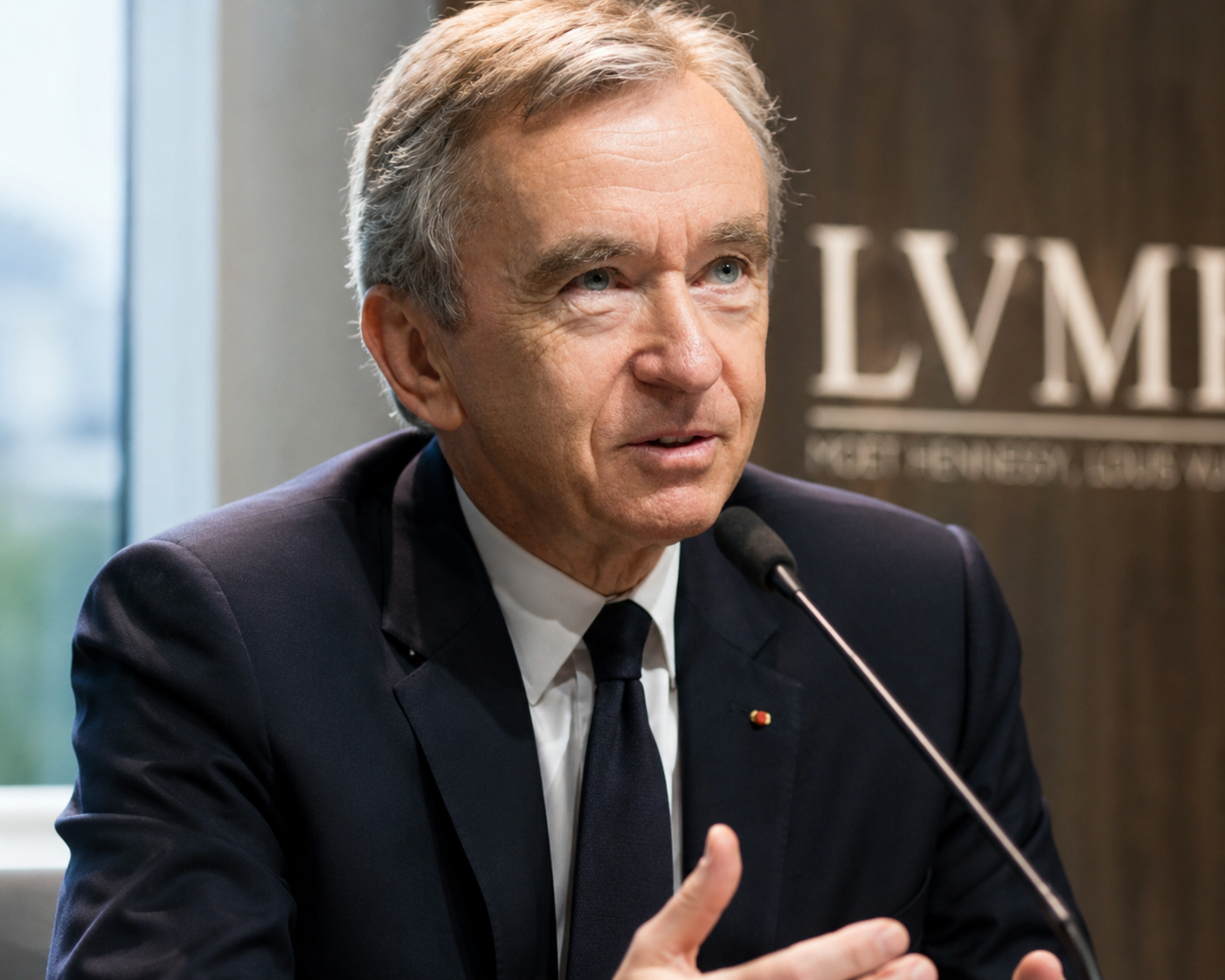
In a December interview with CNBC, as Reuters later reported, Bernard Arnault answered a question about succession with a simple response: “Talk to me again in 10 years.” Nine months later, on September 23, 2026, his family unveiled a plan that never mentions succession yet lands directly in the middle of that debate.
Through Christian Dior, the Arnault family plans to fold the holding companies above LVMH into one listed entity, Agache SCA, which would hold 49.76% of LVMH’s capital and 65.55% of its voting rights directly.
That is the decision. It does not materially alter the family’s control of LVMH. It changes the structure through which that control is held, and the rules governing that new structure are the part the family has not yet fully disclosed.
This article explains what the Bernard Arnault LVMH restructuring does, what Christian Dior’s minority shareholders are being offered, why governance matters as much as ownership, and what remains undecided. Where the record stops, the analysis stops too.
The short version
Decision: Three family holding layers are being consolidated into one listed Agache SCA, which would hold 49.76% of LVMH’s capital and 65.55% of its voting rights.
Minorities: Christian Dior shareholders outside the family would be offered cash at a formula equal to 95% of net asset value for the 2.44% of shares the family does not already own, with no squeeze-out.
Next: Christian Dior shareholders are scheduled to vote on the first conversion step on November 2, with the main restructuring votes expected in December 2026 and the tender offer expected in the first quarter of 2027.
What is the Arnault family restructuring of LVMH?
Today the family controls LVMH through several holding companies. Agache owns 100% of Financière Agache. Financière Agache owns 96.00% of Christian Dior’s capital and 97.10% of its voting rights, as well as 6.77% of LVMH’s capital and 8.49% of its voting rights. Agache also holds small direct stakes in Christian Dior and LVMH.
The proposed sequence is straightforward even if the legal structure is not. Financière Agache would first be merged into Agache. Agache would then be merged into Christian Dior. At the same time, Christian Dior would be converted into a société en commandite par actions, or SCA, and renamed Agache.
Because that conversion triggers a mandatory tender offer under French market rules, the Arnault family would then make a cash offer for the Christian Dior shares it does not already own.
In practical terms, the family is reducing the number of corporate layers between its holding structure and LVMH. A single listed Agache SCA would sit directly above LVMH.
The family currently controls 50.33% of LVMH’s capital and 66.27% of its voting rights. After the restructuring, the new Agache SCA would directly hold 49.76% of the capital and 65.55% of the voting rights, which Christian Dior describes as substantially all of the family group’s LVMH stake.
The difference between the capital and voting percentages reflects LVMH’s voting-right structure, including double voting rights attached to qualifying long-held shares.
This is also not the first time the Arnault family has simplified its holding structure. In 2017, it announced a transaction involving Christian Dior that was explicitly described as a simplification of the group’s structures. That deal combined a public offer for Christian Dior shares with LVMH’s acquisition of Christian Dior Couture.
The stated purpose is different this time. The 2026 announcement says the new structure is intended to maintain continuity of the Arnault family’s control over LVMH.
How does the new Agache SCA structure work?
The legal form is the central design choice.
A société en commandite par actions separates the roles of management and ordinary share ownership. General partners have responsibility for managing the partnership, while shareholders hold shares and a supervisory board oversees aspects of the structure.
The Arnault family adopted the SCA form for Agache in 2022. The 2026 plan keeps that structure and places the new listed Agache SCA at the top of the family’s LVMH holding chain.
The proposed general partners would be Agache Commandité and Bernard Arnault personally. Arnault would also remain managing partner, or gérant.
The supervisory board would include current Christian Dior directors as well as new external members, including independent members under the Afep-Medef corporate-governance code.
One detail in the announcement is easy to overlook: the financial rights of the general partners would remain aligned with those existing at Agache and would be capped at €3 million a year.
The structure therefore separates two things that are often discussed together: the ability to exercise control and the financial rights attached to that control.
There is also a procedural step before the main transaction can happen.
Christian Dior is currently a European company, or SE. French law does not provide for a direct conversion from an SE into an SCA, so shareholders must first vote on converting Christian Dior into an ordinary société anonyme.
That first meeting is scheduled for November 2, 2026, at the Carrousel du Louvre in Paris. The documentation for the meeting was published on Christian Dior’s investor site in late September.
The main restructuring votes are expected in December. If approved, the conversion and merger are contemplated to occur simultaneously at the end of that month, subject to the necessary regulatory approvals and waivers.
What are Christian Dior’s minority shareholders being offered?
The restructuring leaves a small group of outside Christian Dior shareholders with a choice.
The Arnault family currently does not own 2.44% of Christian Dior’s share capital. That stake was worth approximately €1.63 billion based on the company’s September 22 closing price.
Those shareholders can tender their shares into the proposed cash offer or remain shareholders of the listed Agache SCA alongside the Arnault family.
There will be no squeeze-out.
That matters because the restructuring is not designed to force the remaining Christian Dior shareholders out of the listed company. Those who stay would continue to own shares in the entity that sits at the top of the LVMH control structure.
The proposed price is also formula-based rather than fixed today.
The Arnault family intends to propose a price equal to 95% of Christian Dior’s net asset value, calculated on a look-through basis using the one-month average LVMH share price.
The relevant average and net asset value will be determined five business days before the Christian Dior extraordinary general meeting in December.
For illustration only, Christian Dior calculated that formula using figures available on September 23. It produced an indicative price of €469.05 per Christian Dior share, based on a one-month volume-weighted average LVMH share price of €423.18 and a Christian Dior net asset value of €493.74 per share.
That €469.05 figure is not the final offer price.
Christian Dior explicitly says the actual price may be higher or lower depending on the movement of LVMH’s share price. The final price will only be determined shortly before the relevant shareholder meeting.
The proposed price will also face an independent review.
Christian Dior plans to establish an ad hoc committee within its board, which will recommend an independent expert. That expert will prepare a report on the fairness of the financial terms, while the French Financial Markets Authority, or AMF, will have to clear the offer.
The result is a transaction where the family has proposed the pricing formula, but an independent expert and the regulator still have important roles before the offer can proceed.
Why is governance a bigger question than ownership?
The family already controls LVMH. So the important question is not simply how much it owns.
It is how that control will be organized and exercised through the new Agache SCA.
The September announcement gives one explicit purpose: continuity of family control. It does not describe the restructuring as a succession plan.
That distinction matters.
Succession is nevertheless already a public issue around LVMH. Reuters reported in January that some institutional investors wanted greater visibility into how Bernard Arnault’s eventual departure would be handled. In April, Arnault again declined to give shareholders a timetable for a successor, saying they could ask him again in seven or eight years.
The family’s 2022 restructuring provides some documented context. Agache Commandité SAS was created with equal ownership among Arnault’s five children. Regulatory filings show that the company was established as part of the transformation of Agache into an SCA, with Bernard Arnault appointed as managing general partner.
Reuters reported in January that the structure would sit at the top of the holding arrangement after Arnault leaves the managing-partner role, with decisions in the absence of specific instructions requiring a three-fifths majority among the children. LVMH told Reuters that it did not see a risk of deadlock at the holding level.
Those facts do not establish that the September 2026 restructuring was caused by succession planning. They do show why governance around the new Agache SCA will be closely watched.
The new structure also puts senior members of the Arnault family inside the companies affected by the transaction.
Antoine Arnault has been CEO and vice-chairman of Christian Dior since December 2022. Aymeric Le Clere is president and CEO of Financière Agache, the holding company that is being absorbed into Agache as part of the restructuring.
None of that establishes a problem with the transaction. It does, however, explain why the independent expert, the ad hoc committee and the supervisory board matter.
The governance question is therefore narrower and more concrete than “Who will succeed Bernard Arnault?”
It is: What rules will govern the entity that holds roughly two-thirds of LVMH’s voting rights, and how can those rules change over time?
That answer has not yet been fully published.
What has LVMH’s recent performance got to do with the timing?
LVMH’s recent financial performance provides useful context, but there is no evidence in the restructuring announcement that the transaction was caused by operating results.
For the first half of 2026, LVMH reported revenue of €38.6 billion, with organic revenue growth of 2%. Profit from recurring operations was €8.7 billion, representing an operating margin of 22.5%.
The group also reported a return to 3% organic revenue growth in the second quarter, after 2% growth for the first half as a whole.
Those figures describe the business environment in which the restructuring is taking place. They do not explain why the family chose to make the change now.
The official explanation remains the simplification of the structures controlling LVMH and the continuity of family control.
What has not been decided yet?
As of October 3, 2026, several important pieces remain open.
First is the shareholder process. Christian Dior’s November 2 meeting is the first formal step in converting the company into a société anonyme. The larger restructuring votes are expected in December.
Second are the detailed governance rules of the new Agache SCA.
Christian Dior has said that an information document will set out the powers of the managing partner, the general partners and the supervisory board, as well as the rules governing the appointment, replacement and functioning of the gérance.
Those details matter because the new Agache SCA will hold the family’s controlling LVMH position directly.
Third is the exchange ratio for the Agache merger. That ratio will be subject to review by a statutory merger auditor and disclosed in the information document.
Fourth are the regulatory waivers and approvals required from the AMF in relation to the mandatory-offer rules affecting Christian Dior and LVMH.
Fifth is the independent expert’s fairness report on the tender offer.
And finally, there is the actual offer price.
The €469.05 figure announced in September is only illustrative. The final price will depend on LVMH’s share price and the calculation date shortly before the December meeting.
The tender offer itself is expected to open in the first quarter of 2027, subject to AMF clearance.
Until those steps are completed, the restructuring remains a proposed transaction rather than a finished change in ownership.
What can other executives take from the Arnault restructuring?
The most useful lesson is not about Bernard Arnault’s leadership style. It is about corporate architecture.
First, control and economics can be designed separately. The Arnault family can hold roughly half of LVMH’s capital while controlling roughly two-thirds of its voting rights. The new structure also separates the management powers of the general partners from their capped financial rights.
Second, simplification increases the importance of the rules that remain. Removing several holding layers makes the top entity easier to understand. But once more control is concentrated in that entity, its governance rules become more important, not less.
Third, a liquidity offer depends on independent checks. The family has proposed the pricing formula. The independent expert must assess its financial fairness, and the AMF must review the offer before it can proceed.
The Arnault family has explained the part of the restructuring it wants the market to see: a simpler listed holding company with substantially all of its LVMH stake concentrated under Agache SCA.
The next part is more important.
The family has not yet published every rule for how that control will be exercised, supervised and changed over time. The November and December shareholder meetings, the forthcoming governance document and the 2027 tender offer will make those rules visible.
That is where the simplification of LVMH’s ownership structure becomes more than a legal reorganization. It becomes a test of how clearly control can be designed when the company behind it is one of the world’s most valuable family-run businesses.