How Tufan Erginbilgic Changed the Economics of Rolls-Royce's Engine Business
Rolls-Royce's new CEO didn't just cut costs — he decided the company's own engine contracts were priced wrong, and moved to fix them even as two long-standing airline customers walked to GE Aerospace.
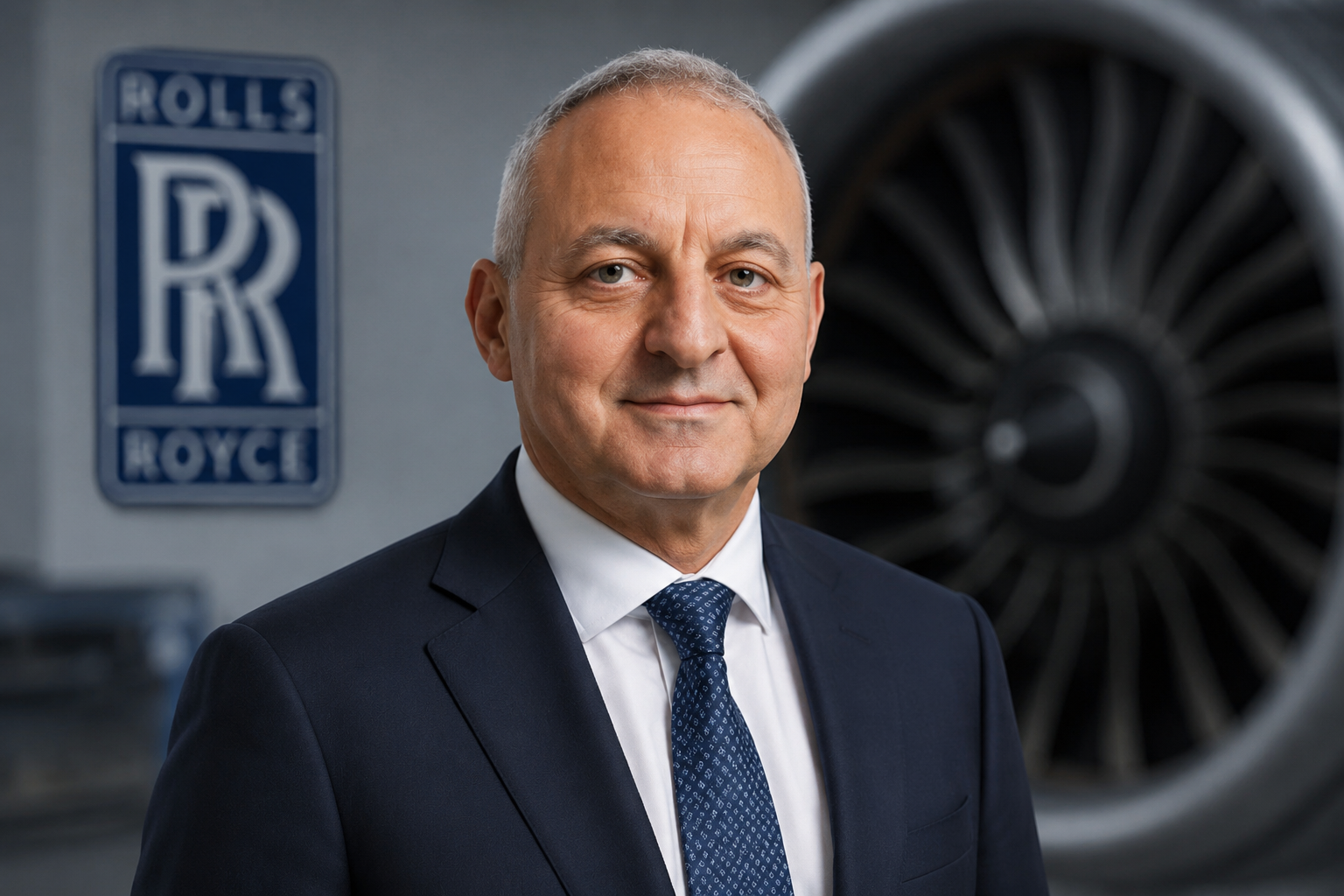
Rolls-Royce had spent decades building an aftermarket business around long-term engine-service contracts. Under Tufan Erginbilgic, the company set out to change the economics behind those contracts — tightening pricing, enforcing terms, and renegotiating agreements that no longer made financial sense.
In January 2023, Tufan Erginbilgic became CEO of Rolls-Royce Holdings, inheriting a business whose accounts had just absorbed a warning sign bigger than any single engine programme. Following an amendment to IAS 37, the accounting standard governing onerous contracts, Rolls-Royce had increased its total contract-loss provisions by £723 million, effective 1 January 2022. The company said all material elements of that increase related to Civil Aerospace contracts. It was not a cash write-off or a one-time operational failure. It was a recalculation of how much future cost some of Rolls-Royce's existing long-term agreements were likely to carry — and it showed that a number of those contracts, on a fully costed basis, were expected to cost more to fulfil than they would bring in.
That mattered because a major part of Civil Aerospace's aftermarket economics runs through long-term service agreements, or LTSAs — contracts that typically span eight to sixteen years and charge airlines largely based on how many hours their aircraft fly. When priced correctly, the model can be highly attractive: an initial engine sale creates a large installed base, and decades of maintenance revenue follow. When priced incorrectly — or when maintenance costs rise faster than the escalation terms built into the original deal allow for — the same structure locks a company into years of thin or negative margins that often required renegotiation, extensions or other commercial changes to fix.
By the time Erginbilgic took over, that second scenario had become a real problem in parts of Civil Aerospace.
A business recovering, but not yet repaired
Civil Aerospace had already begun to improve before Erginbilgic arrived. In 2022, the division reported operating profit of £143 million, a 2.5% margin, up from an outright loss of £172 million the year before. Group underlying operating profit was £652 million, free cash flow from continuing operations was £504 million, and net debt stood at £3.3 billion — better than the pandemic years, but still a business generating thin returns on a very large, capital-intensive footprint.
The company's own disclosures pointed to the deeper issue. Rolls-Royce records a contract-loss provision whenever the direct cost of fulfilling a contract is expected to exceed the revenue it will generate. After the 2022 accounting change required those costs to be measured on a fully costed basis, the company identified that a number of its Civil Aerospace agreements — contracts running eight to sixteen years — carried exactly that risk. In some cases, pricing had been agreed years earlier, in a more competitive environment, under terms that didn't fully anticipate the maintenance costs those engines would eventually generate.
This was not a problem that a single cost-cutting exercise could fix. It was embedded in commercial agreements that Rolls-Royce had already signed and, in many cases, could only be changed through negotiation with the customer on the other side of the contract.
The decision: treat the contract as the problem, not just the cost base
In February 2023, Rolls-Royce launched a company-wide transformation programmed organized around seven workstreams. One of them, commercial optimization, became the center of what followed in Civil Aerospace. The company defined it as bringing “a sharper commercial edge” to the business — securing, in Erginbilgic's own words in that year's annual report, “the right reward for the risks taken and the value created for customers.”
The distinction is worth sitting with, because it shaped everything that came after. The decision was not simply to raise prices across the board. It was to stop treating every signed contract as fixed and unquestionable, and instead to identify which agreements were structurally unprofitable, renegotiate them where possible, and price new and renewing contracts on terms that actually reflected the cost and risk of a multi-decade service commitment.
By the company's November 2023 Capital Markets Day, that intent had a specific structure. Rolls-Royce identified six levers for expanding Civil Aerospace's service-contract margins — three operational (extending engine time on wing, reducing shop-visit costs, and reducing product costs) and three commercial (implementing value-driven pricing, engaging customers directly on onerous and low-margin agreements, and applying greater rigour to contractual terms and conditions). Erginbilgic later described the split himself on an earnings call, reminding analysts that LTSA margin improvement rested on all six levers together, not on pricing carrying the load alone.
The risk that came with it
Renegotiating long-standing commercial terms with airlines is not something a manufacturer can do quietly. Airlines have alternatives, and a harder commercial line can push some of them toward a competitor.
That risk became visible in February 2024, when Thai Airways selected GE Aerospace engines for a new order of Boeing 787 aircraft, ending Rolls-Royce's position as the airline's sole widebody engine supplier on its newer jets. Reuters reported that industry sources cited disagreements over Rolls-Royce's engine-maintenance pricing as a factor in the decision; Bloomberg described the airline as rejecting “the UK company's tougher stance on pricing.” Around the same time, Rolls-Royce's chief customer officer for civil aerospace, Ewen McDonald, told Reuters at the Singapore Airshow that industry-wide price increases — including a roughly 12% rise in the company's own engine-maintenance pricing — were “certainly not” impeding sales, which he described as having reached record levels.
A second case followed months later. In July 2024, British Airways selected GE Aerospace's GEnx engine for six new Boeing 787s, rather than the Rolls-Royce Trent 1000 that powers its existing 38-strong Dreamliner fleet. Bloomberg reported that connection directly, writing that Erginbilgic “has pushed to ramp up margins and unwind unprofitable contracts, a move that's helped the company shore up profitability at the cost of losing out on some deals.”
The question surfaced again, even more directly, on Rolls-Royce's August 2024 half-year earnings call, when an analyst asked Erginbilgic about the British Airways decision in the context of whether the company's pricing actions were costing it business. Erginbilgic's answer is worth preserving in its own terms, because it is the clearest on-the-record account of how he frames the trade-off. He said people sometimes assumed Rolls-Royce was losing contracts because of its pricing decisions, and rejected that framing directly, arguing instead that the company was now being properly compensated for the investment and risk behind its products — and adding: “In the past, Rolls-Royce didn't actually price that fairly and we are right now.” He went on to point to the Trent 1000's time-on-wing performance as a specific competitive weakness on that engine, and pointed to a £1 billion programme aimed at materially improving that performance as the intended fix.
What the public record establishes is narrower than a single clean causal story. It shows that Rolls-Royce materially changed its commercial posture, and that two existing airline customers selected competitor engines for new widebody aircraft during the period, while pricing and Trent 1000 performance were both raised publicly as relevant parts of the competitive discussion — without either company confirming pricing as the sole determining factor in any individual order.
What the numbers show — and don't show
The financial trajectory since 2023 has been strong, but not a straight line upward.
Full-year 2023 underlying operating profit reached £1.59 billion, more than double 2022, with free cash flow of £1.285 billion and net debt reduced to roughly £2.0 billion. Within that year's results, however, net contractual margin movements were still negative — approximately £54 million, comprising £29 million of negative catch-ups and £25 million of net onerous-provision charges — a reminder that unwinding years of underpriced contracts carried real, booked costs even as the broader transformation gained traction elsewhere.
By the first half of 2024, the commercial programme was producing a clearer positive signal. Rolls-Royce reported total gross contractual margin improvements of £431 million in Civil Aerospace, reflecting renegotiated widebody terms and catch-ups tied to price escalation and cost reduction. After an offsetting £208 million charge, largely associated with prolonged supply-chain disruption, net contractual margin improvement was £223 million — more than double the £105 million recorded a year earlier. Group underlying operating profit for the half rose 74% to £1.1 billion, with Civil Aerospace's operating margin climbing to 18.0% from 12.4%.
For the full year 2024, Rolls-Royce reported total contractual margin improvements of £617 million, offset by £382 million of additional charges tied to the same supply-chain pressures, for a net contractual margin improvement of £235 million — comprising £290 million of contract catch-ups and £55 million of net onerous-provision charges. Group underlying operating profit reached £2.464 billion, a 13.8% margin, and the company ended the year with net cash of £475 million, a swing of more than £2.4 billion from the net debt position twelve months earlier.
2025 extended the pattern: group underlying operating profit of £3.5 billion at a 17.3% margin, free cash flow of £3.3 billion, and net cash of £1.9 billion, alongside a £7–9 billion multi-year share buyback programme announced for 2026–2028.
The first half of 2026 produced the largest single data point in the series. Civil Aerospace reported £574 million of gross contractual and operational improvements, against £77 million of offsetting charges tied to higher product and supply-chain costs, for a net contractual and operational improvement of £497 million — comprising £372 million of contract catch-ups and £125 million of onerous-provision releases. Group underlying operating profit rose 46% to £2.534 billion, a 22.5% margin, and Rolls-Royce raised its full-year 2026 guidance to £4.7–4.9 billion in operating profit.
That £497 million figure carries an important qualification, one the company built into its own guidance rather than one imposed from outside. It is not a clean, repeatable annual number. A substantial share of it reflects one-time contract catch-ups and the release of provisions set aside for agreements that have since been successfully renegotiated — accounting events tied to clearing a specific, finite backlog of historically bad contracts, not evidence of a permanently higher rate of commercial return. Rolls-Royce has said explicitly that the contribution from contractual margin improvements is expected to moderate in the second half of 2026.
Not a pricing story alone
Rolls-Royce's own disclosures have consistently attributed its results to more than commercial terms. Higher LTSA margins, increased time-and-materials revenue, stronger business aviation performance, large-engine flying hours recovering above pre-pandemic levels, and genuine cost-efficiency programmes all appear alongside commercial optimisation in the company's account of what drove its results each period.
The time-on-wing programme sits at the centre of that operational side. Rolls-Royce has committed roughly £1 billion to extending the interval between major engine overhauls across its in-production fleet, targeting more than a 100% durability improvement by the end of 2027. For the Trent 1000 specifically, the company has said an initial modification could double time on wing, with a second phase adding a further 25–30% depending on operating conditions. The logic connects directly to the commercial reset: an engine that needs fewer, cheaper shop visits is more profitable under any pricing structure, which is part of why Erginbilgic treated the operational and commercial problems as two sides of the same equation rather than separate initiatives.
The unresolved question
Two things are true about Rolls-Royce's position heading into the second half of 2026. Commercial discipline and operational investment have visibly reshaped the company's profitability, cash generation and balance sheet over roughly three and a half years — from £652 million of group operating profit and £3.3 billion of net debt in 2022, to guidance of £4.7–4.9 billion of operating profit and a net cash position in 2026. And a meaningful portion of the recent gains, the H1 2026 £497 million figure chief among them, comes from clearing a defined backlog of legacy contracts rather than from a demonstrated, permanently higher rate of pricing power on new business.
The company's own guidance effectively poses the next test: once the identified onerous contracts have been renegotiated and the provision releases run their course, what remains? The answer depends on whether value-driven pricing on new and renewing agreements, combined with a genuinely lower underlying cost base from the time-on-wing and efficiency programmed, can sustain margins without relying on the temporary contribution from legacy contract catch-ups and provision releases. Rolls-Royce has also continued to flag aerospace supply-chain disruption as a persistent, multi-year cost headwind working against some of the commercial gains, rather than a problem it considers solved.
What another executive can take from Rolls-Royce's experience is not a formula, but a distinction. Fixing a business's contracts and fixing its costs are different exercises, and at Rolls-Royce neither alone would have closed the gap between a 2.5% Civil Aerospace margin in 2022 and the returns the business is now targeting. The customer resistance and competitive pressure that accompanied the commercial reset were real, not hypothetical: two existing airline customers selected competitor engines for new widebody aircraft during the period, while pricing and Trent 1000 performance were both raised publicly as relevant parts of the competitive discussion. Whether the trade-off holds up once the easiest renegotiations are behind the company is a question Rolls-Royce's own results have not yet answered, and its own disclosures, read carefully, say so.