Why Zoran Bogdanović Is Betting Coca-Cola HBC's Next Growth Story Is in Africa
Coca-Cola HBC agreed to spend $2.6 billion for control of Africa's largest Coca-Cola bottler. CEO Zoran Bogdanović says the bet isn't new territory — it's decades of Nigeria and Egypt experience applied at a much larger scale.
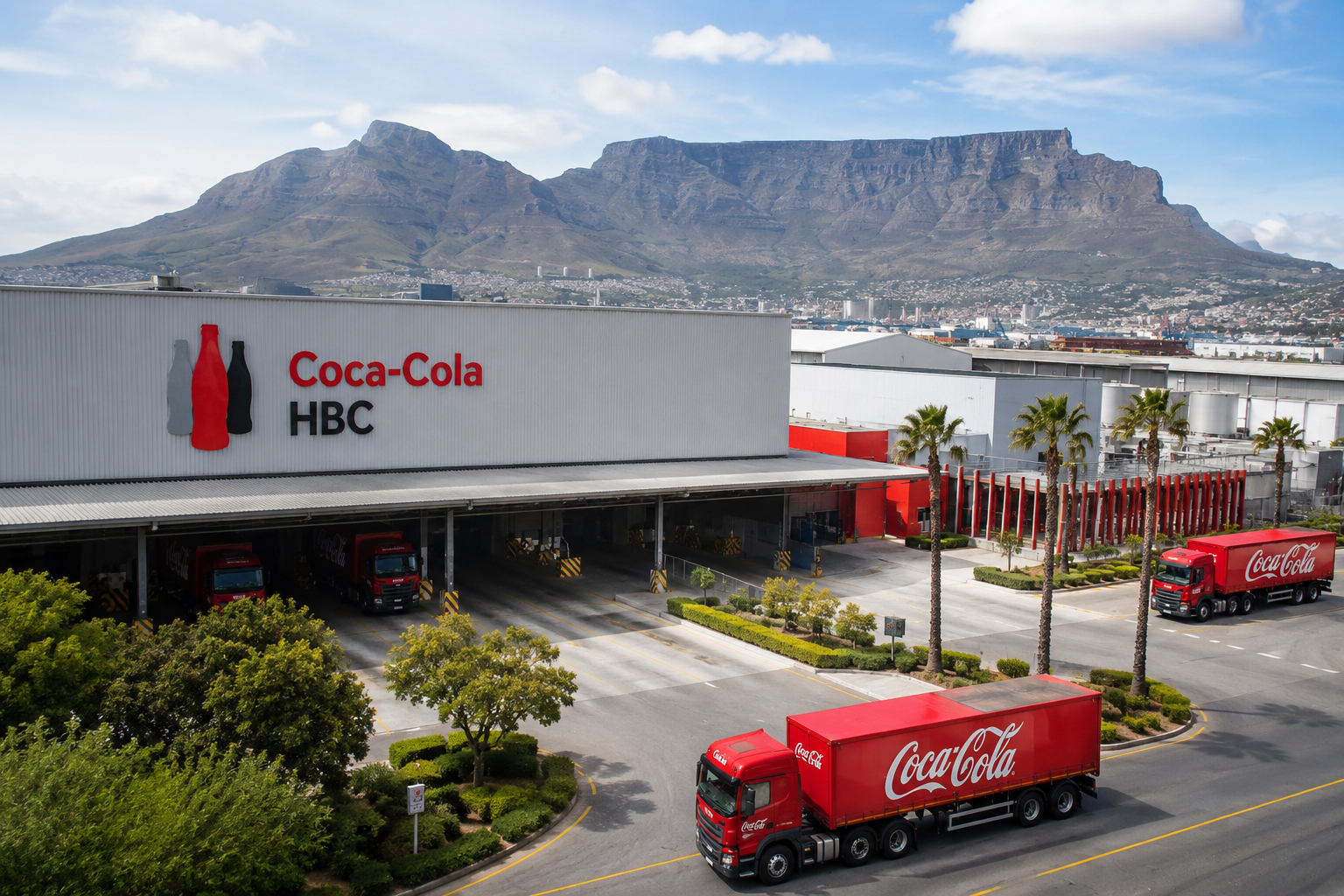
Coca-Cola HBC is best known, if it's known at all outside investor circles, as the Swiss-based company that bottles and distributes Coca-Cola across 29 countries spanning Europe and parts of Africa. In October 2025, its CEO Zoran Bogdanović agreed to spend $2.6 billion changing that description — acquiring a 75% controlling stake in Coca-Cola Beverages Africa, a deal that will add 14 more African markets to the company's territory and, once completed, make it one of the largest bottling partners Coca-Cola has anywhere in the world. The more interesting question isn't the size of the check. It's why Bogdanović believes Coca-Cola HBC is positioned to make the acquisition work.
An Existing Advantage, not a New Bet
Coca-Cola HBC's presence in Africa didn't begin with this acquisition. The company traces its roots on the continent back to the Nigerian Bottling Company, incorporated in 1951 — a business that eventually became part of the Coca-Cola HBC group and gave the company close to 75 years of operating history in one of Africa's largest and most complex consumer markets. In 2022, it added a second data point: the acquisition and integration of Coca-Cola's bottling operations in Egypt, a deal Bogdanović has since referred to directly when explaining the CCBA transaction. Announcing the CCBA deal, he pointed to both track records explicitly: "With almost 75 years of experience in Nigeria and with our successful acquisition of Coca-Cola's bottling business in Egypt in 2022, we see huge growth opportunities in Africa."
Those framing matters, because it changes what kind of decision this actually is. Buying growth exposure to Africa's expanding, increasingly young consumer base is not, on its own, a distinctive strategy — plenty of global companies want the same thing, and most talk about it in similarly optimistic terms. What Bogdanović is arguing, in effect, is that Coca-Cola HBC isn't simply buying access to Africa. It's applying operating knowledge it has already tested twice on a continent most global bottlers have approached with far less direct experience.
What the Deal Actually Buys
The mechanics are straightforward. Coca-Cola HBC will acquire 41.52% of CCBA directly from The Coca-Cola Company and the entire 33.48% stake held by Gutsche Family Investments, taking its ownership to 75% — with an option arrangement that could allow Coca-Cola HBC to acquire the remaining 25% from The Coca-Cola Company over a defined period after completion. The transaction values 100% of CCBA at an equity value of roughly $3.4 billion. CCBA itself is no small addition: spanning 14 African markets and accounting for close to 40% of Coca-Cola's total beverage volume on the continent, it is currently the largest Coca-Cola bottler in Africa.
Shareholders approved the deal in January 2026. Since then, the acquisition has moved through antitrust review in stages: as of Coca-Cola HBC's first-half 2026 results, the company had secured clearance in four of the six required jurisdictions — Mozambique, Namibia, Botswana and the regional COMESA authority — with South Africa and Tanzania still outstanding. In July 2026, South Africa's Competition Commission recommended the country's Competition Tribunal approve the deal, subject to conditions, including a moratorium on job cuts in South Africa. The Competition Tribunal held a hearing on the matter in August 2026, with a final ruling not yet issued as of this writing. Coca-Cola HBC has said it expects the transaction to close in the second half of 2026.
Beyond Bottling Plants
If the CCBA acquisition were the whole story, it would be a large but conventional bottler-buys-bottler transaction. Two other moves, running in parallel, suggest Bogdanović's ambitions extend further than adding territory to a map.
In July 2026, Coca-Cola HBC opened a Digital Hub in Cairo, built to provide artificial intelligence, software engineering, quality assurance and design capabilities to the company's operations across 27 markets in Europe and Africa. The hub launched with around 250 professionals, with plans to scale to 450 by 2027, and is projected by Egypt's IT investment agency to generate roughly $34 million a year in digital export revenue for the country. The hub gives Coca-Cola HBC a shared digital capability across its European and African operations as the group prepares for a larger African footprint.
Separately, in March 2026, the Coca-Cola system in South Africa — led by The Coca-Cola Company's Africa operating unit, not Coca-Cola HBC itself — announced a R17.6 billion (roughly $1 billion) investment through 2030 to expand production capacity and strengthen distribution in the country. Bogdanović welcomed the announcement publicly, calling South Africa central to the CCBA business once the acquisition completes, though the investment commitment itself came from Coca-Cola's Africa unit rather than from Coca-Cola HBC directly. The timing also underscores the strategic importance of South Africa to the broader Coca-Cola system as Coca-Cola HBC prepares to take control of CCBA.
The Integration Question
Buying a controlling stake in a business with its own established local leadership, workforce and customer relationships carries a specific risk: that the acquirer damages the very things that made the target valuable in the first place. Bogdanović has spoken directly to that risk. In comments during Coca-Cola HBC's 2026 earnings discussions, he described visiting local teams in South Africa, Tanzania and Ethiopia as part of pre-closing integration planning, framing the company's role as adding, in his words, "more fuel in the engine" of what CCBA's teams were already doing well, rather than displacing them.
That's the company's own framing of its intentions, not an outcome that has yet been demonstrated. Coca-Cola HBC's own disclosures around the transaction identify the same risks that accompany any acquisition of this size: aligning different business cultures and processes, transferring best practices without disruption, and retaining key employees through the transition. The company also flags currency volatility and broader macroeconomic risk as ongoing exposures in markets like Nigeria and Egypt — a reminder that operating experience in Africa doesn't eliminate the risks of operating in Africa, even for a company that has done it for decades.
The Acquisition Comes from a Position of Strength
One detail worth noting about the timing: Bogdanović isn't making this bet from a position of weakness. Coca-Cola HBC's first-half 2026 results, reported in August, showed organic revenue growth of 9.6% and organic volume growth of 7.5% — the company's 13th consecutive quarter of volume expansion — with comparable EBIT rising 15.2% to €760 million. The results were strong enough that the company raised its full-year guidance for both revenue and operating profit. The acquisition is being pursued while Coca-Cola HBC's existing business is still delivering strong growth — an important context for understanding the scale of the bet, distinct from a company chasing an acquisition out of underlying weakness.
What Remains Unproven
Two things are true about this deal at the same time, and neither cancels out the other. Bogdanović's rationale — extensive, directly relevant operating experience in Nigeria and Egypt, applied to a much larger African footprint — is a genuinely different argument than "Africa is growing, so we're investing in Africa." It's evidence-based, and it's his own stated logic, not simply an outside interpretation imposed on the deal.
At the same time, the acquisition has not closed. Regulatory approval in South Africa and Tanzania, the two remaining jurisdictions, is still pending as of this writing. The integration philosophy Bogdanović has described — investing in local teams rather than displacing them — is an intention his company has stated publicly, not a result that has been tested yet across 14 markets simultaneously. Whether Coca-Cola HBC's Nigeria and Egypt experience genuinely transfers to South Africa, Kenya, Ethiopia, Uganda and the rest of CCBA's footprint, or whether each of those markets turns out to need lessons Coca-Cola HBC hasn't yet learned, is the actual test still ahead.
The Broader Lesson
The pattern worth taking from Bogdanović's decision isn't "expand into growing markets." It's narrower and more useful than that: enter a market at scale when you can point to a specific, demonstrated operating advantage — not simply because the demographic story is compelling. Coca-Cola HBC didn't walk into Africa for the first time with this acquisition. It spent nearly 75 years in Nigeria and built direct experience through its 2022 acquisition and integration of Egypt before betting $2.6 billion that those capabilities could scale across 14 more markets at once. Whether that history actually scales is the question CCBA's next few years will answer — not the announcement that made headlines in October 2025.
FAQ
What is Coca-Cola HBC acquiring, and has the deal closed? Coca-Cola HBC agreed in October 2025 to acquire a 75% controlling stake in Coca-Cola Beverages Africa (CCBA) for $2.6 billion, with an option arrangement that could allow it to acquire the remaining 25% from The Coca-Cola Company over a defined period after completion. As of this writing, the deal has cleared antitrust review in four of six required jurisdictions and is expected to close in the second half of 2026, pending approval in South Africa and Tanzania.
Why does Coca-Cola HBC believe it's positioned to run CCBA successfully? CEO Zoran Bogdanović has pointed to the company's nearly 75-year operating history in Nigeria and its 2022 acquisition and integration of Coca-Cola's Egypt bottling business as direct experience relevant to CCBA's 14 African markets — a track record he has cited explicitly as the basis for the deal's rationale.
What is the Cairo Digital Hub, and how does it relate to the Africa strategy? Opened in July 2026, the hub provides technology and digital capabilities — including AI, software engineering and quality assurance — to Coca-Cola HBC's operations across 27 markets in Europe and Africa. It represents a shared technology investment built ahead of the company's expanded African footprint, separate from the CCBA acquisition itself.
Is Coca-Cola HBC making this acquisition because its core business is struggling? No. The company reported strong first-half 2026 results, including its 13th consecutive quarter of volume growth, and raised its full-year guidance shortly after these results were announced — indicating the Africa expansion is being pursued from a position of financial strength rather than necessity.
What are the biggest risks to the strategy? Coca-Cola HBC's own disclosures cite integration risk — aligning business cultures, transferring best practices and retaining key employees across a large, newly acquired workforce — along with currency volatility and broader macroeconomic exposure in African markets. The acquisition's completion also still depends on remaining regulatory approvals.
Sources
- 1.Coca-Cola HBC / Coca-Cola Company — CCBA Acquisition Announcement ↗
- 2.Coca-Cola HBC — H1 2026 Results & Earnings Call Transcript ↗
- 3.Coca-Cola — South Africa R17.6 Billion Investment Announcement ↗
- 4.Coca-Cola HBC — Cairo Digital Hub Launch ↗
- 5.Competition Commission of South Africa — CCBA Transaction Recommendation ↗