Arthur Rego: Losing Everything Taught Him What “Never Give Up” Really Means
"Leadership is not measured simply by the authority we possess, but by the results we help create, the people we help develop and the positive difference we leave behind."
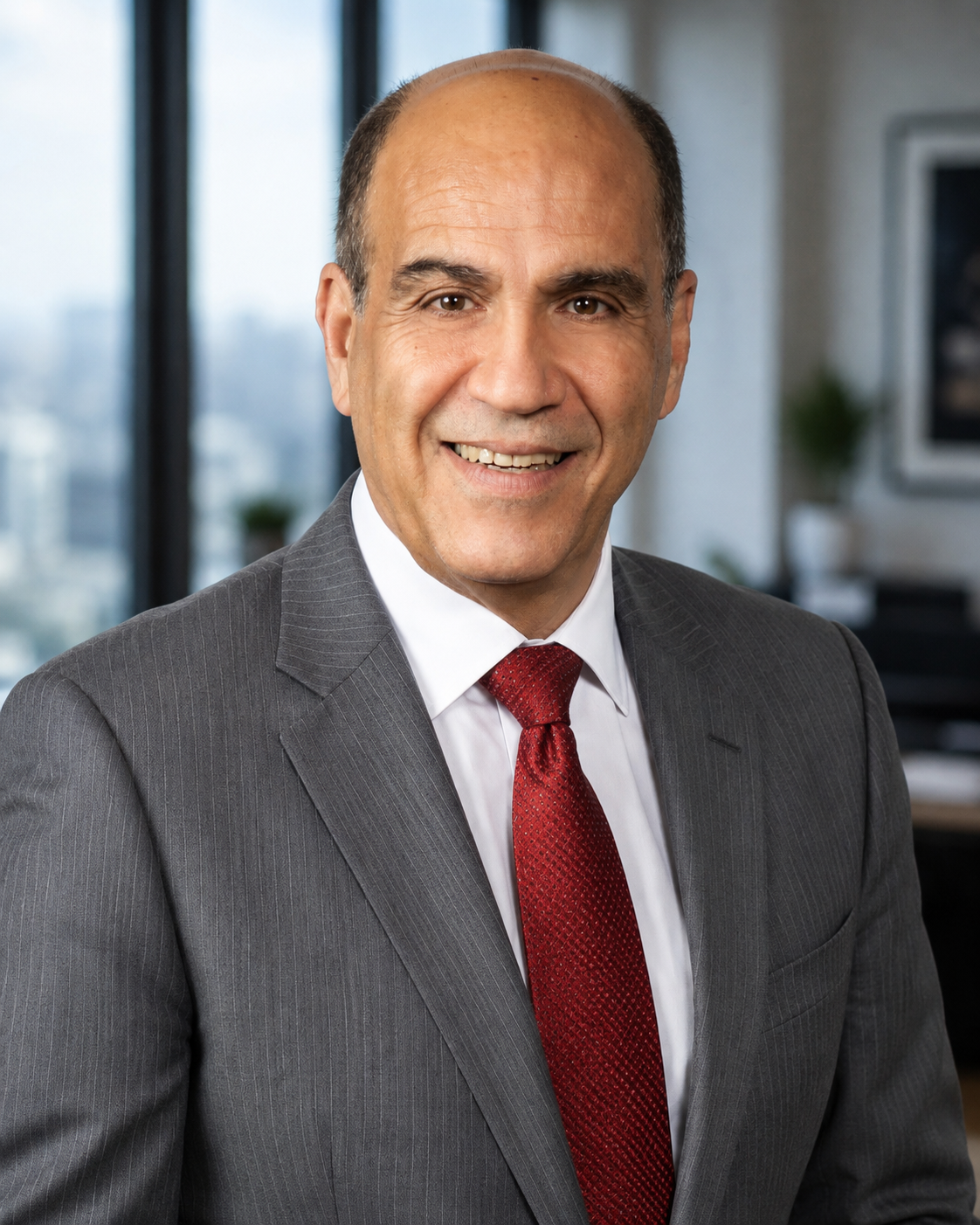
Some leadership lessons arrive through achievement. Others arrive through loss. For Arthur Rego, CEO of AER Enterprises, one of the most enduring lessons of his career came from learning that resilience is not the refusal to change course. It is the discipline to protect the destination while having the humility and grace to choose a much better route.
That distinction now sits at the heart of Rego's approach to leadership, business growth and innovation. It connects the financial discipline he applied as a CFO, the relationship-based perspective he developed over three decades in Bermuda, and the human-centred technology strategy he is building through AER Enterprises in the UK.
The Failure That Redefined Resilience
Rego's personal motto has long been, "Always keep the end in view and never give up." Yet experience has given those words a more demanding and deep meaning. Many years ago, a major real estate project failed big time.. He lost everything financially, but the deeper cost was the impact his decisions had on his wife and children. The experience forced him to examine not only what had gone wrong, but what responsible leadership should require.
The lesson was not to become less ambitious. It was to pair ambition with prudence: to make wiser decisions, select business associates carefully and recognise that determination without sound judgement can become a liability. Rego now draws a clear line between disciplined persistence and stubborn attachment. The first remains committed to the outcome while adapting the approach. The second continues along the same path because too much time, money or emotion has already been invested.
For Rego, resilience is "the wisdom to know what must remain constant, the humility to recognise what must change, and the courage to act on both."
That philosophy also shapes the people he chooses to keep around him. Rego values colleagues and advisers who are willing to challenge his assumptions rather than simply validate them. He identifies Dennis Olympios as one such trusted voice - someone prepared to ask difficult questions and expose risks or blind spots that may otherwise go unnoticed. Criticism, setbacks and difficult circumstances, he believes, can either define a leader or develop one. The difference lies in accepting responsibility, extracting the lesson and making the necessary adjustment.
Financial Revival Requires More Than Cost-Cutting
One of the clearest demonstrations of Rego's operating philosophy came when he was appointed Chief Financial Officer of Bermuda's largest printing company and reported directly to its Chairman. His initial review uncovered serious weaknesses: cash flow was under pressure, receivables were increasingly difficult to collect and effective credit-control procedures were largely absent.
Rego responded with immediate controls. New charge accounts were suspended. Customers with substantial arrears were moved to cash-only terms. Structured repayment plans were negotiated directly with business owners, smaller debts were referred to a collection agency, and customers in arrears had to pay in advance for future advertising.
The measures were not universally welcomed. Their success depended on more than financial logic; Rego had to communicate the necessity of the changes and secure support from shareholders, management and the Board. Within twelve months, outstanding receivables had been significantly reduced, cash flow had improved dramatically, and stronger financial and operational controls were embedded across the company. The business also regained the capacity to pay dividends to shareholders.
For Rego, the turnaround reinforced a principle that remains relevant well beyond finance: revival does not come from cost-cutting alone. It requires decisive leadership, disciplined systems, clear accountability, stakeholder confidence and consistent execution. Difficult decisions become sustainable only when people understand why they are necessary and how they support the organisation's future.
The Bermuda Lesson: Reputation Is an Operating Asset
During thirty years serving as both a CFO and CEO in Bermuda, Rego saw how closely business performance and personal reputation can be connected. In a close-knit market, relationships often cross the private and public sectors, and the way a leader behaves travels quickly. Reputation can open doors, but it can just as easily close them.
Knowledge and experience may create an opportunity, Rego argues, but trust determines whether that opportunity develops into lasting success. His years in Bermuda taught him to view professional credibility, integrity and the consistent treatment of others not as abstract virtues, but as practical business assets. Genuine relationships created opportunities for collaboration and mutual growth; character sustained them.
Leadership Must Turn Vision Into Results
Rego's leadership philosophy rests on empathy, calmness under pressure, personal responsibility, reliability, accountability and purpose. Yet he is equally clear that leadership cannot stop at good intentions. It must produce meaningful action, measurable results and the development of people.
A CEO announcing a major initiative has only begun the work. The real responsibility is to communicate the vision with enough clarity and conviction that people understand the destination and their role in reaching it. The leader must then convert energy into execution through defined responsibilities, appropriate resources, realistic milestones, accountability and continuing communication. When that happens, a commercial result can also create shared ownership: people see that they helped accomplish something no individual could have achieved alone.
Empathy plays a central role in that process. Rego views it not as softness, but as the ability to recognise the human reality behind a job title. An employee may be facing a professional obstacle, a personal difficulty or a task for which they need better support. Understanding those circumstances can help a leader make a better decision.
But empathy without accountability, he warns, can become ineffective leadership. Poor performance missed commitments and damaging behaviour still have to be addressed. Encouragement matters, but so do standards. In Rego's formulation, empathy helps leaders understand people; accountability helps them develop people and protect the organisation.
Power, Purpose and Service
These ideas were reinforced through Rego's involvement in Power and Soul, a collaborative book featuring the experiences of 42 entrepreneurs. The project drew its value from lived experience rather than business theory alone, bringing together different journeys of building companies and pursuing meaningful goals.
Rego's contribution reflected a belief that commercial success, while important, is not the full measure of leadership. Purpose, personal development, service, resilience and helping other people realise more of their potential belong in the same conversation. He continues to explore those themes through his leadership and personal-development writing, including articles shared on LinkedIn.
This service orientation does not weaken commercial discipline; Rego believes it strengthens it. People are more likely to perform when they understand the vision, know what is expected, believe their contribution matters and see that their leader genuinely wants them to succeed. Leadership, in that sense, is both responsibility and service - a commitment to results and to the people who must create them.
The Next Chapter for AER Enterprises
AER Enterprises is now entering a broader phase of development in the UK. The business has evolved towards practical, technology-enabled solutions that include done-for-you funnels, automated business systems and software tools. The aim is to address a persistent challenge for business owners: generating a consistent flow of quality prospects who genuinely need what they offer.
Over the next three to five years, Rego intends to preserve AER Enterprises as a high-trust consulting practice while expanding it into a broader business-growth platform. The envisioned model brings together consultancy, leadership and personal development, lead generation, systems automation, software, strategic partnerships and recurring-income opportunities. Its primary niches will include network marketing organisations, faith-based organisations and business owners seeking a more reliable pipeline of relevant prospects.
The goal is not to add technology for technology's sake. It is to help clients reduce complexity, improve follow-up, use time more effectively and create a more predictable route to sustainable growth - without losing the human qualities on which trust is built.
Automate the Process, Never the Trust
Artificial intelligence and automation will play an important role in that strategy. Rego sees clear potential for AI to help clients identify opportunities, personalise communication, improve lead generation, automate repetitive processes and use information more effectively.
He is equally firm about the boundary. Technology should support judgement, not replace it. People must remain responsible for the decisions made, the information protected and the way customers are treated. Efficiency cannot become an excuse for impersonal communication or diminished accountability.
His guiding principle is deliberately simple: "Automate the process where appropriate, but never automate trust, accountability or genuine human connection."
That principle also informs how Rego evaluates risk. Expanding into too many areas could dilute AER Enterprises' strategic focus. Overdependence on technology, inadequate protection of client information, adoption of tools without a clear business purpose and solutions that look impressive but fail to solve an urgent problem could all undermine the value the company intends to create.
Rego is therefore prepared to revise the plan if market evidence shows that the platform is no longer addressing clients' most important needs, or if expansion begins to weaken the trust and service associated with the business. Technological, regulatory and economic changes may alter the methods. The core purpose, however, remains constant.
A Legacy Measured in Value
The legacy Rego wants to build is not defined by technology alone, nor by growth for its own sake. It is a business that applies modern tools intelligently, develops people intentionally and creates opportunities that deliver meaningful, lasting value.
His career has taught him that innovation works best when paired with wisdom, ambition with responsibility, and commercial performance with service. Systems and strategy can accelerate progress, but they cannot substitute for character.
That may be the clearest connection between Rego's past and AER Enterprises' future. The financial controls, the trusted relationships, the painful lessons of failure and the promise of AI all point to the same conclusion: sustainable growth is ultimately an exercise in accountable value creation.
"Leadership is not measured simply by the authority we possess, but by the results we help create the people we help develop and the positive difference we leave behind."
Relevant Links to Arthur's work nowadays: