Michael Dell Took His Company Off Wall Street. Twice, Carl Icahn Tried to Stop Him.
In 2013, Michael Dell took his company private after a fierce battle with Carl Icahn. Five years later, Dell returned to public markets after using that private period to pursue a $67 billion transformation.
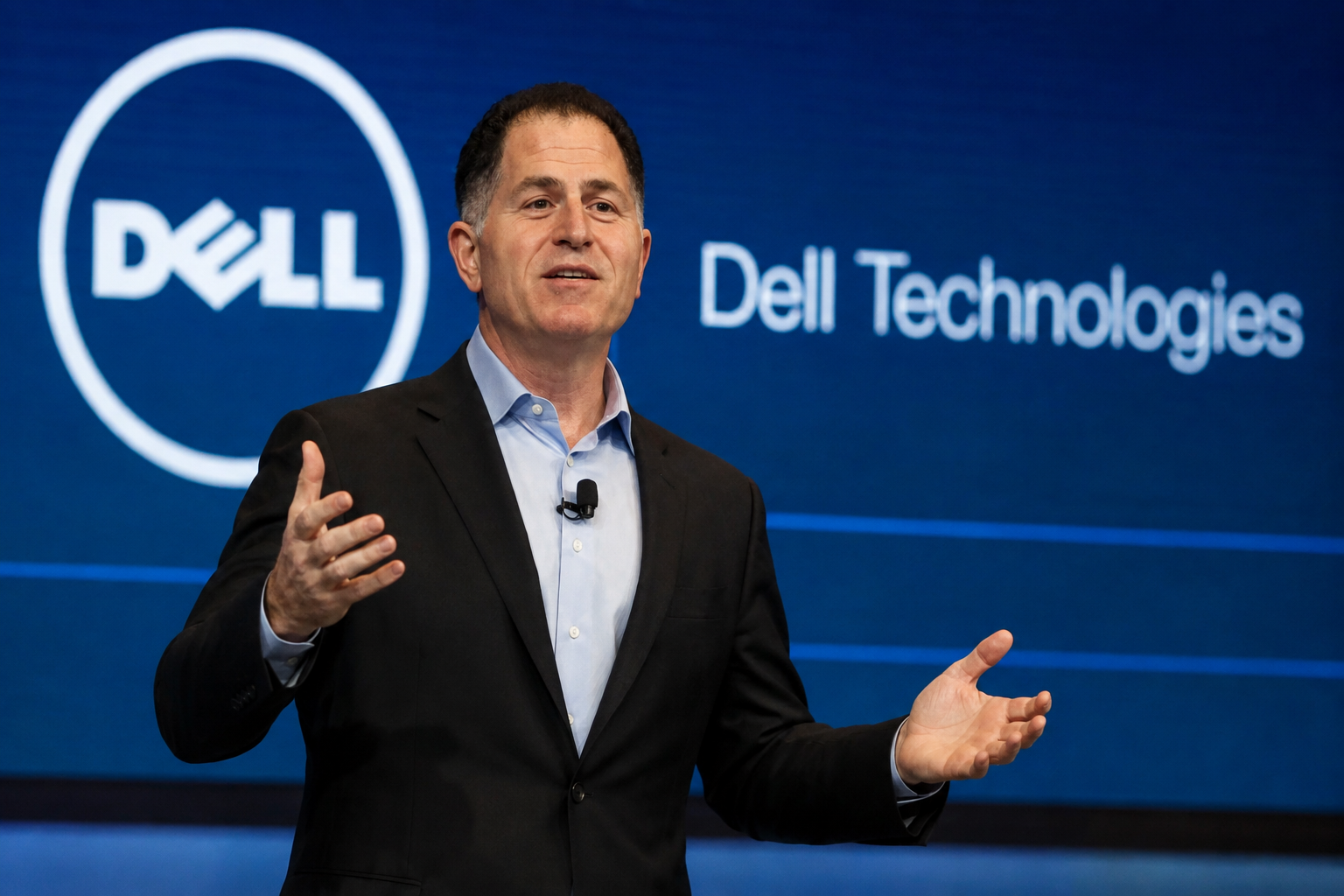
On October 29, 2013, trading in Dell Inc. common stock stopped for the last time on the Nasdaq. The company Michael Dell had started in his University of Texas dorm room in 1984 — grown into one of the world's largest PC makers, then battered by a decade of falling PC prices and a stock that had lost roughly a third of its value in the two years before the deal — was now privately owned by Michael Dell, Silver Lake Partners, and a small group of co-investors. The transaction was valued at approximately $24.9 billion. Getting there had taken nine months, eight price increases, and a hostile activist campaign that, according to a public account later issued by opposing shareholder Southeastern Asset Management, saw the deal fail to secure the shareholder approval it needed on three separate occasions before Dell's board changed the voting standard governing how it would be counted.
Five years later, almost to the week, Dell was back. On December 28, 2018, Dell Technologies' Class C shares began regular trading on the New York Stock Exchange under the ticker DELL, in a transaction that once again drew a legal challenge from the same investor who had opposed Michael Dell in 2013: Carl Icahn.
In between those two dates, Dell spent $67 billion on the largest technology acquisition announced up to that point. Understanding why Michael Dell wanted his company out of public markets in 2013 — and what actually happened while it was there — says more about how he makes large, consequential bets than any account of the transaction alone.
A Company Running Out of Road
By the time Michael Dell moved to take his company private, Dell Inc. was still enormous — it had generated tens of billions of dollars in annual revenue for years — but its core business was shrinking in ways that were hard to disguise on a quarterly earnings call. Worldwide PC shipments were falling industry-wide as consumers and businesses shifted spending toward smartphones and tablets, and Dell's own stock reflected the pressure: shares that had traded above $17 in early 2011 were down near $10 by January 2013, before word of a possible buyout began circulating and pushed the price up.
Dell was not standing still. The company had spent several years and billions of dollars acquiring smaller software, storage and services businesses, trying to move beyond its identity as a PC manufacturer and toward the kind of enterprise IT and data-center business that carried better margins and less exposure to consumer hardware cycles. But that transformation was happening inside a company still judged, every ninety days, primarily on the health of its declining PC business — and Michael Dell, in public SEC filings his own company later distributed to shareholders, argued that the pace of change the business needed was difficult to execute under that kind of quarterly scrutiny.
The Offer
On February 5, 2013, Dell announced a definitive agreement: Michael Dell, in partnership with the private equity firm Silver Lake Partners, would acquire the company for $13.65 per share in cash, in a transaction valued at approximately $24.4 billion. The price represented a 25% premium over Dell's closing share price on January 11, the last trading day before buyout rumors first surfaced, according to the company's own announcement. "I believe this transaction will open an exciting new chapter for Dell, our customers and team members," Michael Dell said in the statement.
Dell's board built a 45-day "go-shop" period into the agreement, giving the company's special committee room to solicit superior offers from other bidders — a standard mechanism in management buyouts, designed to blunt the obvious conflict of interest in a CEO negotiating to buy the company he runs. Two firms, Blackstone and Carl Icahn, submitted preliminary competing bids in March, though Blackstone later withdrew.
Behind the scenes, financial advisers to Dell's board had modeled what the Michael Dell/Silver Lake group itself stood to gain. According to figures Evercore Partners — the special committee's financial adviser — later disclosed to shareholders, projections built by Boston Consulting Group suggested Silver Lake could see an average annualized return as high as 44.7%, and Michael Dell as high as 50.1%, over the following four to five years if the deal went through at the agreed price. Those numbers would become one of the central arguments the deal's opponents used against it.
Icahn's Case
Carl Icahn built a stake of roughly 8.7% in Dell, and Southeastern Asset Management, an investment firm that already owned about 4.1% of the company, joined him — together holding just under 13% of Dell's shares and becoming the most visible and best-financed opposition the deal would face. Their argument was straightforward: $13.65 a share undervalued Dell, and the go-private structure would let Michael Dell and Silver Lake capture upside that rightfully belonged to all shareholders, not just the ones cashed out of the deal.
In March 2013, Icahn proposed an alternative directly to Dell's board: instead of going private, the company should pursue a leveraged recapitalization and pay shareholders a special $9-per-share dividend, funded through a combination of Dell's existing cash, new debt, and factored receivables. Two months later, Icahn and Southeastern jointly proposed something more direct still — a structure that would let shareholders keep their equity in Dell while also receiving a cash-or-stock distribution, financed by roughly $5.2 billion in new debt. Southeastern argued in a letter to Dell's board that the going-private price undervalued the company and noted that, apart from Michael Dell himself, no other long-term institutional owner of the company had publicly supported the buyout.
Dell's special committee held its position, telling shareholders the $13.65 offer represented the highest value and greatest certainty available after what it called an "exhaustive and robust" ten-month process. But the price did move. On August 2, 2013, the buyer group raised its offer to $13.75 per share plus a $0.13 special dividend — a total of $13.88 per share, adding roughly $350 million in value for public shareholders. It was, by Dell's own count, the eighth increase to the offer since the deal was first proposed.
Even that wasn't enough to close the fight on the first attempt, according to Southeastern's own account. In a September 9, 2013 public statement, the firm said that prior to the special committee's decision to change the voting standard, the Michael Dell/Silver Lake transaction "did not receive the required stockholder approval on three separate occasions." Southeastern and Icahn continued to oppose the transaction on principle but, facing a new voting standard, a new shareholder record date, and the board's refusal to combine the vote with Dell's annual meeting, they announced they would not pursue further efforts to block it.
Dell's shareholders approved the transaction at a special meeting on September 12, 2013. The deal closed on October 29, 2013, at the final $13.88-per-share price, in a transaction Dell valued at approximately $24.9 billion. "Today, Dell enters an exciting new chapter as a private enterprise," Michael Dell said in the company's announcement. Ownership of the newly private company broke down accordingly: entities associated with Michael Dell held approximately 71% of the voting securities, Silver Lake affiliates approximately 24%, and MSD Capital — Michael Dell's investment firm — roughly 4%.
What Private Ownership Was Supposed to Buy
Dell's own internal materials, distributed to employees and filed with the SEC during the campaign to win shareholder approval, described what the company expected private ownership to change. Under the new structure, Dell told its workforce, the company would have "the flexibility to fully pursue and realize our end-to-end scalable solutions strategy and pursue organic and inorganic investment, without the scrutiny associated with a publicly traded stock, quarterly targets, and other limitations of operating as a public company."
That is Dell's own stated rationale — not an outside interpretation of Michael Dell's motives, and worth treating with the same caution any company's own framing of a controversial decision deserves. What can be verified independently is what the company actually did with roughly three years of operating outside public markets: it pursued and financed the largest debt-funded technology acquisition in the industry's history.
The EMC Bet
On October 12, 2015, Dell announced its intent to acquire EMC Corporation, the dominant player in enterprise data storage, in a cash-and-stock transaction valued at approximately $67 billion — the largest technology acquisition ever announced at the time. Dell agreed to pay EMC shareholders $24.05 per share in cash, plus a new tracking stock, listed separately and designed to reflect the value of EMC's majority stake in VMware, the cloud and virtualization software company EMC controlled.
The deal closed on September 7, 2016, after clearing shareholder votes and, in its final stretch, approval from Chinese regulators. To finance it, Dell issued approximately $45.9 billion in new debt alongside $4.4 billion in additional financing, according to figures disclosed at the time of closing — substantially more than the roughly $16 billion in debt associated with the original 2013 buyout. The combined company, rebranded Dell Technologies, described itself as serving 98% of the Fortune 500, with roughly $74 billion in combined annual revenue and 140,000 employees across Dell, EMC, VMware, Pivotal, RSA, Secureworks and Virtustream. "Our industry is the change-or-die business," Michael Dell told CNBC on the day the deal closed, describing the combined company as "the essential infrastructure company" spanning "the edge to the core to the cloud."
It is not possible, from the public record, to say that Michael Dell took Dell private specifically in order to buy EMC — no filing or public statement from 2013 says that was the plan. What the sequence shows is narrower and still significant: a debt-funded, industry-reshaping acquisition of this size and this much integration risk is exactly the kind of decision Dell's own internal materials, two years earlier, had described wanting room to make without the scrutiny of quarterly public-market reporting.
A Second Fight With the Same Opponent
Financing the EMC deal partly through a tracking stock created an unusual problem: Dell Technologies now had a class of shares, trading under the ticker DVMT, whose value was tied to VMware's public stock price but which represented an indirect and often-discounted claim on that value. By 2018, Dell wanted to simplify that structure — and bring the whole company back to public markets in the process, without going through a traditional IPO.
In July 2018, Dell proposed buying back the DVMT tracking stock, offering holders either $109 per share in cash, capped at $9 billion in total cash consideration, or 1.3665 shares of newly created Dell Technologies Class C common stock — a deal valued at roughly $21.7 billion. Carl Icahn, who by then held roughly 8.3% of the tracking stock, rejected the offer as an undervaluation, sued the company, and argued the shares were worth closer to $144 apiece.
Dell raised its offer in November 2018: DVMT holders could now elect $120 per share in cash, capped at $14 billion, or between 1.5043 and 1.8130 shares of Class C stock, depending on trading dynamics — a revised transaction valued at approximately $23.9 billion. Shareholders approved it at a special meeting on December 11, 2018, with more than 61% of eligible tracking-stock holders voting in favor. DVMT stock ceased trading on December 28, 2018; Dell Technologies Class C shares began regular-way trading on the New York Stock Exchange the same day.
Was It About Escaping Wall Street, or Buying Time?
The honest answer, based on the documented record, is that the evidence supports both readings without fully resolving which one dominated.
The case for "escaping public-market pressure" is direct and comes from Dell's own words: the company told its employees, in writing, that going private meant operating without the scrutiny of quarterly targets. The case for "buying time to execute a specific transformation" is circumstantial but consistent: within roughly three years of leaving public markets, Dell completed the largest technology acquisition in history up to that point, taking on debt and integration risk of a scale that, at a public company, would ordinarily draw sustained shareholder and analyst scrutiny before a deal could close. Both things can be true simultaneously — a company can seek relief from short-term scrutiny in general terms and then use that relief for a specific, unplanned opportunity that presents itself later. Nothing in the public record from February 2013 indicates Michael Dell knew, at the time he proposed taking the company private, that EMC would become available on the terms it eventually did in 2015.
What is clear is that the private structure did not remove Michael Dell from public-company-style conflict. It simply changed its form. In 2013, the fight was about whether Dell was undervalued as a seller. In 2018, it was about whether Dell was undervaluing a security it had created to buy someone else. Carl Icahn was on the other side of the table both times, and in both cases, Dell's final offer to shareholders ended up meaningfully higher than its opening one — $13.65 rising to $13.88 in 2013, and $109 rising to $120 in 2018.
What the Sequence Suggests
For other executives weighing a similarly disruptive ownership change, the more durable lesson isn't that going private is a shortcut around shareholder accountability — Michael Dell's 2013 buyout took nine months, eight price revisions, and, by his opponents' own account, three failed votes before it passed. Leaving public markets didn't mean leaving conflict behind; it meant relocating the argument from a quarterly earnings call to a boardroom and, eventually, a courtroom.
What changed was the kind of decision Dell was able to make afterward. A privately held Dell announced the EMC acquisition in October 2015 and closed it eleven months later, in September 2016, without the kind of extended public shareholder campaign that had slowed the 2013 buyout itself. Whether that speed was the actual purpose of the 2013 transaction or simply a byproduct Michael Dell made use of once the opportunity appeared is not something the public record settles. What the record does show is that the private structure coincided with a bet of a size and speed that Dell, as a public company two years earlier, had not attempted.
FAQ
Why did Michael Dell take Dell private in 2013? Dell's own internal communications to employees, filed with the SEC, described wanting "the flexibility to fully pursue and realize" a long-term strategy "without the scrutiny associated with a publicly traded stock, quarterly targets" and related public-company constraints. The company's core PC business was also under sustained pressure, with its stock price down sharply in the two years before the deal.
How much was the 2013 transaction worth? The deal was announced on February 5, 2013 at approximately $24.4 billion ($13.65 per share). After a shareholder fight and eight price increases, it closed on October 29, 2013 at approximately $24.9 billion ($13.88 per share, including a special dividend).
What was Carl Icahn's objection? Icahn and Southeastern Asset Management, together holding just under 13% of Dell's shares, argued the buyout price undervalued the company and proposed alternative structures that would let shareholders retain equity in Dell rather than being cashed out entirely.
What did Dell do while it was private? In October 2015, Dell announced it would acquire EMC Corporation for approximately $67 billion, the largest technology acquisition announced up to that point. The deal closed in September 2016, forming Dell Technologies and was financed with approximately $45.9 billion in new debt plus $4.4 billion in additional financing.
How did Dell return to public markets? In December 2018, Dell Technologies bought out its VMware-linked tracking stock (DVMT) for approximately $23.9 billion in cash and newly issued Class C shares, which began trading on the New York Stock Exchange on December 28, 2018 — again over the objection of Carl Icahn, who sued over the initial, lower offer.
Did Michael Dell go private specifically to buy EMC? There's no evidence for that specific claim in the public record. What's documented is that Dell, while privately held, announced and closed a transaction of EMC's size and debt load faster than the shareholder-approval process for the 2013 buyout itself had taken — though the public record does not establish that this speed was the intended purpose of going private in the first place.