Philip Ruffini and the Future of Global Business
Why Great Companies Are Built Beyond Borders
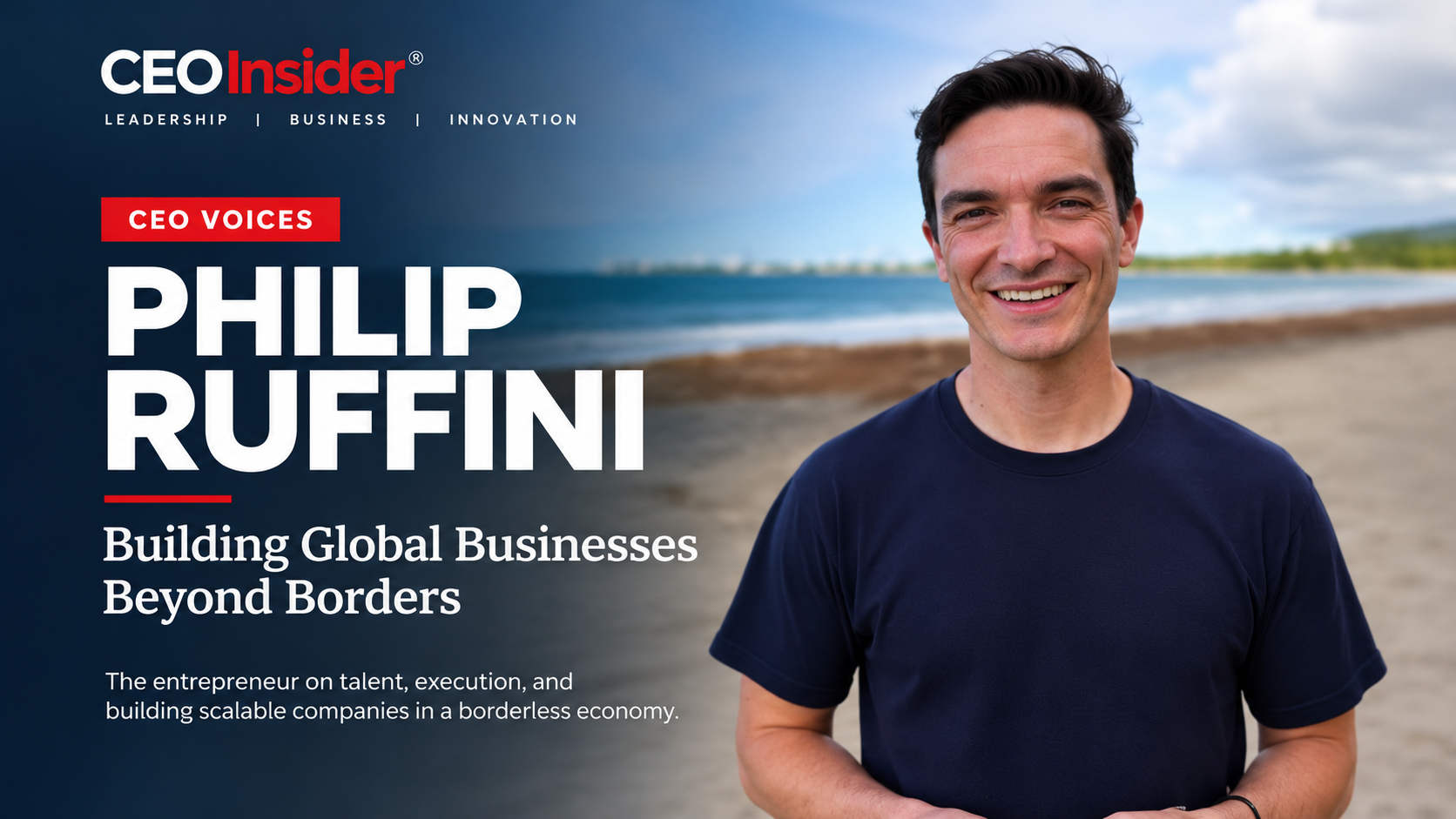
Philip Ruffini and the Future of Global Business: Why Great Companies Are Built Beyond Borders
In today's increasingly interconnected economy, the traditional boundaries of business are becoming less relevant. Companies are no longer limited to hiring talent within their immediate geographical locations, and entrepreneurs are discovering that building a competitive organisation requires more than financial resources or an impressive office address. It requires access to the right people, effective systems, and the ability to operate across borders.
Few emerging business models illustrate this shift better than the approach championed by entrepreneur Philip Ruffini, co-founder of Hire Overseas.
Ruffini's entrepreneurial journey offers an interesting perspective on how businesses can rethink talent acquisition, operational efficiency, and organisational growth in an increasingly globalised economy.
From Technology and Entrepreneurship to Global Business
Ruffini's professional experience spans technology, entrepreneurship, product management, and business growth. He previously worked as a product manager at Microsoft, where he contributed to the company's Cloud and AI team.
His entrepreneurial experience also includes building and selling a profitable office-products business and developing ventures around content and marketing.
One particularly significant chapter of his career was his involvement with Rupa Health, a healthcare technology company. As head of growth, Ruffini helped build an international team of more than 20 overseas professionals across different functions, including search engine optimisation, content production, graphic design, customer support, and web development.
According to Hire Overseas, this international team helped Rupa Health save approximately $1.2 million annually. The company was subsequently acquired by Fullscript in October 2024.
This experience became an important foundation for his next entrepreneurial venture.
The Business Case for Global Talent
In 2024, Ruffini and his co-founder Harlan Rappaport established Hire Overseas, a company focused on helping American businesses recruit and manage international professionals.
The business operates around a straightforward proposition: companies should not have to restrict their search for exceptional employees to their local labour markets.
Through its recruitment and employment support model, Hire Overseas connects businesses with professionals across regions including Africa, Southeast Asia, and Latin America.
The model addresses several challenges that growing businesses face, particularly the rising cost of recruitment, limited access to specialised skills, and the administrative complexities associated with international employment.
Hire Overseas reports having served more than 250 clients and placed over 500 contractors, illustrating the commercial demand for internationally distributed talent.
However, the more important lesson extends beyond recruitment.
Ruffini's approach reflects a broader shift in how modern companies think about organisational structure. Rather than building every department around expensive local hiring, businesses can retain strategic leadership internally while distributing specialised execution across international markets.
This creates opportunities for companies to access skills that might otherwise be financially difficult to acquire.
Why Systems Matter More Than Headcount
One of the most important lessons from Ruffini's business philosophy is the distinction between building a large workforce and building an effective organisation.
A company can employ hundreds of people and still struggle with productivity, coordination, and profitability. Conversely, a smaller organisation with clearly defined responsibilities, effective processes, and the right talent can achieve considerably more.
This distinction is particularly relevant for startups and growing businesses.
Many founders approach expansion by immediately increasing their workforce. However, recruitment without operational structure can create additional management challenges rather than solve existing problems.
A more sustainable approach begins with identifying the activities that drive business performance, documenting how those activities should be executed, and recruiting people with the capabilities to deliver them.
This is consistent with the operating philosophy presented by Hire Overseas: businesses should build systems that allow talented specialists to perform clearly defined functions while leadership focuses on strategy, direction, and accountability.
For entrepreneurs, this represents an important change in perspective. Growth should not simply mean hiring more people. It should mean increasing the organisation's capacity to deliver results.
The Growing Opportunity for African Professionals
Perhaps one of the most interesting implications of Ruffini's business model is what it means for emerging markets, particularly Africa.
For years, African professionals have competed for opportunities within relatively restricted local employment markets. However, remote work, digital infrastructure, and international recruitment are gradually changing that reality.
Businesses in the United States and Europe can increasingly access qualified professionals from African countries without requiring them to relocate.
Hire Overseas identifies Africa as one of its talent markets, alongside Southeast Asia and Latin America. Its recruitment network includes professionals from countries such as Nigeria, South Africa, and Kenya.
This creates opportunities for African professionals working in finance, sales, marketing, customer experience, and other specialised fields.
It also challenges the traditional understanding of international business relationships.
African talent is no longer relevant only to organisations operating within the continent. It can contribute directly to the operations, competitiveness, and growth of companies headquartered thousands of kilometres away.
Nevertheless, this opportunity comes with responsibilities. International recruitment must prioritise fair compensation, professional development, appropriate employment arrangements, and meaningful career opportunities.
The long-term value of global talent acquisition should be measured not only by cost savings for employers but also by the quality of opportunities created for workers.
What Entrepreneurs Can Learn from Ruffini's Approach
There are several lessons that founders and business executives can take from Ruffini's experience.
First, build around business needs rather than conventional structures. Every company does not need to follow the same organisational model. Recruitment decisions should reflect actual operational requirements.
Second, prioritise systems before expansion. Businesses need repeatable processes, clear responsibilities, and measurable performance expectations before increasing their operational capacity.
Third, look beyond geographical limitations. The best person for a particular role may not necessarily live in the same city or country as the business.
Fourth, understand the difference between strategy and execution. Leadership must establish direction, priorities, and standards. Skilled professionals can then execute clearly defined responsibilities.
Finally, build businesses that can function without depending entirely on their founders. Sustainable organisations require structures, people, and processes that continue delivering value even when the founder is not personally involved in every activity.
The Future of Building Companies
The next generation of successful businesses may not necessarily be the ones with the largest offices or the biggest local workforces. They may be the organisations that understand how to combine technology, international talent, operational discipline, and effective leadership.
Artificial intelligence will accelerate this transformation by changing how teams communicate, automate processes, and distribute work. However, technology alone cannot replace the importance of sound management, human judgement, and accountability.
Ruffini's entrepreneurial experience provides a useful case study of this evolving business environment.
His journey from technology and entrepreneurship to building international teams and co-founding a global recruitment business demonstrates how practical business experiences can evolve into new commercial opportunities.
Ultimately, the future of business will belong to organisations that understand how to identify talent, build effective systems, and create value regardless of geographical boundaries.
For entrepreneurs, the question is no longer simply how many people they can hire or how large their companies can become. It is how effectively they can bring together the right people, processes, and technology to build organisations capable of competing globally.