When a New Jet Becomes an Old Asset: Why Emirates Won't Take Boeing's First 777-9s
Emirates has told Boeing it does not want the earliest 777-9s built for it, a refusal that shows what years of delay can do to an aircraft ordered as the future of a fleet
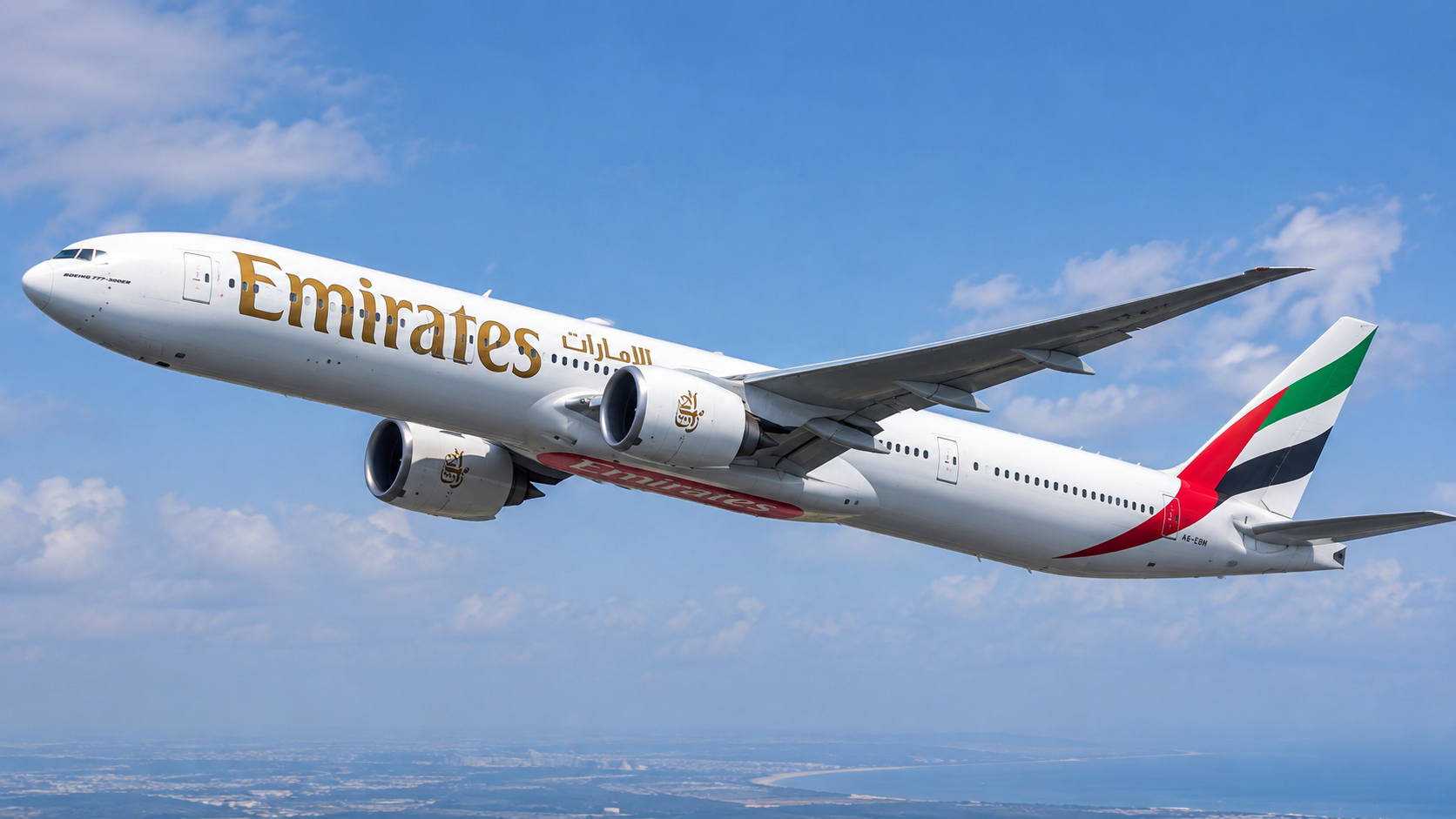
On July 21, at the Farnborough Airshow, Sir Tim Clark told The Telegraph that Emirates would not accept the first batch of Boeing 777-9s built for it. Asked where Boeing might send them instead, he had a suggestion: "Heinz would be interested – baked bean cans."
The line travelled, but the joke is the least useful part of the story. The useful part is how an aircraft ordered as the centerpiece of a fleet can, a few years later, be treated as an old asset before it has carried a single passenger.
Here is the short version. Emirates says the earliest 777-9s built for it were assembled between 2019 and 2021. The design has changed a great deal since then, and bringing those airframes up to the standard now heading for certification would take extensive rework. If delivered next year they would be about eight years old, which Clark puts at roughly half the service life Emirates expects from an aircraft. Emirates has told Boeing it will not take them.
Clark, President of Emirates Airline since 2003, is the executive who has explained the position in public. Sheikh Ahmed bin Saeed Al Maktoum is chairman and chief executive of Emirates Airline and Group. Neither Emirates nor Boeing has published the contract terms behind the refusal, so this article sticks to what has been said on the record.
Ten Aircraft, Built Before the Design Was Settled
Emirates is the largest customer for the 777X, and its history with the program goes back to the start. In 2013 it committed to 150 aircraft, Air Data News reports: 115 777-9s and 35 777-8s. By November 2023 Boeing counted a backlog of 205. Two years later Emirates added 65 more 777-9s, valued at $38 billion at list prices, a figure that also covers 130 GE9X engines and that airlines often negotiate down. That took the total to 270 777X aircraft. Sheikh Ahmed said at the time that every aircraft in the order book is planned around Emirates' growth and Dubai's ambitions.
In July 2019, Clark told Executive Traveler, he walked through the first 777-9. It lacked the new first-class suites, which had not yet been built, but everything else was ready to go. Delivery was due in April 2020.
Then the schedule began to slip. On September 5, 2019, a 777X static test airframe suffered a rupture in the aft fuselage near the end of its final test, at about 99 percent of the target load. Boeing said it would run a root-cause assessment. An FAA engineer told The Seattle Times that Boeing could reinforce the weak area and prove the fix by analysis.
In April 2022 Boeing pushed the first 777-9 delivery to 2025 and said it would temporarily pause the 777-9 production ramp through 2023. One stated reason was to limit the inventory of airplanes that would later need change incorporation, the work of bringing already-built aircraft up to a later design. Production resumed in the last quarter of 2023. Boeing now points to first delivery in 2027, which Executive Traveler notes would come 13 years after the initial order and seven years after the first aircraft was due.
By then the early airframes existed. Aviation Week's Fleet Discovery database shows that of the ten built for Emirates, three date from 2019, four from 2020 and three from 2021. The magazine reports they sit within an initial batch of 39 777-9s stored at Boeing's Everett site, although Boeing's own estimate of the airplanes going through change incorporation is roughly 30. Some coverage puts Emirates' refusal at ten aircraft and some at eleven.
Emirates is not the only customer facing the problem. On Lufthansa's second-quarter call in August, chief executive Carsten Spahr said the airline is in talks with Boeing about which early-built 777-9s it will not accept for commercial service, and which could be modernized and taken with a financial contribution from Boeing. Lufthansa, a launch customer, has taken a less absolute line than Emirates. The issue is the same: aircraft built years before certification risk looking dated before they carry a passenger.
What Change Incorporation Really Means
Change incorporation sounds like a technicality. In practice it means taking an airplane built to one version of a design and updating it to the version that survives certification, including changes that come from testing, from regulators and from Boeing's own process improvements. Boeing CEO Kelly Ortberg said earlier this year that the older airplanes need more of it, including structural changes.
Stephanie Pope, who runs Boeing Commercial Airplanes, told Aviation Week that change incorporation has always been part of the plan. A dedicated team handles it, separate from normal 777 production, and the earliest airplanes will need more change than later ones. She said Boeing has already accounted for the cost in its financials.
Clark's objection is about who carries that work and on what aircraft. He says the problems with the early jets sit in the airframe and the engines. Had Boeing kept to its original schedule, he said, Emirates would have needed modifications in the first years of service anyway. Instead the aircraft would arrive eight years old, and he told reporters they would be "of no use to anybody." Emirates keeps its own teams at Everett, he added, so there should be no surprises about their condition.
He has also put a rough price on the problem. No one would take the aircraft, he said, unless Boeing gave them away for around $10 million. That is Clark's estimate, not a market price, and Boeing has not commented on his remarks, citing customer confidentiality.
One early airframe has already been dismantled. The Air Current reported that the seventh 777-9 built, a 2019 airplane reported to have been intended for Emirates, never flew and was taken apart in 2025 after about six years in storage. Boeing confirmed the disposal to the publication. It is a single airplane and says little about what will happen to the rest.
The Cabin Emirates Had Already Thrown Away
This is not the first time delay has made something Emirates bought obsolete. In January 2025, Clark told Executive Traveller that the airline had scrapped its original 777X business class plans. Technology on the customer-facing side moves quickly, he said, from Wi-Fi to screens to the seats themselves, so Emirates "just had to throw 'em all away." The exit cost a payment of about €20 million to €30 million to the manufacturer.
The replacement business class suites for the 777-9 come from a Safran seat agreement signed in November 2023, according to Executive Traveller. Emirates valued it at $1 billion, and it covers seats across its A350s, its 777X-9s and its existing 777-300s, not the 777-9 alone. Seen next to the airframes, the cabin is the same problem at a smaller scale. A long delay lets the rest of the industry move, and what was ordered stops matching what is available.
The costs sit on very different scales. The cabin payment ran to tens of millions of euros. The retrofit described below runs to billions of dollars. The November 2025 order for 65 aircraft and 130 engines was valued at $38 billion at list prices. What Emirates has paid toward the ten early aircraft has not been disclosed.
Keeping the Fleet Competitive in the Meantime
Emirates has spent heavily to keep the fleet it has competitive while it waits. In March 2025 The National reported that the airline would spend about $5 billion retrofitting 220 Boeing 777s and Airbus A380s to keep older aircraft flying longer. A year earlier the programmed covered 205 aircraft at a cost of $4 billion. "We've had to take control of our own destiny," Clark said.
He also said then that Emirates was constrained by the availability of aircraft, and that it would move more heavily into Asia once the new ones arrived. Airbus has stopped building the A380, which is one reason the retrofit matters. New aircraft have come from elsewhere: Emirates took 15 Airbus A350s in the year to March 2026, bringing that fleet to 19. It ended the year with 277 aircraft averaging 10.8 years old.
The Problem Was Not Whether Emirates Could Pay
It would be easy to read the refusal as a cash decision. The numbers point the other way. For the year ended March 31, 2026, the Emirates Group reported record profit before tax of AED 24.4 billion ($6.6 billion) and record cash assets of AED 59.6 billion ($16.2 billion). Emirates airline alone reported profit before tax of AED 22.8 billion and cash assets of AED 54.9 billion. The group declared a AED 3.5 billion dividend to its owner, the Investment Corporation of Dubai.
Emirates also said it fully met its contracted obligations in the year, including aircraft pre-delivery payments, from its cash reserves. Those figures show that the rejection was not obviously driven by a lack of liquidity. They do not show how much Emirates has paid toward any of the ten early aircraft, or what happens to that money.
What Has Not Been Disclosed
Several of the most important details are not public. Neither company has said what Emirates' refusal means for its order, its delivery slots or any compensation. Ortberg was asked at a Morgan Stanley conference this month about early-build aircraft becoming technologically outdated and about cancellations or discounts. He called it a matter of contractual discussions with customers, said Boeing has accounted for it in its estimates, and declined to discuss who is getting which airplane. He did not confirm that any aircraft had been cancelled.
Clark told reporters he understood Boeing had been looking for another buyer. Boeing has not said who might take the aircraft.
The Aircraft Emirates Does Want Is Still in Testing
Boeing said in July that its 777-9 test fleet had logged more than 4,800 flight hours over roughly 1,700 flights, with half of planned certification testing complete.
On September 16, Ortberg said a durability issue with the GE9X engine's mid-seal had affected the testing schedule and that some testing could spill into next year. Boeing still targets first delivery in 2027. The next day GE Aerospace's chief financial officer, speaking at the same conference, said he was confident the redesigned seal would not delay entry into service. He said the original seal remains usable for the certification work under way, including the approvals Boeing needs before ETOPS testing, and that FAA approval of the redesigned part is expected in the next few months.
Labor is a second variable. Boeing made a final four-year contract offer to its engineers and technical workers on September 11, and the union's bargaining teams recommended a yes vote. Members vote from September 24 through October 1, and the current contract expires October 6. Ortberg has said a strike would effectively halt certification.
Emirates' own timetable is the second quarter of 2027 for the first 777-9 built to the latest standard. A test aircraft was scheduled to arrive in Dubai in September for hot-weather testing, and Flight Global reported that Clark expects to see the first fitted 777-9 in November.
Emirates is not abandoning the 777X program. Its November 2025 order carried options to convert 777-9s into the larger 777-10 or the 777-8, and Sheikh Ahmed said at the time that Emirates supports Boeing's feasibility study for the 777-10. At Farnborough Clark said, "We do want a bigger one."
The Cost of a Jet That Arrives Too Late
Emirates is holding two positions at once. It has 270 777X aircraft on order, has backed a larger version, and expects deliveries to stretch to 2038. It also will not take the first ten. The contradiction eases once those aircraft stop being read as identical units in one order. The earliest were built at a fixed point in a design that has kept moving for seven years, and the later ones are being built toward where that design ended up.
What Boeing does with the early airframes is unresolved. One has been dismantled, roughly thirty are lined up for rework, and Boeing has declined to say who will end up with them. What Emirates gets in the second quarter of 2027 is the real test. By then the question will not only be whether Boeing finally delivers the 777-9. It will be whether the jet that lands in Dubai still resembles the one Emirates ordered in 2013.