Patagonia’s Ownership Transfer: Why Yvon Chouinard Split Control From Profit Instead of Selling
In 2022, Yvon Chouinard moved Patagonia’s voting stock into a purpose trust and its economic value into a 501(c)(4). Three years on, the money is moving; whether the structure can carry the mission is a different question.
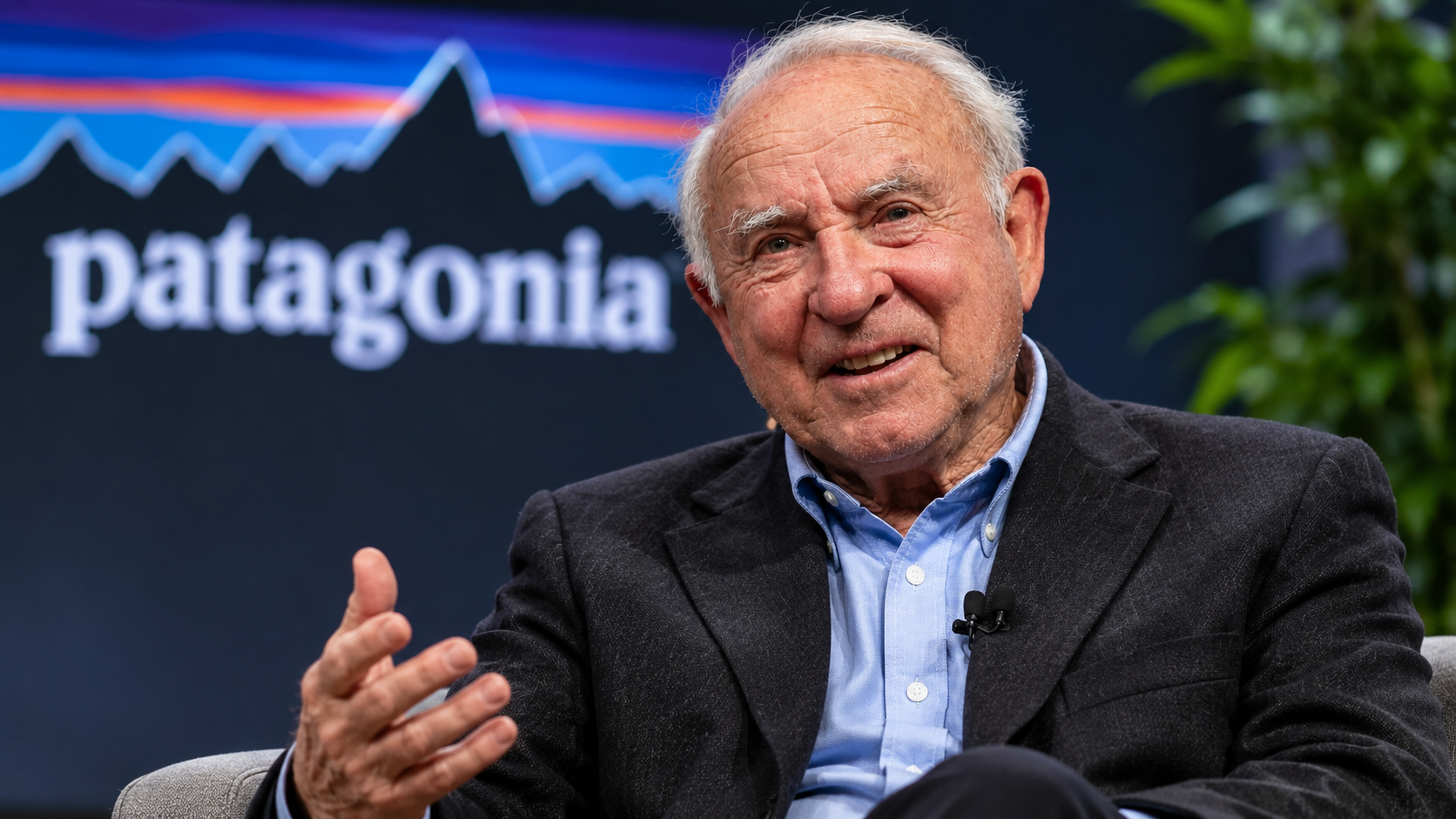
Patagonia told its employees first. On September 14, 2022, the company pulled staff into a global town hall and explained that Yvon Chouinard and his family no longer owned it. They had not sold the company. They had not taken it public, and they had not handed it to their children. Everything the family owned had been moved into two new entities, one holding the votes and the other holding almost all of the value.
The announcement came with a slogan, “Earth is now our only shareholder,” and most coverage stopped there. A founder had given away a company that The New York Times valued at roughly $3 billion.
It was not the whole story. Strip out the slogan and what remains is a piece of ownership engineering: an attempt to separate the people who control a company from the people who profit from it, and to make that split permanent. Patagonia’s 2022 ownership decision is best read as a governance decision with a mission attached. Three years on, it finally has something it lacked at the start, which is a record.
The Problem a Charter Couldn’t Solve
Chouinard was 83 when the news broke. Patagonia had long been a certified B Corp and California benefit corporation, and in 2018 it rewrote its purpose around saving the home planet. That language protected the mission on paper. It could not, on its own, stop a future owner from changing it.
Ryan Gellert, Patagonia’s CEO, has said the family challenged a handful of people inside the company two years before the announcement to build a structure with two goals: protect the purpose of the business, and release more money for the environmental fight, immediately and permanently. Those goals pull in different directions. Protecting a mission argues for keeping a company stable and tightly held. Releasing money argues for giving ownership, or at least its returns, away.
Gellert also told the Times that Chouinard’s children did not want to be seen as the company’s financial beneficiaries. That is a CEO describing the family’s wishes, not the family speaking, and it should not be stretched into a full account of anyone’s motives. It does help explain why ordinary succession was never an easy answer.
Why Chouinard Rejected a Sale and an IPO
Chouinard’s own letter, published the same day, sets out the options he considered. One was to sell Patagonia and donate the proceeds. He wrote that the family could not be sure a new owner would keep the company’s values or keep its people employed. The other was an IPO, which he called a disaster, because even well-meaning public companies face heavy pressure to chase short-term gains at the expense of long-term responsibility. None of the existing routes would do, he concluded, so the family built its own.
As business logic, both rejections hold together. A sale hands control over the mission to a buyer whose obligations run to someone else. An IPO builds the same pressure into the company’s structure. A benefit-corporation charter helps, but a mission written into a charter can be amended by whoever holds the votes. So the real question was narrower than how to give the company away. It was how to make the votes belong to something designed not to change its mind.
Who Owns Patagonia Now: How the Purpose Trust and Holdfast Collective Work
Two entities share ownership. The Patagonia Purpose Trust holds all of the voting stock, which is 2 percent of the company’s total stock. The Holdfast Collective holds all of the nonvoting stock, the remaining 98 percent, in practice through five trusts it manages. Nonvoting stock carries economic value but no say in decisions. Voting stock carries both.
The votes matter more than the percentage suggests. According to Patagonia, they give the Trust the right to approve key decisions, including who sits on the board and any change to the charter, such as the company’s purpose and B Corp commitments.
The Chouinard family guides the Trust. It elects and oversees Patagonia’s board, and family members sit on that board alongside Kris Tompkins, Dan Emmett, Ayana Elizabeth Johnson, chair Charles Conn and Gellert. The family also guides Holdfast’s philanthropic work. The Chouinards gave up economic ownership but kept a governance role. Patagonia’s announcement says so openly; the slogan just made it easy to miss.
Holdfast is not an ordinary charity. It is a 501(c)(4), a social welfare organization under the tax code, which can lobby and take part in limited election activity as well as make grants. Each year, profit that remains after the business has reinvested, and set aside reserves for shocks like a pandemic, is paid to Holdfast as a dividend. Patagonia itself remains a for-profit company, still run by Gellert.
The Trade-Offs Built Into the Structure
The first cost was financial. Moving the voting shares into the Trust triggered a gift tax that the Times put at about $17.5 million, a figure Bloomberg’s estimate matched. Because Holdfast is a 501(c)(4), the Times reported, the family received no tax benefit for donating the other 98 percent.
Bloomberg then offered a counterfactual: on a $3 billion sale, it estimated, the federal capital gains bill could have topped $700 million. That is a hypothetical about a sale that never happened. It is not an assessed tax, and it says nothing about what the family intended. A Patagonia spokesperson said no one in the family asked for a structure designed to avoid taxes, and that no estate or capital gains taxes arose because there was no sale and no gift to heirs.
The tax consequences are real and legal. What the public record does not show is that tax savings drove the decision, and an article that implies otherwise is guessing. Bloomberg’s own reporting points to a structural reason for the 501(c)(4): U.S. rules make it hard for a charitable foundation to own a private business, and the trust-and-(c)(4) route let the family keep effective control.
The second trade-off sits inside the dividend. Holdfast receives what is left after the business takes what it needs, and deciding what the business needs is the company’s call. The company has not said how much it keeps. A board protecting the business and a beneficiary wanting every dollar will not always agree, and the same family has influence on both sides. That is efficient. It also means the usual tension between a company and its owners gets settled inside one small circle.
How far that influence reaches deserves precision. Greg Curtis, Holdfast’s executive director, told Inside Philanthropy in early 2024 that he recommends grants to a board that includes the family and an institutional trustee. The family gives feedback, he said, while distribution committees for each trust make the actual funding decisions. So the family does not pick every grant. But it sits in the review chain on one side and guides the company on the other, and, as of that interview, the makeup of those committees was not public.
The 501(c)(4) Question
The choice of a 501(c)(4) was deliberate, and it carries the sharpest risk in the design. IRS guidance draws a line that is easy to blur. A social welfare organization may lobby without limit on matters tied to its purpose, even as its primary activity. It may also take part in some political campaign activity, but only if that is not its primary activity, because the IRS does not count campaign intervention as promoting social welfare. The agency has never formally defined what “primary” means.
When the Times reviewed tax filings and internal documents in early 2024, it found that a network of nonprofits linked to Patagonia had distributed more than $71 million since September 2022. Much of it went to conservation, from a mine fight in Alaska’s Bristol Bay to the Vjosa River in Albania. Holdfast told Inside Philanthropy that 46 percent of its grants went to land conservation and 10 percent to litigation or policy.
Political giving was a small share. Inside Philanthropy put political and lobbying funding at roughly $1 million, about 3 percent of the first round of spending. But the early donations pointed to a new pool of money for advocacy groups and political committees that support Democratic candidates and causes. Curtis said the group does not intend to be partisan and engages in politics only to advance stronger environmental policy. Asked whether such funding would grow, he said it could, though land and water were the focus for now.
Transparency was the other issue. In early 2024 the Times found that the group had no website and no formal process for applying for grants, and that Patagonia would not disclose the size of its 2023 dividend. The nonvoting shares sit in five separate trusts, each filing its own return, which makes the money harder to follow as a whole.
Some of that has moved. Patagonia’s 2025 Work in Progress Report, its first, put a cumulative figure on what the company has paid Holdfast. Disclosure improved. It still falls short of a full account.
What the Numbers Show Three Years On
Patagonia says it has paid $180 million to Holdfast since the restructuring. The figure is the company’s own, published in its 2025 report, and it is cumulative. The public has no year-by-year reconciliation of dividends, reinvestment and retained profit to test it against. The Times had earlier reported an initial $50 million dividend in 2022 and a further payment in 2023 that was not disclosed.
Over roughly three years, $180 million works out to about $60 million a year. The 2022 announcement pointed to roughly $100 million annually, but described that as a projection that depended on the health of the business. Curtis himself called the figure “a little bit aspirational” in early 2024. The gap is not proof of anything. The company has not published what it reinvested, what it held back or how payments fell by year, so the difference cannot be explained from outside.
It is also worth keeping the numbers apart, because they are easy to blur. The $180 million is what Patagonia paid to Holdfast. The $71 million is what the nonprofit network had distributed by early 2024, per the Times. The $240 million in the company’s 2025 report is something else again: total environmental grants since the company was founded. Alongside all of it, Patagonia’s 1 percent giving continues, with $14.7 million in grants and in-kind support going to 824 nonprofits in fiscal 2025.
In one example the company cites, Holdfast put $2 million toward buying 8,000 acres near Georgia’s Okefenokee Swamp in June 2025, a site threatened by a proposed mine.
What the Structure Hasn’t Solved
Chouinard’s note in the 2025 report is blunter than the 2022 announcement. The transfer, he writes, solved how to keep the company’s values intact beyond the family’s lifetimes and opened a way to send more money toward the planet. He also says there is work ahead to reach the structure’s full potential and prove the experiment works.
The report is just as direct about the business underneath. Patagonia reports emitting 182,646 metric tons of CO2e in fiscal 2025 and says roughly 85 percent of its products had no end-of-life solution. It had aimed for half of its synthetic fabric to come from secondary waste, such as textile scrap and discarded fishing nets, by 2025. The report puts the figure at about 6 percent. Gellert’s own letter calls the company a paradox: its charter demands environmental responsibility, yet every product it makes takes resources from the planet.
None of that undercuts the ownership decision, which was never meant to make clothing manufacturing harmless. But it shows where the structure’s reach ends. The Trust can protect the purpose, and Holdfast can spend the profits. Neither shrinks the footprint of a business whose profits depend on selling more goods, a tension Patagonia’s own ownership FAQ concedes.
Several questions remain open. How much does the business keep before Holdfast is paid? What does family influence over both the company and its beneficiary mean for accountability if priorities diverge? And will the structure behave the same way once Chouinard, now 87, is no longer around to guide it?
What Other Owners Can Take From It
Patagonia’s model is often discussed alongside steward ownership, a family of arrangements in which control stays with people tied to the mission and profits are not extracted as private wealth. Patagonia’s version is a hybrid shaped around one company’s history, so copying it wholesale would be a mistake. A few lessons do travel.
Ownership is a design choice. Votes and value can be separated, and whatever holds the votes can be built to last. The cost arrives up front: here, a gift tax bill and the family’s ability to ever sell.
A mission lock is only as strong as whoever holds the key. Family guidance protects the company from outside buyers and leaves its biggest decisions with a small group. An owner weighing a similar model has to decide which risk worries them more.
And the parts outsiders cannot see will draw the scrutiny. Patagonia’s impact report includes unflattering figures. The dividend, the reinvestment decisions and the political spending are where questions will keep landing.
The decision’s hardest test has not arrived. It comes when Chouinard is gone, when profits fall short of the plan, or when a future board and the Trust want different things. Until then, Patagonia has demonstrated something narrower but still useful: a company can hand its profits to a mission, lock its charter and keep operating. Whether that is enough for the planet it was built to serve is a question the company itself says is still unanswered.