Stellantis’ €22.2 Billion Reset: What Antonio Filosa Changed and What It Cost
Antonio Filosa wrote down Stellantis's own EV assumptions and rebuilt the plan around what customers actually buy. The 2026 results show improvement, but not yet proof.
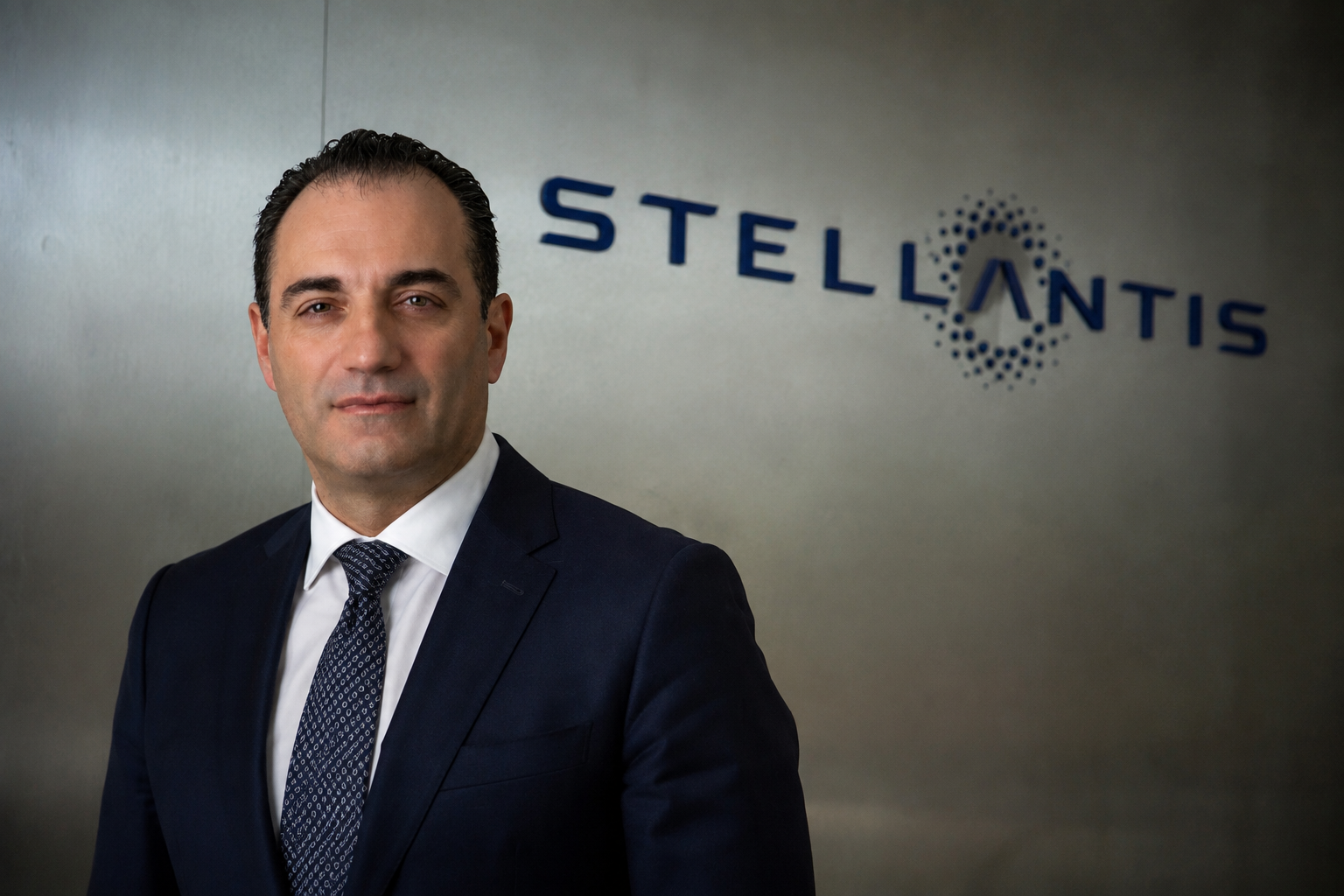
On February 6, 2026, Stellantis’s chief financial officer told analysts the company was booking about €22 billion of charges against the second half of 2025. The company’s own explanation was that its plans had run ahead of what customers wanted to buy.
Stellantis’s answer was to take the cost in one place and rebuild the plan around what customers actually buy. It said it had taken the vast majority of the decisions needed to do that, and that they were reflected in the amounts accrued. Antonio Filosa, who had been chief executive for less than eight months, said in the company’s release that the charges “largely reflect the cost of over-estimating the pace of the energy transition.”
The size of the write-down is only part of the story. What matters just as much is what sat inside it, how much of it turns into cash, and how much of the recovery has been demonstrated so far.
What did Stellantis decide on February 6, 2026?
In short: Stellantis wrote down about €22.2 billion to reset its product plan, its EV supply chain, its warranty estimates and its European workforce costs, and it skipped the 2026 dividend.
The reset had four parts. The company rewrote its product plan and resized its battery and EV supply chain. It changed how it estimates warranty costs. It booked restructuring charges, mostly for job reductions in Europe already announced. And it moved authority to the regions, closer to customers. Alongside the charges, the board authorized up to €5 billion of hybrid bonds.
On the analyst call, Filosa described the new logic as a product plan driven by “demand rather than command.”
What is actually inside the €22.2 billion?
The number invites a simple headline: carmaker loses €22 billion on electric vehicles. Stellantis’s own breakdown shows a more mixed picture.
€14.7 billion went to product plans. That covers €2.9 billion of write-offs on cancelled products, €6.0 billion of platform impairments and about €5.8 billion of cash payments expected over four years. Another €2.1 billion resized the EV supply chain, with about €0.7 billion of it in cash. Together those two lines, €16.8 billion, are the product and EV supply-chain reset. They make up roughly three-quarters of the total.
The remaining €5.4 billion sits outside the product plan. €4.1 billion came from changing the way the company estimates contractual warranty provisions, and €1.3 billion covered restructuring and other items, mainly workforce reductions in Europe that had already been announced. Stellantis tied the warranty change to cost inflation and to a deterioration in quality that it attributed to earlier operational choices, now being reversed by new management. That points to an execution problem separate from the EV-demand forecast. The same release said the charges also reflect earlier poor operational execution.
The charges sat outside adjusted operating income, but the operating result took its own damage. Management listed €2.1 billion of specific items that weighed on second-half AOI: €700 million of higher warranty expense, a €500 million accrual for compliance fines on European light commercial vehicles, €500 million for a supplier bankruptcy and aluminum supply disruption, and €400 million in financial-services items. The preliminary second-half operating loss came in at €1.2 billion to €1.5 billion.
Three figures circulate around this story, and they are not interchangeable. The €22.2 billion is the reset charge for the second half of 2025. The €25.4 billion is Stellantis’s total unusual charges for the full year. The €22.3 billion is the full-year net loss. Subtract the reset from the full-year charges and roughly €3.2 billion remains, close to the €3.3 billion of net charges the company flagged for the first half of 2025, mostly cancelled programs, platform impairments and restructuring. That last step is my arithmetic, not a company statement.
The cash the company has quantified is about €6.5 billion over four years, all of it from the product-plan and supply-chain lines.
Why did Stellantis change course?
The plan being unwound had a name and a date. In March 2022, under then-CEO Carlos Tavares, Stellantis published Dare Forward 2030. It aimed for every passenger car sold in Europe to be battery electric by 2030, and half of its passenger cars and light trucks in the United States. It counted on five million battery-electric vehicles a year, more than 75 BEV models, €300 billion of revenue and double-digit margins.
By Filosa’s account, conditions then diverged by region. He told investors in May that Europe is moving faster into electrification while the US is easing its CO2 trajectory. The impairments reflect that divergence: of €6.6 billion in platform impairments for 2025, €5.7 billion was recognized in North America. The reset was not only American, and Stellantis gives no regional split for every line of it, but the platform write-downs fell mostly on the US business.
Europe had its own pressure, with a different shape: the compliance-fine accrual for vans noted above, and, as Filosa listed among the structural pressures on the industry, intensifying Chinese competition. There was also a product problem that had nothing to do with powertrains. On the July earnings call, Filosa said discontinued products between 2021 and 2025 had cost the company market share in both North America and Europe.
Taken together, the record points to three separate problems, a split that is mine, not the company’s: a forecast about EV adoption, a lineup with holes in it, and a quality problem. Reading the reset as a single EV mistake misses two of the three.
Why an insider made the call
Filosa did not arrive from outside. He joined the Fiat group in 1999, later ran Stellantis in South America, then Jeep, then North America, and took over global quality in early 2025. Stellantis announced his appointment on May 28, 2025, and he took the job on June 23. Chairman John Elkann later called it natural that the new chief executive came from within.
That career gave him direct exposure to several of the businesses now being reset: the Americas, Jeep and quality. It also raises a fair question the record does not answer: how early should the people running the business have challenged the old plan? Stellantis attributes the warranty and quality issues to earlier operational choices and says the new team is addressing them. On the February call, Filosa described the operational problems as triggered by past decisions. Nothing in the filings and transcripts reviewed for this article assigns personal responsibility, and this article does not either.
He also acted on structure. By May the leadership team had been cut from 30 people to 15, and the regions owned their own profit and loss.
What did the reset cost beyond the charge?
The cash comes due over several years. The CFO told analysts about €2 billion of the €6.5 billion would go out in 2026, roughly €1 billion of it in the first quarter, with the rest spread evenly across 2027 to 2029. He also said supplier negotiations were not all closed on February 6, though the €700 million EV supply-chain deal already agreed followed the four-year terms. About €0.9 billion had been paid by the end of the first half, and the company still expects roughly €2 billion in 2026.
The balance sheet absorbed part of the cost too. There was no dividend for 2026, up to €5 billion of hybrid bonds (issued in March), and management ruled out an equity raise on the day. Liquidity was near €46 billion at the end of 2025 and €44.1 billion at the end of June, 27% of trailing revenue, inside the company’s 25% to 30% target range.
Time and complexity are the less visible costs. Filosa said the pace of the reset would follow new product launches, and in July he put it more simply: “Nothing can be fixed overnight.” The new plan’s 60-plus launches and 50 refreshes through 2030 include 29 battery-electric models, but also 15 plug-in and range-extended hybrids, 24 hybrids and 39 combustion or mild-hybrid models. That breadth means more powertrain families to engineer, source and certify.
What do the results show so far?
The 2025 base was weak. Revenue was €153.5 billion, adjusted operating income was a loss of €842 million and industrial free cash flow was negative €4.5 billion. In the first quarter of 2026, revenue was €38.1 billion and adjusted operating income €0.96 billion, a 2.5% margin, though industrial free cash flow was still negative €1.9 billion. The second quarter brought revenue of €43.5 billion, adjusted operating income of €773 million, a 1.8% margin, and positive industrial free cash flow of €1.0 billion. For the first half as a whole, revenue was €81.6 billion, adjusted operating income €1.733 billion, a 2.1% margin, and industrial free cash flow negative €921 million.
That is a clear improvement on 2025, but not yet the profitability the plan promises. Second-quarter revenue grew 13%, and the margin was 1.2 points above the year-earlier quarter, although below the first quarter’s.
Management also reports early quality gains, with one-month-in-service measures up more than 50% in North America and more than 30% in Europe since the start of 2025. A later event points the other way. On August 17, Stellantis said it was recalling 955,000 vehicles worldwide, including various 2026 and 2027 model-year vehicles, because radio software may prevent rear-view cameras from working properly, Reuters reported. The fix is an over-the-air update, and the company said it knew of no related accidents or injuries. One recall does not show the broader quality program has failed, but it belongs in the picture.
The company’s own release adds caveats. The first half included a €0.4 billion tariff refund, Europe still lost money in the second quarter at a margin of negative 0.6%, and management expects the second half to be weighted toward the fourth quarter.
Guidance for 2026 is modest by design: mid-single-digit revenue growth and a low-single-digit margin, reaffirmed in July. The reset also shows up in product mix. On February 6 the CFO said US mix should improve with fewer plug-in and battery-electric vehicles and more HEMI V8 engines, and Filosa expected roughly 100,000 more HEMI-powered Ram 1500 trucks built and sold in 2026 than in 2025.
Analysts pressed management on two unresolved issues at the May Investor Day. Philippe Houchois of Jefferies said a 3% to 5% European margin target was low even by Europe’s modest history. Henning Cosman of Barclays asked how rivals would react to a plan for 35% volume growth in a flat US market. Filosa’s answer on Europe leaned on shared global platforms and brand differentiation, and on an expected change to EU van rules within 12 months. He added that the plan works with or without regulatory relief.
How far Stellantis still has to go
The targets are specific. By 2028: €175 billion of revenue, a 5% margin and €3 billion of industrial free cash flow. By 2030: €190 billion, 7% and €6 billion. Free cash flow is due to turn positive in 2027, and the plan leans on €6 billion of annual cost savings by 2028 against a 2025 baseline.
The CFO’s own bridge to 2028 shows how much rests on cost: savings contribute five points of margin, while raw-material inflation takes back 1.4. On the Investor Day stage, Filosa described the first-quarter improvement as “not enough yet.”
Set the new plan beside the old one and the scale of the change becomes visible. Dare Forward 2030 targeted €300 billion of revenue and double-digit margins. FaSTLAne 2030 targets €190 billion and 7%. The plans were written by different management in different markets, but the new one is smaller on both counts.
The regional split matters as much as the total. North America is targeted at an 8% to 10% margin and is expected to deliver about 60% of the planned profit increase; Europe is targeted at 3% to 5%.
What will settle the question is a third and fourth quarter that hold the margin gain, a European business that stops losing money, positive free cash flow in 2027, and a 5% margin in 2028. The cost program carries the most weight. Filosa said almost 3,000 people are working on it and that roughly 40% of the initiatives would be implemented by the end of 2026.
What other executives can take from it
The most transferable point is in how the charge was disclosed. Stellantis’s breakdown let readers see which parts were a forecast error and which were an execution problem. A single blended “strategy charge” would have buried the €5.4 billion that Stellantis did not attribute to the EV plan.
The cash tail matters as much as the headline. A €22.2 billion charge turned into €6.5 billion of quantified payments, a skipped dividend, a hybrid-bond issue and supplier talks that were still open. Where a reset unwinds commitments, settling payment terms before announcing it is worth the effort; the CFO said not every negotiation was closed.
A reset also has to change who decides. Halving the leadership team and giving regions their own P&Ls is what turns a reset from a document into a different way of running the business. And publishing targets makes it both accountable and risky: the May numbers for 2028 and 2030 are on the record, and analysts already measure against them.
Filosa’s reset has produced early improvement. It has not yet shown that Stellantis can earn the returns the new plan promises. The next real test comes in 2027 and 2028, when free cash flow has to turn positive and the margin has to reach 5%.