Walmart’s $2.9 Billion Tariff Refund: Why It Put Price Investment First
Walmart received nearly $2.9 billion back on tariffs it had paid, and its finance chief said in May that price investment would be the priority. The bigger impact of that choice is expected in the next quarter.
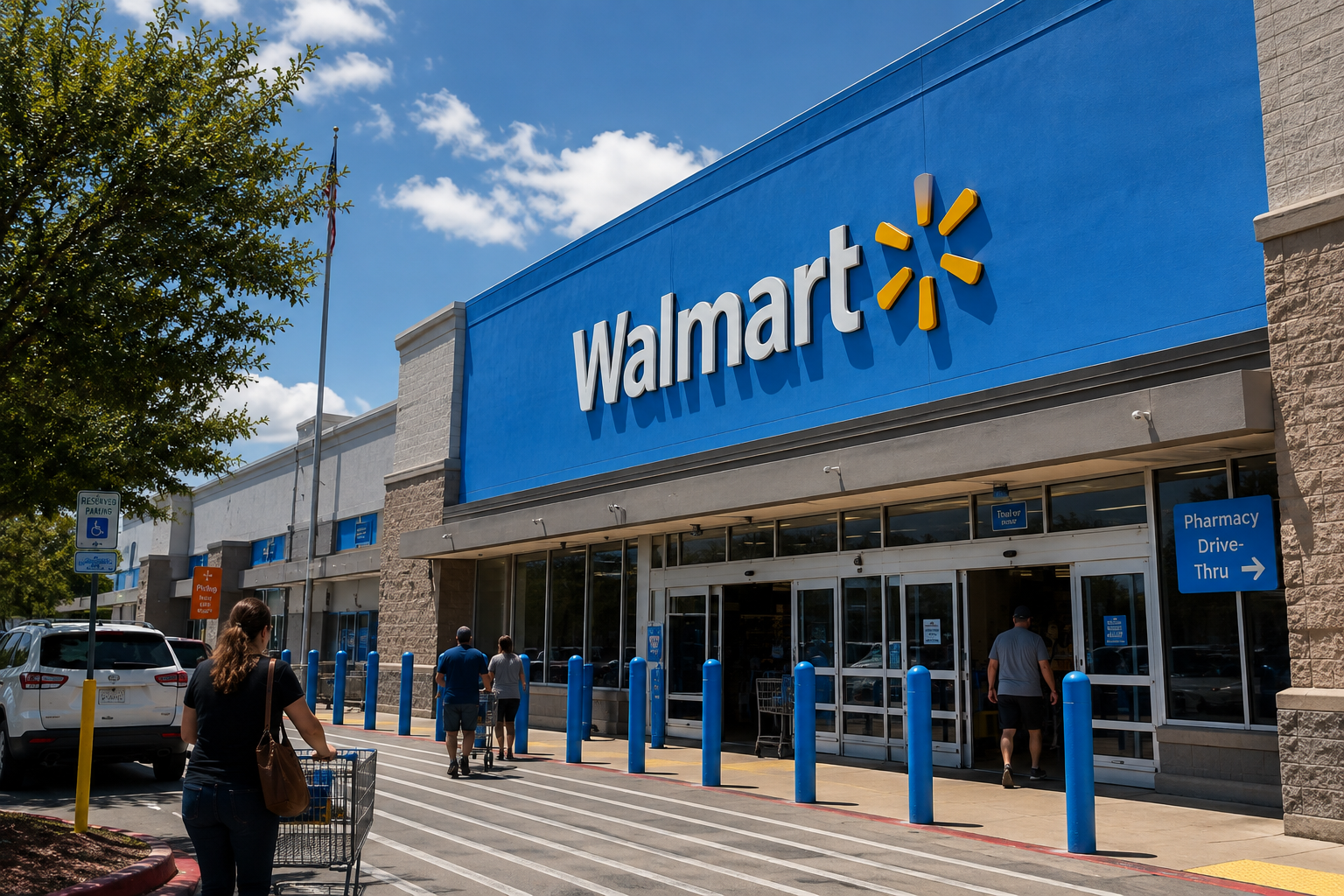
On July 6, a one-pound roll of 73 percent lean ground beef at Walmart fell from $6.74 to $5.94, and a 24-pack of Coca-Cola dropped from $14.97 to $9.97. The same day, President Donald Trump said the cuts had come at his administration’s request. Walmart’s own statement made no mention of the administration and said the rollbacks were designed to help customers make the most of the summer season.
The cuts looked like a seasonal promotion. They were the visible end of a decision Walmart’s chief financial officer flagged in May and its chief executive confirmed on August 20: a significant portion of a nearly $2.9 billion tariff refund would go toward customer-focused initiatives, primarily price investment.
This article traces how that decision unfolded, what the executives said about why, what it cost, and what will show whether it worked. It relies on Walmart’s earnings calls, releases and quarterly filing, with independent reporting where noted.
What did Walmart do with its $2.9 billion tariff refund?
Walmart says it prioritized price. Its second-quarter release, issued August 20, states that the company received nearly $2.9 billion in refunds of tariffs imposed under the International Emergency Economic Powers Act and prioritized investment in price during the period. In the quarter, Walmart U.S. delivered more than 11,000 rollbacks, which are temporary price cuts, up from 7,200 at the end of the first quarter.
The quarterly filing is more specific. It says a significant portion of the refunds was invested in customer-focused initiatives during the quarter, primarily through price investment and other cost mitigation strategies, and that continued prioritization of price investment is expected through fiscal 2027. Two limits are worth noting: the filing says a significant portion, not all, and it pairs price investment with other cost mitigation. In that passage it gives no dollar figure, and neither earnings call put one on it.
Furner told analysts in August that the intent he had signaled on the previous call was to put much of the refund back into price, and that this was what the company was doing. Rainey said a large portion had been invested near the end of the quarter, with grocery and general merchandise first in line.
Where did the refund come from?
The money traces to tariffs imposed under the emergency-powers law. The Supreme Court struck those tariffs down in February, and by July 31 the government had refunded roughly $100 billion. U.S. Customs and Border Protection began accepting refund claims in April.
Walmart’s filing for the quarter ended July 31 is plain about the accounting. The company treats such refunds as gain contingencies, recognized only once realized. It received about $2.9 billion during the quarter, mostly in the Walmart U.S. segment, recorded as a reduction to cost of sales, and says that amount represents substantially all it requested. The first-quarter filing, by contrast, had said the timing and amounts of any refunds were uncertain.
To keep the size in proportion, Rainey described the $2.9 billion as about half a percent of annual U.S. net sales. Walmart booked $187.9 billion in revenue in the quarter alone.
Other retailers logged refunds too. Target reported $994 million, Home Depot $730 million, TJX $331 million and Lowe’s $80 million. Walmart’s was the largest reported by a U.S. company at the time, according to The Hill.
There is an awkward fact beneath all of this. Refunds go to the importer that paid the tariff, even though research suggests consumers absorbed part of the cost through higher prices. CBS News noted that Walmart said in February that tariffs had pushed up some of its general-merchandise prices. That is context, not a claim about Walmart’s motives, and Walmart has not described its decision in those terms. It does explain why the question of what to do with the money drew attention.
What did Walmart say in May, before the money arrived?
On May 21, when Walmart reported first-quarter results, the refunds were still a maybe. Management left them out of its full-year outlook on purpose. Rainey said the company wanted guidance to reflect the underlying business, and that the most Walmart could receive as importer of record was less than half a percent of annual U.S. sales.
An analyst then asked about tariff rebates. Furner answered the traffic half of the question, and Rainey took the rebates. He said Walmart would bias any refunds toward price, and that the best return on a dollar of capital at that moment was to “invest in the customer and invest in price.” His reasons were on the table: fuel costs squeezing shoppers, and the retention and share gains Walmart said it was seeing. Later in the call he said the average fill-up at Walmart fuel stations had fallen below ten gallons for the first time since 2022, which he called an indication of stress.
Furner supplied the backdrop. He described a U.S. consumer who felt pressure and was looking to Walmart for value, and he pointed to about 7,200 active rollbacks, against a range of 5,000 to 5,500 in recent years. The push had begun in the second half of last year.
That same day Rainey said fuel had already cost Walmart about $175 million in the first quarter, roughly 250 basis points of operating income growth, and that the company would keep playing offense despite short-term pressure on profit.
So the refund did not create the strategy. It gave Walmart a way to pay for a larger version of one already under way. That is interpretation, but the sequence supports it.
Why did Walmart direct the refund toward prices?
Walmart’s stated reasoning, all of it from its own calls, has three parts. Shoppers were under pressure. Low prices are the company’s core promise. And the payoff would be measured in market share. Furner said Walmart was “investing heavily in price because customers need us to,” and believed the spending would win share over time. He added that share gains were ultimately how the company would judge how it was doing, and that it was too early to say how many rollbacks would become permanent.
What the money bought is visible on the shelf. Furner said Walmart invested in ground beef because meat prices had been high and customers needed relief. Walmart U.S. chief executive Dave Guggina said the company used some of the refund money on a summer grilling basket that fed eight people for under $40, with 13 items priced 16 percent below last year. He also cited 14 back-to-school items priced below 2019 levels. Rainey named grocery and general merchandise as the priority categories.
Walmart’s profit mix is context for the bet. In May, Furner said advertising and membership together accounted for about a third of operating income. In August, Rainey said almost half of operating income growth, excluding the refund, came from membership, advertising and marketplace. Walmart did not say it funded price cuts with those profits, and this is analysis rather than a company claim. But a retailer that earns only on the gap between wholesale cost and shelf price has less room to cut than one with other profit engines.
Who made the call? The record shows the CFO signaling it in May and the CEO confirming it in August. Furner took over from Doug McMillon on February 1. Walmart has not described how the decision was reached internally, and this article does not guess.
What did the decision cost?
In the second quarter, adjusted operating income rose 17.4 percent in constant currency, to about $9.25 billion. Rainey said the refunds added a net benefit of about 750 basis points to that growth, after price investments, and that underlying growth landed at the top of the company’s 7 to 10 percent guidance. The quarterly filing tells the same story from the margin side: the gross profit rate rose 96 basis points, primarily because of the refunds, partly offset by price investments and higher fuel costs.
The bigger impact of the price investments was expected in the third quarter. Rainey said a large portion of the refunds was invested at the end of the second quarter, so the full-quarter effect would be more pronounced in the third, and he asked investors to look at the two quarters together. On that view, operating income growth averages about 10 percent a quarter. Walmart guided third-quarter operating income growth in constant currency of 2 to 4 percent and adjusted earnings of 62 to 64 cents a share. A year earlier, the figure was 62 cents.
Rainey added that the financial impact of receiving and reinvesting the refunds should be largely contained within the current fiscal year, with the aim of sustained customer benefits and share gains in the second half and into future years.
Walmart still raised its full-year outlook, to sales growth of 4 to 5 percent and operating income growth of 7 to 8.5 percent. It did so while expecting more than $2 billion in extra fuel costs beyond its original plan.
Is the price bet working?
The first evidence is mixed. Walmart U.S. comparable sales rose 2.6 percent excluding fuel, against 4.6 percent a year earlier, the slowest pace since early 2020. Customer traffic grew 1.5 percent, down from 3 percent the quarter before. The quarterly filing shows a different measure, calendar comparable sales, at 3.3 percent. Shares fell more than 9 percent that day, the biggest one-day drop since May 2022.
Walmart pointed to Medicare drug-pricing rules that weighed on pharmacy sales, and said core categories outside health and wellness have kept growing at 3 to 4 percent. Furner said that, setting pharmacy aside, it was Walmart U.S.’s best second quarter in three years, and he cited strong food share gains. The rest of the business kept moving: Walmart U.S. e-commerce grew 24 percent, global e-commerce 23 percent, and global advertising 38 percent. Rainey said lower prices bring a cumulative benefit with a lag, and Furner said the lasting effect in food shows up over weeks or months. Because a large part of the price money went out late in the quarter, these numbers capture only part of its effect. That is a fair defense. It also cannot be tested until the next results.
What could go wrong?
Rollbacks are temporary by design. Furner explained that each has a start date and an end date, and that Walmart watches unit movement and the effect on the category. News Nation noted that the profit beat came with an asterisk, because Walmart cannot count on the refund in coming quarters. Rainey also said that matching next year the second quarter’s 19 percent earnings-per-share growth will be a challenge.
Analysts pressed the point on the August call: what if the sales response does not come, and the refund money is gone? Furner said the company’s bias is to lower prices when it can, but that it must balance those investments against what it sees in the market and against its commitments on operating income, and that it would review the investments one at a time.
Fuel is a second risk. Higher costs hit Walmart’s supply chain and its customers at once. The third is political. Trump said the July cuts came at his administration’s request, and Walmart’s statement did not address the claim. Its price-investment intention was already on the record, in May, more than six weeks before his post. That sequence does not settle what conversations may have taken place, but it does show the decision was signaled before the president spoke.
Peers are talking about the money differently. Home Depot’s finance chief told investors in May that refunds would help offset higher fuel, transportation and input costs. Those are different uses of the same kind of money, and judging them will take more than one quarter.
What happens next, and what can other executives learn?
The next evidence arrives on November 19, when Walmart reports third-quarter results. Those numbers will show whether the added price investment is translating into transactions, unit growth and market-share gains while Walmart absorbs the margin pressure that comes with it. They will also show how the second and third quarters look together, the view Rainey asked investors to take.
Three lessons carry over to other executives, and none requires Walmart’s scale. First, decide what a one-time gain is for before it arrives. Walmart signaled its intent in May, and by leaving the refund out of guidance it ensured that spending it would not break a promise to investors. Second, name the scoreboard in advance. Walmart has said it judges its results by share gains and manages over more than one quarter, which gives outsiders a standard to hold it to. Third, know what gives you room for the bet. Walmart’s profit mix, discussed above, is one plausible answer. A company without a similar cushion would be making a very different decision with the same money.
Walmart has not yet shown that the decision pays off, and it has not shown that it fails. It has made the bet in public, with a date attached.