Takahisa Karita: The Integrator Approach to Global Entrepreneurship
Across pharmaceuticals, biotechnology, finance, education, AI and Web3, Takahisa Karita has built a career around connecting people, knowledge and opportunities across borders.
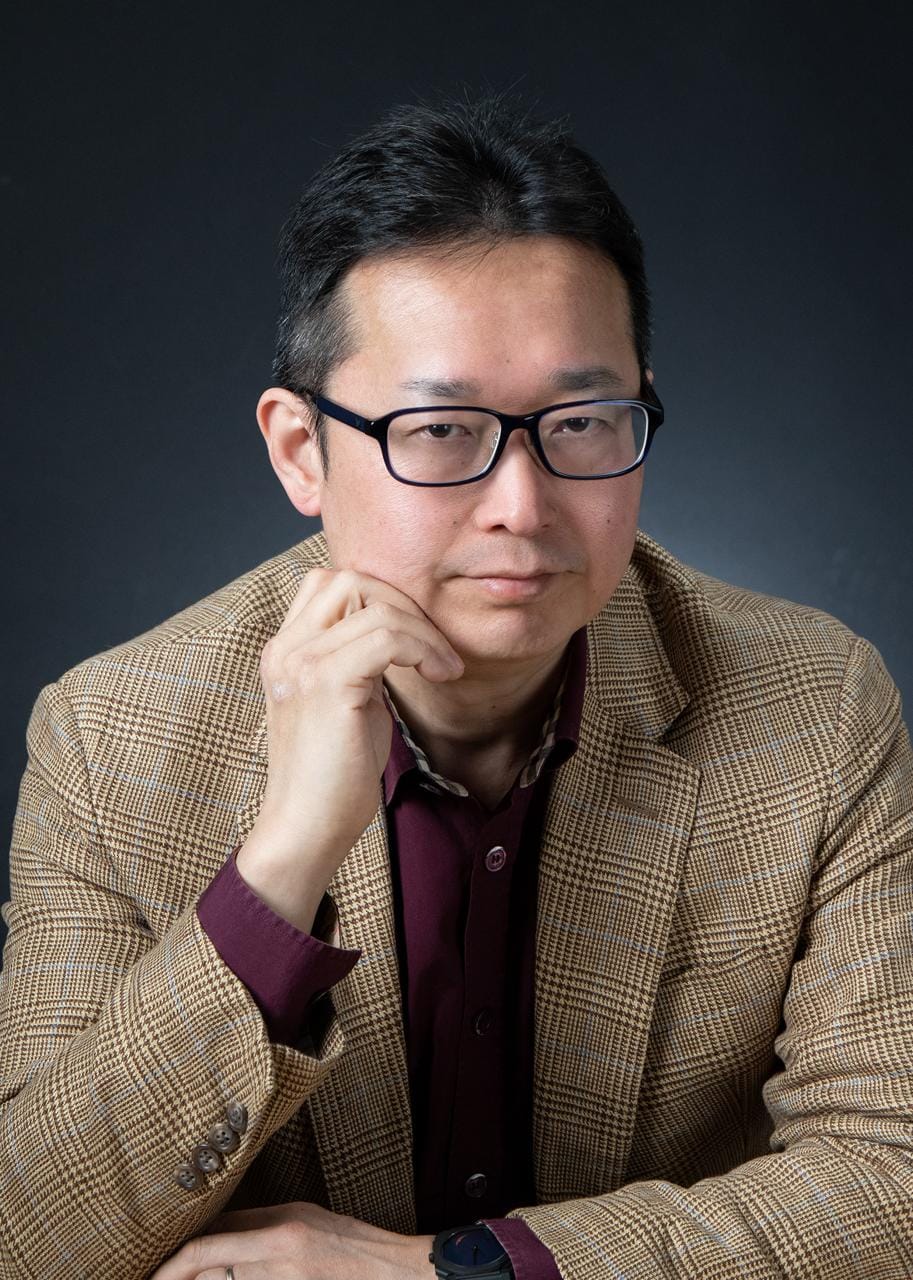
Entrepreneurship has increasingly become a cross-disciplinary activity. The boundaries that once separated finance, technology, education, healthcare and international business are becoming less distinct, creating space for professionals who can move between different environments without losing sight of the connections between them. In that landscape, Takahisa Karita represents a career built less around one fixed industry than around the ability to connect people, organizations, technology and opportunities across borders.
His professional journey has developed over more than three decades and has included pharmaceuticals, biotechnology, information technology, education, construction, finance and Web3. Rather than following a linear progression through a single field, his career has accumulated through different roles and projects across Japan, Asia, Europe and the United States. The result is a professional identity shaped by movement between sectors and by an interest in the points where different areas of expertise meet.
The foundations of that journey were established early. Takahisa began his entrepreneurial career through a bio-venture company, eventually moving into broader leadership and business-development responsibilities. The experience placed him close to industries where scientific knowledge and commercial execution have to work together. It also established a pattern that would remain visible throughout his later career: entering different environments, learning their operating realities and looking for ways in which separate capabilities could be brought together.
That approach became especially visible through UNIPLAT, the international collaboration platform developed by Unify Platform AG, which Takahisa co-founded in Switzerland. The platform is designed to support entrepreneurs and researchers by connecting projects, knowledge, investment and opportunities. Takahisa’s professional profile reports more than 165,000 participants across 146 countries. The numbers provide a sense of scale, but the broader idea is one of connectivity: creating a structure in which people with different forms of expertise can find one another.
The philosophy behind that model reflects a wider change in entrepreneurship. Innovation is rarely produced by one discipline alone. A scientific discovery may require capital, a technology company may require access to a new market, and a researcher may need an international network before an idea can become commercially useful. Takahisa’s career has repeatedly placed him in these spaces between disciplines, where the challenge is not simply to understand one field but to understand how several fields can operate together.
His executive responsibilities further illustrate that range. Takahisa serves as CFO and International Development Director at CDTEC China, an education technology company whose platform supports more than 5,600 kindergartens across mainland China. He has also held financial and advisory roles connected with technology, artificial intelligence, biotechnology, finance and international business. His work therefore combines strategic and financial responsibilities with an ongoing involvement in organizations operating in emerging sectors.
Technology has become an increasingly visible part of that portfolio. His professional work has included Web3 initiatives, AI-related activity and digital infrastructure, while his involvement with European technology and innovation organizations has extended into sustainability and international cooperation. As a board member of the SDG Alliance at the European Technology Chamber, for example, he operates within a network focused on using technology to address broader development challenges. These activities place technology in a wider context rather than treating it simply as a product category.
There is also a financial dimension to his career that runs alongside the technology work. Serving as a CFO across multiple organizations has required him to consider growth from the perspective of capital, structure and long-term business development. This combination matters because entrepreneurial expansion often depends on more than an idea. It requires systems that can support the idea once it begins to move across markets, organizations and jurisdictions.
The path has not been without disruption. One significant turning point came during the global financial crisis of 2008, when the lead underwriter connected to one of his company’s planned IPOs closed its public underwriting division. The resulting sale of the business forced a change in direction. Rather than ending his entrepreneurial activity, the experience became part of a broader reorientation that led him into additional projects and eventually toward the international, cross-sector work that defines much of his current profile.
Recognition has followed this international activity. His professional profile records appearances and recognition from publications and organizations including USA Today, MSN, the International Business Times and APAC Entrepreneur. Such recognition provides visible markers of his public profile, but the more consistent feature of his work is the accumulation of relationships across different markets. Each role adds another perspective to a career that has continued to move between disciplines rather than settling permanently inside one.
There is a particular relevance to this approach in an era of increasing specialization. As technology becomes more complex, the value of collaboration between specialists also increases. A person does not necessarily need to be the deepest expert in every field to contribute to an interdisciplinary project; they may instead create the conditions in which specialists can work together. Takahisa’s public work increasingly reflects this role of integration, particularly through platforms and organizations designed around international collaboration.
His connection to education and research reinforces the same principle. Through UNIPLAT and related advisory activities, the emphasis is not limited to established corporations. Entrepreneurs, researchers and emerging innovators are part of the same ecosystem. This creates a model in which knowledge can move beyond institutional boundaries and where an early-stage idea can potentially reach people, funding or expertise in another market.
The international nature of the work is equally important. Japan, Switzerland, China, Europe, Southeast Asia and the United States appear repeatedly across his professional history. Each market carries different commercial conditions and expectations, making cross-border business development a discipline in itself. Takahisa’s experience across these environments has therefore become part of the value he brings to the organizations and networks with which he works.
For Takahisa, entrepreneurship therefore becomes less about a single company or a single technological trend and more about building connections that remain useful as industries change. Pharmaceuticals can lead toward biotechnology; finance can support technology; education can intersect with digital platforms; and international networks can bring otherwise separate communities into the same conversation. His career has developed around these intersections.
The direction of his current work continues that evolution. From UNIPLAT and international advisory roles to finance, education technology, AI, Web3 and sustainability-related initiatives, the individual projects may differ, but the underlying pattern remains consistent. The emphasis is on creating relationships between people, knowledge, capital and technology so that ideas can travel further than they might within a single organization or geography.
In a business environment increasingly defined by specialization, the ability to integrate different forms of expertise offers another way to understand leadership. Takahisa’s trajectory illustrates that model through a career built across industries and continents, with continuity coming not from one narrow specialization but from a recurring interest in collaboration. The result is an entrepreneurial profile shaped by movement, adaptation and the belief that some of the most useful opportunities emerge where different worlds meet.