Lululemon's Settlement With Chip Wilson: What the Board Bought, and What It Didn't
The board secured roughly 18 months of public quiet from its founder and a clear runway for a new CEO. The sales figures that followed have not been so accommodating.
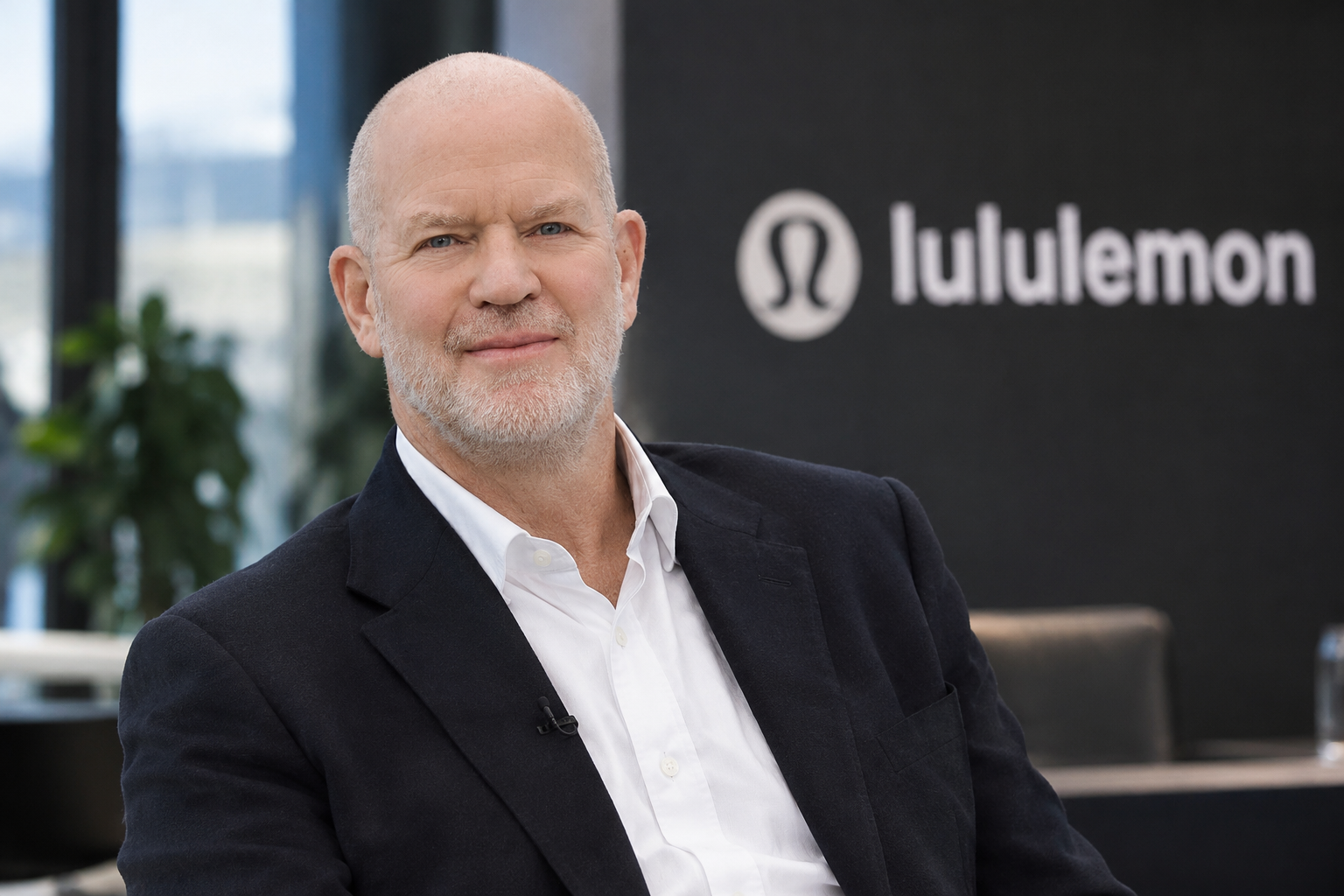
On 7 October 2025, a man who had not sat on Lululemon’s board for a decade bought a full-page advertisement in The Wall Street Journal. The headline read “lululemon: in a Nosedive.” Chip Wilson, who founded the company in 1998 and, by his own filing, ran it until 2005, was telling the market and the directors that the brand had lost its way.
Nearly eight months later, the company he started reached an agreement that put two of his nominees on its board in exchange for standstill, non-disparagement and related commitments. The Lululemon settlement with Chip Wilson, announced on 27 May 2026, ended a five-month proxy fight. It did not settle the larger argument about the brand’s direction, and it raises a harder question than who won: what did the board actually buy, and do the company’s results since then suggest the price was worth paying?
What did Lululemon agree to with Chip Wilson?
Lululemon signed a cooperation agreement with Wilson, who owns about 8.7% of its stock. Laura Gentile, a former chief marketing officer at ESPN, and Marc Maurer, a former co-CEO of On, joined the board after the June annual meeting. The company also committed to appoint a third new director with apparel product and brand expertise by 1 October 2026, subject to Wilson’s approval, which could not be unreasonably withheld. One further incumbent director agreed not to stand for re-election in 2027.
Wilson gave up a good deal in return. He accepted standstill, non-disparagement and voting commitments lasting about 18 months, until shortly before the nomination deadline for the 2028 annual meeting. Instead of reimbursing his campaign costs, Lululemon agreed to a donation for athletics, art and landscaping at Kitsilano Beach in Vancouver.
The board also backed Wilson’s proposal to declassify the board, and shareholders approved it at the 25 June annual meeting. That vote was advisory, so the binding step comes later. The company must put a charter amendment to shareholders in 2027, and annual elections for every director would begin at the 2028 meeting if it passes. The transition is promised, not complete.
Two things are missing from that list. Eric Hirshberg, Wilson’s third nominee, did not get a seat. And the CEO question was already closed, because the board had settled it five weeks earlier.
How a founder who left the board in 2015 made it a public fight
Wilson’s case, laid out in his April proxy statement, was about product. He argued that Lululemon had drifted toward mainstream fashion and chased short-term profit at the expense of the technical edge that built the brand. He pointed to the Disney partnership, the $452.6 million Mirror acquisition that the company later wound down, and the January 2026 launch of the “Get Low” leggings, which Lululemon paused and which his filing links to a 6.5% one-day drop in the shares.
These are Wilson’s claims, not settled findings, and the company rejected his reading of the brand. It called his perspectives “outdated” and accused him of conflicts of interest.
There is a selective quality to his case. His authority comes from building the brand, but the decade since he left the board is the period that matters to shareholders now, when the company grew from a boutique name into a global one and then stalled in its biggest market.
His second argument was about governance. Calvin McDonald’s exit, announced on 11 December 2025, was in Wilson’s telling the third time the company had announced a CEO departure without naming a successor. He also objected to a tight circle of long-serving directors with professional ties to the private equity firm Advent International. On 29 December he nominated three directors and filed a proposal to declassify the board.
Negotiations were slow. By Wilson’s account, the board took nine weeks to answer his first settlement proposal, made on 15 December, with a counter-framework. He estimated the campaign would cost about $6 million. Meanwhile the board refreshed itself on its own schedule. Chip Bergh, the former Levi Strauss CEO, joined in March in place of David Mussafer, a director since 2005 who said he would not stand for re-election. Esi Eggleston Bracey, formerly of Unilever, arrived in April after Shane Grant also stepped aside. Wilson has said he believes his campaign prompted those changes. The company says Bergh’s appointment came out of a board skills assessment that began earlier.
Why the board named a CEO before it settled
On 22 April, Lululemon named Heidi O’Neill, a 25-year Nike veteran, as CEO, effective 8 September. Reuters-sourced reports put the early drop in the shares at about 12%, and BTIG analyst Janine Stichter warned that O’Neill’s long Nike tenure overlapped with problems that resemble Lululemon’s own. Wilson’s 29 April letter called the CEO and director selections “reactive,” and a source told Reuters he believed a board overhaul should have come first. Activist investor Elliott Management, which Reuters reported had built a stake above $1 billion, had backed a different candidate, former Ralph Lauren executive Jane Nielsen.
The sequence was the board’s real decision. By choosing O’Neill first, it made sure the truce could not be read as Wilson picking the CEO, and it kept the one call it treated as non-negotiable away from the bargaining table. Conceding seats is cheaper than conceding a CEO.
The deal itself came fast and late. On 18 May the company made its case to shareholders in public, urging them to back its slate at the 25 June meeting. The same day, Wilson said publicly that he was ready to agree to the principal terms the company had offered, and that the remaining disagreements were over details such as when his nominees would join. A little over a week later, the two sides signed. Executive chair Marti Morfitt said the agreement lets the company “focus on continuing to strengthen its performance.”
Wilson’s own 18 May filing lays out what the company had put on the table: one more mutually agreed director by October, one incumbent director stepping down at the 2027 meeting, and a vote on declassification. All three are in the final agreement. The visible differences were narrow, chiefly the Kitsilano donation in place of expense reimbursement. That reading is mine, and Wilson would frame the same facts differently, pointing to the seats, the governance commitments and a board that now talks about product the way he does. What the record does support is that the board gave ground on seats and governance, not on its CEO or its strategy.
What the settlement bought, and what it didn’t
Quiet was the point, and on that measure the board got what it paid for. The operating numbers are a different matter. In Lululemon’s largest region, its own releases show a steady slide in comparable sales: down 3% in the Americas for fiscal 2025, down 5% in the first quarter of 2026 and down 12% in the second.
Fiscal 2025 closed with revenue up 5% to $11.1 billion, but gross margin fell 260 basis points to 56.6% and operating income fell 12%. The first quarter of 2026, reported on 4 June, a week after the deal, brought earnings of $1.69 a share against $2.60 a year earlier and a lower outlook for the year. The second quarter, reported on 3 September, was worse. Revenue fell 4% to $2.4 billion and total comparable sales fell 9%. The company now expects 2026 revenue of $10.35 billion to $10.50 billion, down 5% to 7%, and guided the third quarter down 10% to 11%. On the earnings call, interim co-CEO Meghan Frank said negative commentary in the media and on social channels had hurt traffic, and that some new products drew a softer response than planned. Management tied most of the revenue shortfall to China Mainland, where it also pointed to reaction to a marketing event at the Great Wall.
Read those figures with care. The second quarter ran almost entirely under interim co-CEOs Frank and André Maestrini. O’Neill did not start until 8 September, and product decisions made months or years earlier were still reaching stores. The data does not show the settlement failed. It does show the settlement did not fix anything by itself.
The profit line needs the same care. The reported margins benefited materially from a $134.5 million tariff refund, which the company said added 560 basis points to both gross and operating margin in the second quarter. Setting that aside gives a useful analytical estimate, though not a reported figure. By my calculation, gross margin was about 54.9% against 58.5% a year earlier, and operating margin about 13.2% against 20.7%. Selling and administrative costs, which are reported, rose to 41.7% of revenue from 37.7%.
International sales add a second caution. In fiscal 2025, China Mainland comparable sales rose 20% and Rest of World rose 9%, according to the annual report, while the Americas fell 3%. International comparable sales were still up 13% in the first quarter of 2026. In the second quarter they turned negative, down 3%, though revenue in the region still grew 4%. The weakness was no longer confined to the Americas in the latest quarter. One quarter does not establish a lasting trend, or prove that the same problem is hitting every market.
Capital allocation has not visibly changed either. Lululemon repurchased $1.2 billion of stock in fiscal 2025 and another $330 million in the second quarter, while its cash fell from $1.81 billion in February to $1.39 billion in August. Whether a refreshed board keeps buying while sales shrink is an open question.
Heidi O’Neill’s first move puts product at the center
O’Neill’s first major act, announced about a month after she started, was an org chart. Maggie Gauger, previously CEO of Athleta and a Nike executive for more than two decades, becomes President and Chief Product Officer on 26 October. The new role pulls design, merchandising, footwear, product innovation and materials science under one leader. Joseph Godsey, formerly of Walmart Canada, Sam’s Club and Adidas, becomes Chief Operating Officer, with sourcing, production, fulfillment and planning in his remit.
Two executives leave on 6 November: the chief brand and product activation officer and the chief supply chain officer. Searches are open for a chief brand officer, a chief communications officer, a chief technology officer and a chief strategy officer, who will report to Frank. She continues to lead finance and strategy, with interim oversight of brand and technology until those hires are made. O’Neill said the company has “work to do” and described putting product, design and innovation at the center of how it operates.
That is, in substance, the argument Wilson made in a newspaper ad. The difference is who delivered it. The company has not said it acted because of him, and the record does not support a causal claim. But a board that spent months calling its founder’s views outdated now has a CEO whose first structural change centers on his main point. The Nike lineage cuts both ways: O’Neill’s company biography credits her with shortening product development timelines there, while at least one analyst argued that her tenure overlapped with the problems Nike itself later faced.
What the Lululemon decision is really betting on
The bet is that governance was a distraction and product is the problem. If that is right, 18 months of quiet, four new independent directors since March and a product-led CEO give Lululemon a clean run at a turnaround. If it is wrong, and the weakness reflects something deeper in how the brand competes against rivals such as Alo Yoga and Vuori, the settlement bought time and little else.
One loose end deserves attention. The original agreement called for a third new director by 1 October. A trade report from that date said both sides had agreed to extend the deadline, giving no reason and no new date. As of 11 October, I could not find a publicly announced appointment or a new deadline. The extension means the missed original date alone does not establish a breach, and Wilson’s approval right means the appointment needs both sides to cooperate. It is still the most concrete test of the deal, and for now the timing and outcome are unresolved in public.
The evidence that will decide the question is specific. Watch Americas comparable sales, which fell 12% in the second quarter. Watch markdowns: the company’s annual report attributed a 340 basis point drop in Americas product margin to tariffs and higher markdowns. Watch full-price selling, which management said improved sequentially in the first quarter. And watch the third quarter, when the company has already guided to a double-digit revenue decline.
What other boards can take from the Lululemon settlement
First, pick the CEO before the truce. A settlement signed before a succession decision invites the argument that the activist chose the leader. Second, write commitments that can be checked, and when a date slips, say why. A deadline that moves quietly leaves outsiders guessing about whether the two sides still agree. Third, do not confuse peace with progress. A cooperation agreement can quiet a critic, but it cannot change same-store sales. Fourth, resist declaring victory in either direction. The company’s decline does not prove Wilson right, and his silence does not prove the board right.
Lululemon is expected to report third-quarter results in December, the first quarter reported with O’Neill as CEO. That report, and the one after it, will say far more about the Wilson settlement than the press releases that announced it.