Inside C.C. Wei's $265 Billion Bet: Can TSMC Rebuild Its Taiwan Manufacturing System in Arizona?
TSMC's July 2026 expansion decision tests whether its Taiwan manufacturing system can operate in Arizona while the company manages higher costs, labor constraints and an unsettled funding picture
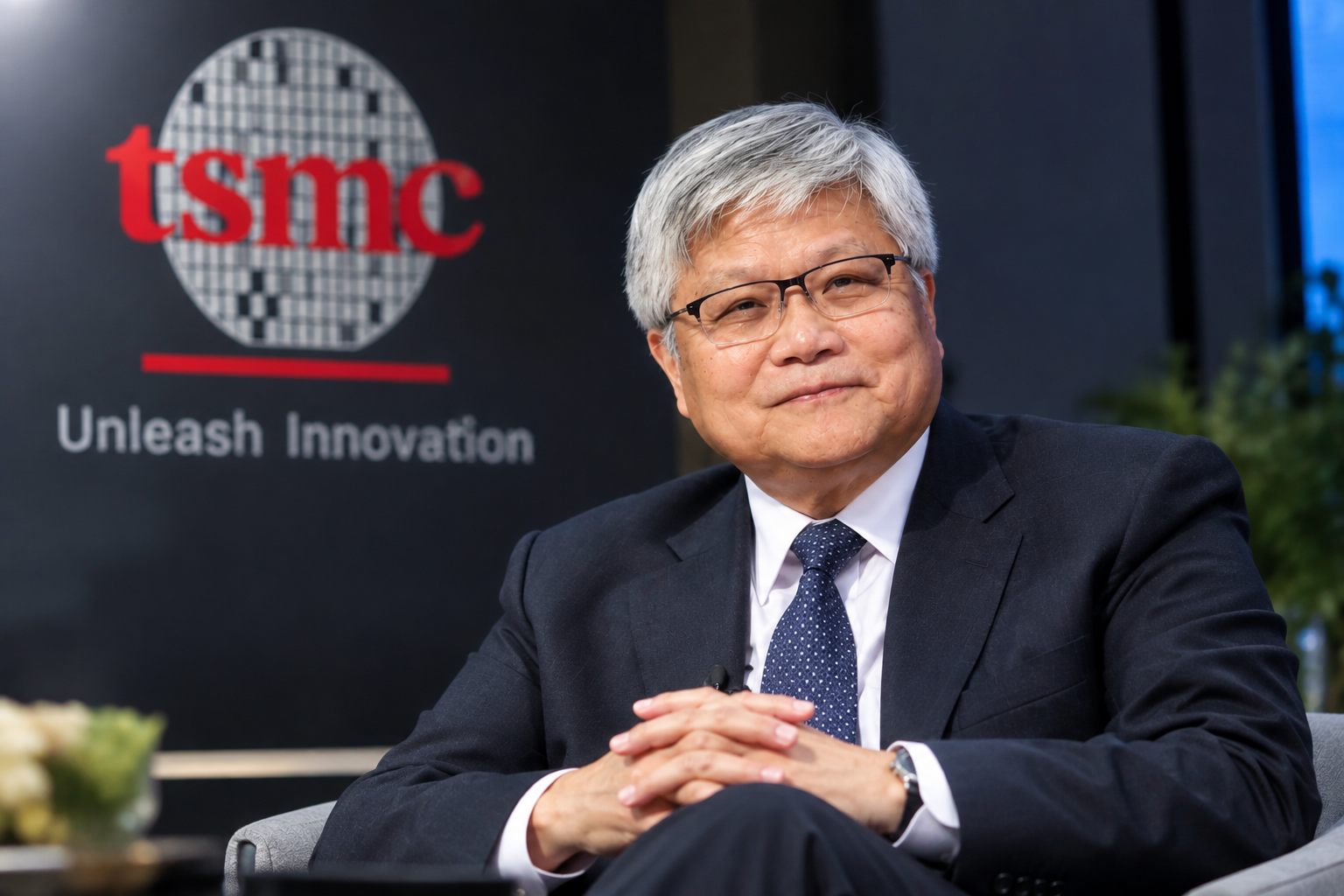
On July 16, 2026, Taiwan Semiconductor Manufacturing Company reported record second-quarter net income of NT$706.56 billion, up 77.4% from a year earlier, on revenue of NT$1,270.38 billion, up 36.0% year-over-year. In the earnings call that followed, Chairman and CEO C.C. Wei announced another $100 billion investment in TSMC's Arizona operations, bringing the company's planned Arizona investment to $265 billion. The commitment followed a series of major increases: $12 billion in 2020, $40 billion in 2022, $65 billion in 2024 (paired with a formal CHIPS Act funding agreement), $165 billion in March 2025, and now $265 billion. The U.S. Commerce Department described the March 2025 milestone, at the time, as the largest single foreign direct investment in American history.
Much of the coverage that followed treated the July number as another response to the AI boom: demand is rising, chipmakers are expanding, governments are encouraging domestic production. That explanation is incomplete. TSMC's advantage was never a single secret process. It's a manufacturing system — engineering discipline, supplier density, workforce training and customer trust — built in Taiwan over more than three decades. Wei is now betting that a version of that system can operate in Arizona at a scale the company has never attempted outside Taiwan.
The Situation: A Company Racing to Add Capacity
By mid-2026, TSMC's immediate constraint wasn't a lack of demand. It was the ability to add capacity fast enough. On the July earnings call, Wei said AI-related demand remained "extremely robust" and that the company was expanding investment to support multi-year demand from its leading U.S. customers. He also noted that developing a new node, building a fab and ramping it to high-volume production is a multi-year process — commonly cited by the company as taking two to three years to build and another one to two to ramp. That timeline is the reason Wei was willing to commit capital years ahead of when any of the new fabs will actually produce a chip.
High-performance computing accounted for 66% of TSMC's second-quarter revenue and grew 20% from the prior quarter, according to the company's earnings disclosures. Second-quarter revenue reached $40.2 billion, up 33.7% year-over-year, with gross margin at 67.7%. TSMC raised its full-year 2026 revenue-growth outlook to "slightly above 40%" in dollar terms and increased its capital-expenditure outlook to $60–64 billion, up from an earlier $52–56 billion range.
Nvidia, Apple, AMD and Broadcom have been identified in company commentary and industry reporting as major sources of TSMC's leading-edge demand. TSMC's own account of the Arizona site shows how far the buildout had already progressed before the July announcement: the first fab began high-volume production on N4 process technology in the fourth quarter of 2024, the second fab's structure was completed in 2025 with N3 production targeted for the second half of 2027, and a third fab, aimed at N2 and A16 technology, broke ground in 2025. That progress came alongside publicly reported labor and construction challenges — a reminder that the company's manufacturing system doesn't automatically remove the practical difficulty of building in a new location, even before the footprint roughly doubles in size.
The Decision: More Fabs, No Promised Date
The new $100 billion is earmarked for additional 2-nanometer-and-below logic fabs and more advanced-packaging capacity — the manufacturing step that combines multiple chips into a single package, increasingly central to how AI accelerators are built. Asked how many facilities the investment could support, Wei said four or more additional fabs would probably be built, combining front-end wafer fabrication and back-end packaging. Some reporting on the announcement has put the resulting Arizona footprint at as many as ten fabs, two advanced-packaging facilities and a research and development center in total — though the exact final configuration and timing remain dependent, by Wei's own account, on market conditions and customer demand.
What Wei didn't give analysts was a construction calendar. Pressed on timing, he said the schedule "depends on the market situation and our customers' demand," and that TSMC had a plan but no firm date to announce, adding that the company would try to move as fast as possible. That flexibility is understandable for a project whose economics depend on long-term customer commitments, but it also means the expansion can't yet be measured against a fixed delivery schedule — a notable thing for TSMC's own CEO to say aloud, given how much of the company's reputation rests on manufacturing predictability.
Why Wei Made the Call — and the Funding Question That Isn't Fully Settled
Wei's explanation, delivered directly to analysts, centered on customer demand rather than policy. On TSMC's first-quarter call in April 2026, he said the company had bought a second large parcel of Arizona land specifically to meet multi-year demand from its leading-edge U.S. customers, and that TSMC now had more confidence executing in Arizona than it had a year earlier.
The financing side of the decision is less settled. TSMC's earlier $65 billion Arizona commitment came with a documented, non-binding U.S. Department of Commerce agreement: up to $6.6 billion in direct CHIPS Act funding and roughly $5 billion in proposed loans, finalized in late 2024. The July 2026 announcement did not come with a separately announced grant of comparable size. That absence raises a fair question about how much of the new round TSMC will finance directly from its own balance sheet rather than through additional public support — but it remains an open question, not a confirmed description of the financing. TSMC has not publicly characterized the entire $100 billion as fully self-funded.
Wei's own comments leave the question open rather than closing it. Asked how TSMC planned to compete with Intel, which received an $8.9 billion U.S. government equity stake the previous year, Wei responded that TSMC had "also got the government support, by the way, although we don't announce it." The July 16 announcement did not disclose a separate new grant or financing agreement comparable in size to the earlier CHIPS arrangement. The available public record supports a narrower conclusion: the exact funding structure behind the new $100 billion has not been fully disclosed, by TSMC or by Washington.
The Trade-Off: Expanding America Without Hollowing Out Taiwan
TSMC is not shifting its center of gravity from Taiwan to the United States, whatever the headline number suggests. On the same call, Wei said TSMC would keep expanding its leading-edge and advanced-packaging capacity in Taiwan while also building out Arizona and Japan. Arizona, in his description, is one piece of a broader multi-country buildout, not a replacement for Taiwan.
That still leaves a difficult operational question. TSMC's capital budget and its pool of experienced process engineers aren't unlimited, even with annual spending above $60 billion. Wei told analysts the company is "also moving the new fabs and the facilities in Taiwan as fast as possible," and that TSMC is working to narrow the gap between demand and supply across every site at once, Arizona and Japan included, rather than sequencing one location ahead of another. Whether an Arizona footprint that could eventually include several more fabs can be staffed and supplied without slowing Taiwan's own expansion is not answered by the July announcement. It's one of the central execution questions sitting behind the investment.
The Risks: Water, Execution Capacity and a Margin Wei Is Choosing Not to Chase
Three risks stand out from public reporting: water, execution capacity and margin pressure.
Water is a longer-term constraint rather than an immediate one. TSMC's own Arizona planning materials say that at startup, approximately 65% of the water used at the site will come from the company's in-house recycling systems, with a stated goal of reaching 90% water reclamation. Those figures describe TSMC's planned water-management system; they don't by themselves resolve the broader regional picture. Arizona's semiconductor expansion is taking place inside a water system already under pressure from drought, population growth and competing agricultural, municipal and industrial demand, and the Colorado River's declining reliability adds another layer of uncertainty for the state generally. TSMC's own water arrangements may reduce some of its direct exposure, but they don't remove the company from a regional supply picture that's getting tighter, not looser. The practical business question isn't only whether TSMC can recycle more water. It's whether the surrounding infrastructure can keep up with a growing concentration of water-intensive manufacturing.
Execution capacity is the more immediate risk. Reuters has reported that permitting delays and a shortage of specialized construction labor have slowed the pace of TSMC's U.S. buildout. Adding several more fabs and packaging capacity to a site still completing its first three facilities compounds that exposure. The lack of a fixed schedule leaves this risk difficult to measure precisely from the outside — it may reflect flexibility around customer demand, construction conditions, or both, and the company hasn't provided enough detail publicly to separate the two.
The third is margin discipline. TSMC's own guidance indicates that the 2-nanometer ramp will pressure gross margin by several percentage points before scale efficiencies offset the cost, on top of the added expense of running fabs overseas. One obvious response would be to raise prices while advanced-chip capacity remains tight. Wei's public comments suggest TSMC is weighing that decision differently. At TSMC's June 4, 2026 shareholder meeting, and again on the July earnings call, he said the company would "like to" raise prices given how tight demand is, but that it remained focused on "long-term, sustainable operations" rather than short-term spikes. Those comments suggest TSMC is placing significant weight on long-term customer relationships rather than maximizing near-term pricing power. That approach may protect the trust at the center of the foundry model. It also limits one of the more obvious ways to offset the cost of expansion.
What the Numbers Show So Far
TSMC's own disclosures in the weeks after the announcement were consistent with the demand picture Wei described in July. August 2026 revenue, reported in the company's own filing, reached NT$514.81 billion — roughly $16.35 billion — up 53.3% year-over-year and 10.1% from July, the highest monthly revenue figure TSMC had reported to that point. Combined, TSMC's reported July and August revenue (NT$467.58 billion and NT$514.81 billion) totals NT$982.39 billion, or roughly $31 billion at the exchange rate implied by the company's own second-quarter figures. Measured against TSMC's third-quarter guidance of $44.6–45.8 billion, that two-month total already accounts for close to 70% of the low end of the range, with September still to be reported.
The figures are consistent with the strong near-term demand environment Wei described in July. They do not, however, establish whether a $265 billion, multi-year Arizona expansion will generate attractive returns over the decade it may take to complete. Near-term revenue momentum and long-term capital-allocation success are different tests, and only one of them is answered by two months of data.
What the Decision Is Really Betting On
Strip away the AI-spending headlines and the political photo-ops, and Wei's bet comes down to something narrower. TSMC is trying to run a second full manufacturing ecosystem thousands of miles from Taiwan, without losing the cost discipline, yield performance and customer trust that made the original one worth exporting. It's attempting that at a scale it has never tried before, while Arizona faces pressure on labor, infrastructure and water, and while the timing and financing of the new investment stay partly unresolved.
For executives considering similarly large geographic bets, the lesson isn't simply to spend early or follow demand. It's to be clear about which parts of a company's advantage can travel and which depend on a particular ecosystem. Wei has made the demand case for Arizona clearly and repeatedly. The harder test — the one that will take years, not quarters, to answer — is whether TSMC can reproduce the people, suppliers, operating discipline and customer confidence that support its Taiwan model, without letting the cost and complexity of expansion weaken the system it's trying to extend.