Why the Nissan Honda Merger Collapsed, and What Nissan Is Still Trying to Prove
Nissan was ready to let Honda appoint most of a joint holding company’s directors, but it would not become a direct subsidiary. By late 2026, its restructuring is real, reported profit has leaned on one-time items, and the two companies are cooperating again on narrower terms.
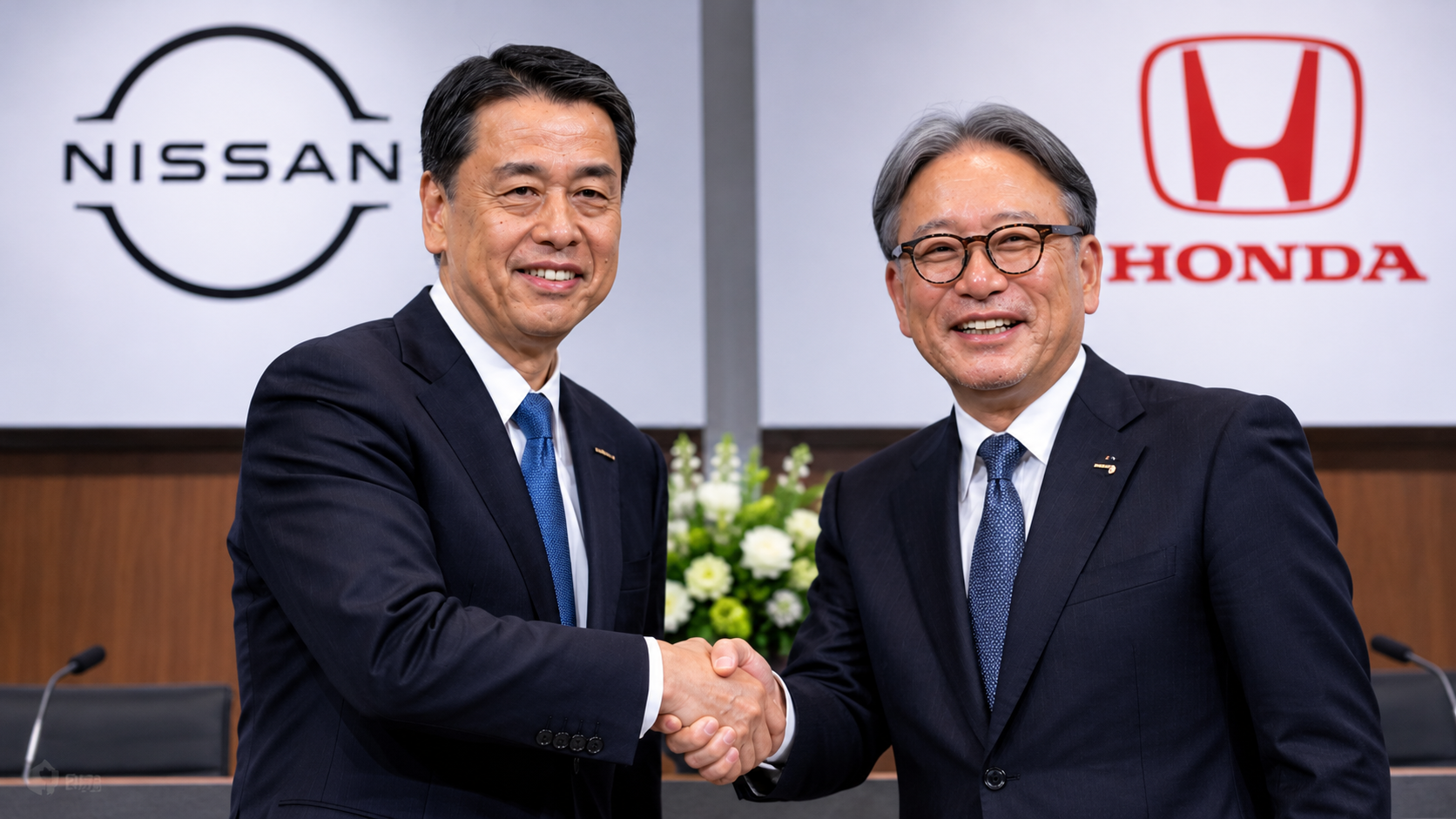
On Thursday, 6 February 2025, Makoto Uchida, then Nissan's chief executive, met Honda's Toshihiro Mibe in Tokyo and told him Nissan wanted to end their merger talks, according to Nikkei and Reuters. Nissan's board had met the day before, Japanese media reported. The formal announcement came a week later, on 13 February, when the two companies jointly terminated the memorandum they had signed in December. The Nissan Honda merger talks, which had been meant to produce the world's third-largest automaker, were over in less than eight weeks.
The common summary says Nissan refused to be swallowed by a bigger rival. The record is narrower, and more interesting. Nissan had already agreed to a structure in which Honda would appoint most of the directors of a new holding company. What it would not accept was a later Honda proposal to make it a direct subsidiary. By late 2026, the useful question is what Nissan has done with its independence, and whether the numbers so far show a company able to fix itself.
The pressure behind the Nissan Honda merger talks
Nissan did not walk into those talks from strength. On 7 November 2024 it reported first-half operating profit of ¥32.9 billion, down from ¥336.7 billion a year earlier, and cut its full-year operating profit forecast by 70% to ¥150 billion. It announced 9,000 job cuts, about 7% of its workforce, and a 20% reduction in global production capacity. Uchida took a 50% pay cut. Sales in China had fallen 14.3% over the half, and he admitted that Nissan lacked the hybrid and plug-in hybrid range American buyers were now choosing.
Figures Nissan released on the day the talks ended showed operating profit of ¥64 billion and net income of ¥5.1 billion on revenue of ¥9.1 trillion for the nine months to December, and the company was forecasting a full-year net loss of ¥80 billion. Honda sat on the other side of the table as the larger, healthier company, and its own memorandum was blunt about the terms: Honda's participation rested on Nissan's turnaround actions being steadily executed.
What the December 2024 memorandum proposed
This was never a merger of equals. Under the memorandum signed on 23 December 2024, the two companies would create a joint holding company, listed on the Tokyo Stock Exchange's Prime Market, that became the parent of both. Nissan and Honda would each be a wholly owned subsidiary of that new entity. Honda would nominate a majority of its directors, and its president would come from among Honda's nominees. The two operating companies would keep running as separate businesses beneath it.
Much was left open: the share-transfer ratio, a definitive agreement pencilled in for June 2025, and a listing for August 2026. The companies also talked about a group with revenue above ¥30 trillion and operating profit above ¥3 trillion. Those were projections, not results.
Where the Nissan subsidiary proposal broke the deal
In early February, Honda changed the structure. Instead of a holding company above both, Honda would become the parent and Nissan its subsidiary, through a share exchange. Mibe's public reasoning was speed. With representatives of both companies on one board, he said, hard calls could slow down, and the integration would demand what he called decisive, painful decision-making. He added that Honda had expected Nissan might withdraw.
Uchida's version, given in Nissan's analyst session on the evening of 13 February, is the piece many summaries get wrong. Nissan, he said, had understood from the outset that Honda would hold the board majority, and had been prepared to work on that basis because the aim was a stronger combined company that kept Nissan's strengths. The sticking point was 100% subsidiary status. After directors deliberated, he said, the board concluded that Nissan would struggle to become a strong company under it.
The joint termination notice described the outcome as shared: both companies, it said, judged that ending the memorandum would put speed of decision-making and execution first. Whether that was a genuine meeting of minds or a courteous label for a deadlock is something the documents cannot settle.
What was reported about the internal fight
The inside story rests on reporting, not disclosure, and it should be read that way. Nippon.com reported that the executive running production, Hideyuki Sakamoto, objected strongly to the subsidiary idea at a meeting of top executives on 4 February, and that at an emergency board meeting the next day only two of twelve directors favored continuing the talks. The Financial Times reported that the two directors who backed Honda's proposal were the chair, Yasushi Kimura, and Motoo Nagai, a former Mizuho executive.
Reuters, citing six people, reported that the talks came apart partly because of Nissan's pride and its underestimate of how serious its position was, and partly because Honda abruptly changed the terms. Its sources also described Honda as wanting deeper cuts than Nissan was ready to make. None of these details comes from an official record of either company, and Nissan's formal explanation does not mention them. Renault, a longtime Nissan shareholder, said after the announcement that it welcomed Nissan's intention to focus on executing its turnaround plan.
The Ivan Espinosa Nissan turnaround begins
On 11 March, less than a month after the collapse, Nissan's board replaced Uchida with Ivan Espinosa, the chief planning officer, from 1 April. He became Nissan's fourth chief executive in eight years. Reporting tied the change to the failed deal and to weak results, and the Financial Times reported that Honda would be open to resuming talks if Uchida left. No document shows that the failed merger alone caused the change.
Re:Nissan and the recovery Nissan chose to carry alone
On 13 May 2025, Nissan reported a net loss of ¥670.9 billion for fiscal 2024, including a large write-down of plants and other assets, and unveiled a recovery plan called Re:Nissan. The targets were specific: 20,000 job cuts by fiscal 2027, including the 9,000 announced the previous November, roughly 15% of the workforce; vehicle plants reduced from 17 to 10; ¥500 billion in savings against fiscal 2024 costs; and a return to positive automotive operating profit and free cash flow by the end of fiscal 2026, excluding tariffs. Capacity outside China was to fall from 3.5 million units to 2.5 million.
Some of that has moved from plan to action. In July 2025, Nissan said its Oppama plant near Yokohama, open since 1961, would stop producing vehicles at the end of fiscal 2027, in March 2028, affecting about 2,400 employees. That closure has not happened. It is scheduled.
Oppama is not the only site affected. Nissan first said it would consolidate Frontier and Navara pickup production, which had been split between Mexico and Argentina, at its Civac plant in Mexico. In July 2025 it went further and announced that Civac itself, its first plant outside Japan, would close, with all of its models moving to the Aguascalientes complex during fiscal 2025. Mexican media reported that the lines stopped in late March 2026. Nissan also agreed to transfer its 51% stake in Renault Nissan Automotive India to Renault, while saying it remained committed to its operations in India. In November 2025 it completed a ¥97 billion sale-and-leaseback of its Yokohama headquarters, signing a 20-year lease and continuing to use the building, and said it expected a gain of about ¥74 billion. None, by itself, shows that the underlying business is earning its keep.
It is tempting to read all this as Nissan doing alone what Honda wanted done. The evidence does not support that. The claim that Honda pressed for deeper cuts comes from anonymous sources, and Re:Nissan was written by a new chief executive, not negotiated with Honda. The defensible point is smaller. Ending the talks did not create these problems, which predated them. It meant Nissan would have to manage the recovery on its own.
What the numbers show so far
Fiscal 2025, which ended in March 2026, was mixed. Nissan reported revenue of ¥12.0 trillion and consolidated operating profit of ¥58.0 billion, a margin of 0.5% and slightly below the prior year's ¥69.8 billion. That headline hides the state of the core business. Nissan's filing shows an operating loss of ¥239.9 billion in the automobile business, and automotive free cash flow was negative ¥480.8 billion for the year, though it turned positive at ¥112 billion in the second half. Profit from its sales-finance arm made up the difference at group level, and Nissan's presentation points to a one-time reversal of loss provisions in that unit. The net loss of ¥533.1 billion, narrower than the prior year's ¥670.9 billion, included a ¥366.2 billion impairment charge. The automotive business held net cash of ¥1.17 trillion, and Nissan said it would pay no dividend for fiscal 2026. Ahead of those results, the company said the improvement in its outlook mainly reflected a one-time benefit from changes to U.S. emissions rules, alongside cost cuts and currency.
The April to June quarter of fiscal 2026 looked better on the surface. Operating profit reached ¥77.9 billion, against a loss of ¥79.1 billion a year earlier, and net income was ¥3.8 billion. Re:Nissan delivered about ¥60 billion in savings in the quarter, mostly from variable costs, so part of the improvement reflects real cost reduction. But Nissan itself said one-time gains tied to fiscal 2025 U.S. tariffs also contributed to that operating profit. On the earnings call, the automotive business was close to break-even, with a loss of roughly ¥8 billion. Automotive free cash flow was negative ¥323.9 billion, better than the ¥390.5 billion outflow of the same quarter a year earlier, and automotive net cash fell by ¥201.2 billion to ¥969.2 billion. Cash flow improved through last year, but one year is too little to call that a seasonal pattern. The picture is real progress on costs, with core profitability and cash generation still unproven.
China remains the weak point. Nissan cut its fiscal 2026 volume forecast from 3.3 million vehicles to 3.15 million, mainly because of that market. It kept its full-year targets of ¥13 trillion in revenue, ¥200 billion in operating profit and ¥20 billion in net income. Those are forecasts, not results. In the United States, Nissan said on 1 October that retail sales had risen year over year for 19 consecutive months.
A Nissan Honda partnership returns without the merger
On 31 August 2026, the two companies announced a joint development agreement for next-generation software-defined vehicles. They will set common specifications for multiple core electronic control units, the in-vehicle operating system, key parts of the middleware and the vehicle-control software. The shared architecture is planned for each company's next-generation models from fiscal 2029, which begins in April 2028. Honda told investors the agreement was not expected to have a material effect on its consolidated results for the year ending March 2027.
The agreement is a plan, not a product launch, and no savings have been realized. Nor is it a new relationship. The two companies had agreed in March 2024 to research the basics of software-defined vehicles, and when they ended the merger memorandum in February 2025 they said they would continue as strategic partners. What changed is the shape of the cooperation. They are now sharing the cost of software without sharing an owner.
What independence preserved, and what it still has to prove
Set against the record, the trade-off is clearer than either camp's talking points. Nissan kept its board, its decision rights and its freedom to choose partners and terms. It also kept a working relationship with Honda, and the August agreement shows that software costs are a problem both companies would rather share. In return, it passed up the potential scale, shared costs and single governance that a combined group might have offered. It also left itself to manage, alone, a restructuring that was already under way. The ¥670.9 billion fiscal 2024 loss, the 20,000 job cuts and the plant closures trace back to problems that predated the talks, not to the decision to end them.
Honda's worry about speed was not invented. The November 2024 forecast cut was Nissan's second downgrade of that year, and Reuters' sources described a company slow to grasp how deep its problems ran. Espinosa's plan, with named plants, a savings target and a cash-flow deadline, is more specific than what came before it. Whether it is fast enough is what the coming results will measure.
The counterfactual cannot be known. Nobody can say how Nissan would have performed as a Honda subsidiary, and Honda itself said integration would require painful decisions. What can be said is that Nissan's decision turned a merger question into an execution question. The company now has to show that it can reach positive automotive operating profit and free cash flow by March 2027 without relying on one-time gains, while China shrinks its volume and tariffs weigh on U.S. results.
The next evidence arrives on 11 November, when Nissan is due to report first-half results for fiscal 2026. The test is narrow: whether automotive operating profit and cash flow improve once the one-offs are set aside. Until then, the fairest description of the decision is the one the numbers allow. Nissan kept control of its own turnaround, and the turnaround is still Nissan's to prove.