Why AMD Gave OpenAI and Meta Warrants for Up to 320 million Shares
AMD has not issued a single share under its OpenAI and Meta warrants. Its latest results already carry a $1.1 billion non-cash loss from them, and the milestones that set the final accounting impact are still ahead.
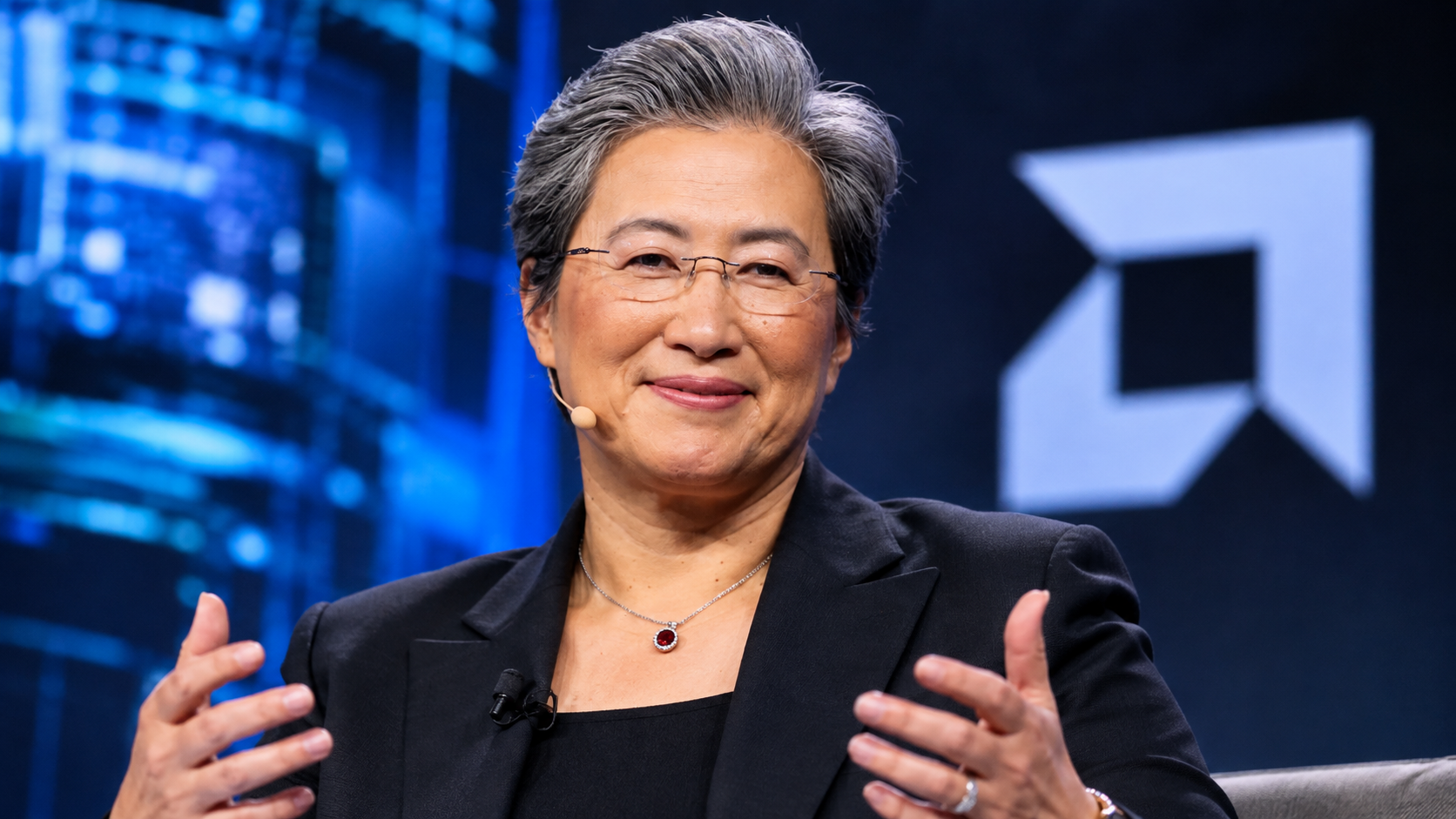
AMD signed the OpenAI warrant on Sunday, October 5, 2025, and announced it the next morning alongside a deal to supply six gigawatts of Instinct GPUs. The stock closed up about 24%. On February 24, 2026, AMD announced a similar package for Meta: a warrant for up to 160 million shares, a one-cent exercise price and a six-gigawatt purchase plan.
Between them, the AMD warrants for OpenAI and Meta cover up to 320 million shares. That is a ceiling, and none of those shares has been issued. What AMD did was tie its largest AI customer commitments to a claim on its own future, and the accounting for that claim is already running.
The evidence sits in the 10-Q for the quarter ended September 26. AMD valued the warrants at a weighted average of $178.58 a share, up from $14.25 at grant, and said no warrant shares had vested, become exercisable or been exercised. It is the clearest look yet at what Lisa Su’s decision costs, what it has bought so far and how much of the financial impact remains ahead.
What the OpenAI and Meta warrants are
A warrant is a right to buy stock at a fixed price. These carry an exercise price of $0.01, so nearly all of their value sits in the shares themselves. What makes them unusual is how much a customer must do before it receives anything.
The OpenAI warrant vests in tranches tied to purchases of AMD Instinct GPUs. The first tranche vests after the initial one-gigawatt deployment of MI450-series products, and all 160 million shares require six gigawatts. AMD’s share price must also reach specified targets, rising to $600 for the final tranche, and the OpenAI warrant adds stock-performance thresholds. Each vested tranche then has to clear technical and commercial conditions before it can be exercised. Meta’s warrant follows a similar design: its first tranche vests on shipment of the first gigawatt, and its price thresholds also climb to $600.
The OpenAI warrant runs to October 5, 2030, and Meta’s to February 23, 2031. In the filed agreement, AMD calls the OpenAI warrant a material inducement for the supply deal and an incentive to buy in volume, and the two sides agreed to treat it for tax purposes as a sales discount or allowance. The Meta filing adds that Meta agreed to a binding commitment to buy the first gigawatt, under an amendment to a 2023 master purchase agreement. The filed OpenAI warrant's vesting schedule and exercise conditions are redacted, and Meta’s exhibit also carries redactions, so readers can see the gates but not how many shares sit behind each one.
AMD had 1,640,087,251 shares outstanding on October 28. Against that base, 320 million shares would be an increase of about 19.5%, or roughly 16.3% of the enlarged share count if every one were issued. Neither number describes dilution today.
Why AMD chose to pay its customers in stock
AMD’s problem was proof. Nvidia dominates AI accelerators, and a rack-scale system such as Helios only makes sense if a few very large buyers commit early and put real workloads on AMD’s software.
At the OpenAI announcement, Su said each gigawatt of compute could generate significant double-digit billions of dollars in AMD revenue. She also said the wider ecosystem benefits of the partnership could generate well over $100 billion over the next several years. That broader projection included the effect on AMD’s capabilities, existing customers and new customers, not just revenue from the OpenAI agreement. Both figures were management projections, not guaranteed or fully contracted revenue.
Equity let AMD offer something a price cut could not. A discount is paid when the order arrives. These warrants give customers the potential to acquire shares only after purchase, share-price and other conditions are met. They also give the customer a reason to care how AMD’s chips, software and roadmap fare for years. At a March 2026 investor conference, Su called warrants “a very special instrument” for transformational partnerships. Asked whether other customers should expect similar terms, she said she did not. She added that deals like these help pull the wider AMD ecosystem along.
That is management’s rationale, and it should be read as one. It explains why AMD wanted the structure. It does not prove the benefits will arrive.
What the warrants have already cost
The cost runs through two accounting mechanisms, and they behave differently.
The first is revenue. AMD treats the warrants as consideration paid to customers, so the grant-date fair value of shares expected to vest is deducted from revenue as qualifying sales are recorded. That began in the third quarter, when MI450-series shipments started, and CFO Jean Hu told analysts that AMD’s reported revenue is already net of it. About $4.5 billion of grant-date value remains unrecognized, to be taken against future qualifying revenue.
The second is remeasurement. Until a tranche becomes exercisable, the liability is marked to fair value each quarter, with changes recorded in other income and expense. AMD’s stock climbed, so the liability grew. The 10-Q shows a $1.097 billion loss from that change in the third quarter, a warrant liability of about $1.2 billion and a $1.179 billion non-cash warrant line in the nine-month cash flow statement. These are separate figures reflecting different accounting disclosures, not amounts that should be added together.
Hu said these charges are expected to rise as customers progress, will move with AMD’s share price and do not affect non-GAAP results or free cash flow. GAAP earnings were $1.46 a share against $2.09 non-GAAP, and Hu said the GAAP figure included the charge.
None of these figures is cash paid or shares issued. Nor does a one-cent exercise price make the warrants worth a cent. Fair value depends on AMD’s stock price and on the probability that customers meet the conditions, which is why the weighted-average value per share moved from $14.25 to $178.58 in under a year.
One feature is awkward. The number of shares is capped at 320 million, but their value is not. AMD’s stock closed at $615.52 on September 21, the day its market value briefly passed $1 trillion, above the $600 target for the final tranche. The 10-Q says most market conditions had been met by September 26, yet no shares had vested. The remaining hurdles include GPU purchase and delivery requirements and the technical and commercial conditions attached to each tranche. Success can therefore increase the warrant liability and its accounting impact long before it increases the share count.
Hu said warrant shares enter the diluted share count only once the vesting and exercise conditions are met. AMD’s fourth-quarter diluted share-count guidance, about 1.67 billion, includes the estimated effect of two pending acquisitions, Taalas and World Labs, and excludes the customer warrants. The company plans to give guidance on the warrants in 2027.
What the evidence shows so far
The operating results are strong. Third-quarter revenue was $13.377 billion, up 45%, and Data Center revenue was about $8.5 billion, up 97%. That growth came from both EPYC server processors and Instinct GPUs, so it cannot all be credited to the AI accelerator deals. Su said MI455X volume shipments began in the quarter and that Anthropic, Meta, Microsoft, OpenAI and Oracle brought their first Helios racks online. AMD guided fourth-quarter revenue to about $17 billion and expects 2027 growth above 80%.
The warrant triggers are a narrower test. On October 27, AMD said its Helios rack-scale systems were running at Meta, specifying that initial systems were installed and being tested ahead of a broader deployment in the near future. It gave no rack count or date, and the announcement did not mention the warrant or the six-gigawatt figure. AMD added that its Instinct GPUs were already in production at Meta for training, ranking and recommendation workloads. These are AMD’s own descriptions.
Software remains the hard part. CUDA’s grip on developers is a real barrier, and nothing public shows the warrants were designed to loosen it. The documented software work is with Meta: AMD says the two companies have optimized recommendation models for Instinct GPUs and contributed improvements to PyTorch, Triton and ROCm. OpenAI’s relationship, as the two companies described it, is a multi-generation hardware and software collaboration that began with the MI300X and continued with the MI350X series. Whether that work turns into production adoption, here and beyond these two customers, is the evidence still missing.
Where the risks sit
Delivery comes first. The warrants vest as the required gigawatts ship, and the share-price gate is already largely behind AMD. AMD ties its warrant accounting to qualifying customer revenue recorded so far, so a slip in deployments can delay the revenue recognition and the related grant-date revenue reduction. The fair-value liability, meanwhile, can move with AMD’s share price and the probability of meeting the remaining conditions.
Customers come second. AMD’s own risk language lists the loss of a significant customer among the factors that could change its results. OpenAI has chosen AMD’s Turin EPYC processors as host CPUs for its first custom accelerator platforms, a reminder that large buyers are also building alternatives, and Su told analysts that total cost of ownership is what decides deployments. AMD has to keep winning that comparison against Nvidia and custom chips.
Third are AMD’s own commitments. Its Q3 filing lists $48.8 billion of unconditional commitments related to operations, $33.4 billion of which falls due in the rest of 2026 and 2027. These are not obligations to OpenAI or Meta. The filing says they consist primarily of obligations for wafers, substrates, memory, other components and manufacturing services, alongside cloud compute capacity, licenses and service agreements. Inventory rose about $3 billion in the quarter to $11.5 billion. Su says demand exceeds supply, so idle stock is not today’s problem. It does mean a lot of cash goes out before the customer revenue it supports comes in.
Last is disclosure. With the schedules redacted, investors can follow the gates but cannot model the tranches.
AMD’s wider role as a financier
The warrants are no longer the only way AMD shares the financial load of its customers’ build-outs. The 10-Q puts AMD’s maximum potential payments under guarantees at $8.5 billion. That is contingent exposure: $7.7 billion covers commercial partners’ data-center leases and $750 million covers debt they use to finance data-center infrastructure, payable only if a partner defaults. As of September 26, no partner was in default and nothing had been paid. Lease guarantees stood at $4.1 billion in June, so on a like-for-like basis they rose about 88% in a quarter. The filing speaks of commercial partners generally and does not tie the guarantees to OpenAI or Meta, and $8.5 billion is a ceiling, not a loss.
Su has called the approach selective, saying AMD backs lead partners where having data-center infrastructure lined up years ahead helps.
Money has also begun to flow the other way. On July 22, AMD said Anthropic would deploy up to two gigawatts of Instinct MI450-series GPUs from the first half of 2027, and that AMD would invest up to $5 billion in the company, tied to milestones. On October 27, AMD said it would invest $1 billion in Meta’s equity offering, so a customer holding an AMD warrant will also have AMD as a shareholder. Nvidia has come at the same entanglement from the opposite side: Jensen Huang said in March that Nvidia had finalized a $30 billion investment in OpenAI.
What the decision is really betting on
Lisa Su is making three bets at once. The first is that tying two giant customers closely to AMD will make its hardware and software credible to everyone else. The second is that the profit from those gigawatts will outweigh the economic cost of the shares potentially issued. Hu called the OpenAI agreement highly accretive to non-GAAP earnings per share, a claim that cannot be tested until volumes are known and the warrants progress through their vesting conditions. The third is that AMD can manage the accounting consequences of its own success, because a higher share price can increase the fair-value liability while the warrants remain outstanding.
Several things will settle it. The first vesting event under each warrant will come with the required one-gigawatt milestone. AMD’s 2027 share-count guidance will be the first time it puts a number on potential warrant dilution. Whether OpenAI and Meta keep buying past the first gigawatt matters, and so does whether customers with no disclosed equity terms, such as Microsoft and Oracle, keep scaling Helios. Investors will also watch whether any of AMD’s guarantees are called.
What other executives can take from it
AMD’s own filing shows the lesson. When the warrants were granted, their weighted-average fair value was $14.25 a share. By September 26, it was $178.58. That change had accounting consequences before a single share vested.
Executives weighing equity as a sales incentive can take three things from that. First, model the incentive under more than one share-price scenario, because the fair-value liability can change substantially as the company’s stock rises and the probability of vesting changes. Second, understand the separate accounting effects: grant-date value reduces revenue as qualifying sales are recorded; subsequent fair-value movements affect other income and expense; and the share count changes only when the relevant conditions are met. Third, disclose enough of the schedule for investors to understand what triggers vesting and when dilution could occur. AMD’s choice to link the warrants to customer purchases rather than simply issuing shares upfront is a central feature of the design. The redacted schedules, however, make the economics harder for investors to model.
AMD tied its biggest AI customer commitments to a share of its own future. Whether that proves worthwhile depends on gigawatts that have not yet been delivered, customers that must keep buying and a share count that has not yet been written.