ASML’s Capacity Bet: Why Christophe Fouquet Is Expanding Production—and Still Can’t Meet Demand
ASML just posted a record quarter. Its CEO says the factory plan for 2027 and 2028 is still too small, leaving the company to decide how far to push before the AI boom shows its limits.
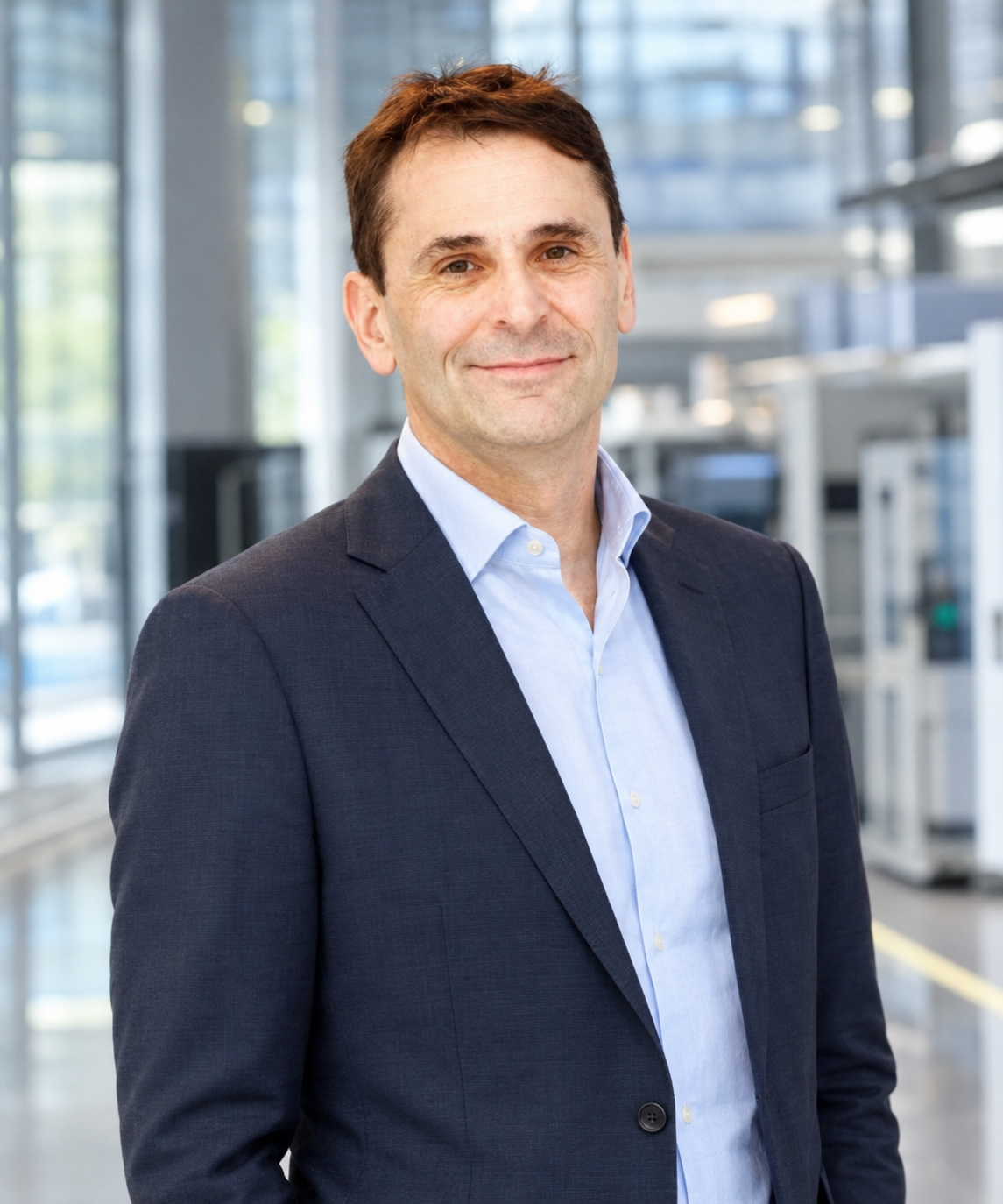
On October 14, 2026, ASML reported record quarterly sales of €11.662 billion, a gross margin of 57.5% and net income of €4.96 billion. In the same release, chief executive Christophe Fouquet said the company’s currently planned supply for 2027 and 2028 “will not fully meet the demand of our customers.”
That sentence captures the ASML capacity expansion story. The Dutch company is the only maker of extreme ultraviolet (EUV) lithography systems, which chipmakers use to print the finest circuit patterns on advanced processors and memory. When customers cannot obtain enough of these machines, their own manufacturing plans can be delayed. ASML has now said that even after planning a 30% capacity increase for 2027, its supply is expected to fall short of demand.
The decision is difficult in both directions. Build too little and ASML leaves demand unserved. Build too much and it carries additional costs into a downturn, in a business where every machine depends on a long chain of specialist suppliers. Fouquet is trying to find the line between those risks while the evidence is still developing.
The decision: build 30% more, then look for more
The numbers matter, and so does the language around them. According to CFO Roger Dassen on the October call, ASML shipped 44 low-NA EUV systems in 2025 and expects roughly 65 in 2026, an increase of nearly 50%. For DUV immersion systems, which remain important for printing many chip layers, ASML expects about 130 shipments in 2026.
In July, alongside its second-quarter results, ASML said it planned to add 30% to its 2026 low-NA EUV capacity of around 65 systems for 2027. It also planned to add 30% to its DUV immersion capacity of around 130. For both categories, a further 30% increase in 2028 was under investigation. An analyst on the October call described the implied 2027 EUV figure as the mid-80s; that is arithmetic based on the stated plan, not a separate company target.
Three months later, the language moved again. ASML said it was investigating ways to lift 2028 capacity beyond the 30% increase it had discussed in July. Asked for new figures on the October call, Fouquet declined to provide them, saying it was too early.
That distinction is important. The 2027 increase is a plan. The 2028 increase was described as under investigation, and the latest update is a search for ways to go further. None of these statements is a guarantee of delivered output. The difference between a plan and a commitment runs through the entire story.
Why AI chip demand has outrun the plan
Fouquet’s explanation starts with ASML’s customers and the companies that buy chips from them. On the October call, he described chipmakers receiving more long-term commitments from their customers. That visibility is encouraging manufacturers to plan for demand that could outpace supply through at least 2028, accelerate factory construction and prepare for further expansion.
The pressure is uneven across markets. ASML expects memory-related system sales to grow around 75% in 2026, driven by new DRAM capacity and the adoption of EUV for advanced memory production. Advanced logic system sales are expected to grow by more than 25%, while logic overall is expected to grow around 10%. In July, Fouquet also said some customers had raised their capital-spending plans and that DRAM makers were planning large factories that would come online in phases.
The order picture supports the near-term case, but not every part of the longer-term one. In July, ASML said it was close to fully covered with low-NA EUV orders for 2027 and had already received a significant number for 2028. That makes the planned 2027 increase less speculative than a further expansion for 2028, where the company is still assessing the right level of capacity.
The 2029 and 2030 picture is less settled. Fouquet said customers were expressing interest in placing orders for those years. Interest is not the same as an accepted order, however, and ASML has been careful not to treat those conversations as a firm backlog. The company wants to understand what each customer needs and what capacity it can credibly offer before committing, rather than promise supply it may not be able to deliver.
Why ASML cannot simply build faster
If demand is this strong, why not simply make more machines? The answer lies in how they are built. ASML’s 2025 annual report lists 5,100 suppliers and 535 systems sold during the year. An EUV tool combines highly specialised parts and subassemblies, so increasing final assembly depends on the wider supplier network expanding at a similar pace.
On the October call, Fouquet described several ways to raise output without waiting for an entirely new factory. One is to use the footprint ASML already has more efficiently. Another is to reduce cycle time—the time a machine spends moving through the factory. As the current EUV platform matures, some qualification steps can be shortened in agreement with customers, he said. The third lever is the supply chain.
Fouquet said the key challenge is ensuring suppliers can ramp output by roughly 30% each year. He pointed to the nearly 50% increase in low-NA EUV output expected in 2026 as evidence that the network can expand quickly. He also said ASML did not see Carl Zeiss SMT, the German optics supplier, as a bottleneck for the capacity expansion being discussed. Those assessments are management’s view of the current plan, not a guarantee that every supplier will meet every future target.
New factory space is part of the longer-term response. On September 8, ASML broke ground on Brainport Industries Campus North in Eindhoven, its second major industrial campus in the Brainport region. The multi-phase project is expected eventually to cover about 350,000 square metres and could accommodate up to 20,000 workplaces. The first phase, expected to be completed in 2029, will house at least 3,000 employees. That is a substantial long-term commitment, but it will not solve the immediate 2027 capacity challenge.
ASML also has levers that do not depend on building more machines. Productivity upgrades can increase the output of lithography tools already installed in customers’ factories. Installed Base Management sales reached €3.289 billion in the third quarter, above the company’s guidance. ASML is also developing faster systems: its NXE:3800F EUV system is specified at 260 wafers per hour and is expected to ship in small quantities in 2027. The company has also discussed 330 wafers per hour for future DUV immersion systems shipping in 2027. These are throughput specifications, not a promise that every customer’s factory will achieve the same real-world output.
What the expansion costs—and what helps pay for it
Growth at this speed is not free. ASML’s fourth-quarter gross-margin guidance of around 57% is slightly below the third quarter’s 57.5%, even though sales are expected to rise to between €14.2 billion and €15.2 billion. On the October call, Dassen attributed the pressure in part to ramp costs: the spending required to prepare ASML and its suppliers for higher output offsets some of the margin benefit normally associated with higher volume. He said those costs would remain an important factor into 2027.
Pricing is another lever. ASML said it had completed customer discussions that led to price increases for its most critical products. The impact is expected to begin appearing in 2027 and become more fully visible from 2028. Dassen said the increases partly reflect the exceptional cost of the ramp, while also supporting margins. Management described the move as unusual rather than a routine annual price adjustment. The longer-term test will be whether customers continue to accept the higher prices when supply conditions or demand change.
The headline financial results also need context. Third-quarter net income of €4.96 billion included an approximately €500 million gain from the revaluation of ASML’s first tranche of its Mistral AI investment. That means the reported net income should not be read as a pure measure of the quarter’s operating performance. Dassen also said free cash flow of €11.4 billion reflected customer down payments on orders. That supports the picture of strong order momentum, but it should not be mistaken for a recurring level of cash generation in every quarter.
For scale, ASML expects 2026 sales of €44 billion to €45 billion, around 36% above its 2025 total of €32.7 billion. Its 2025 annual report also presents a 2030 annual-revenue scenario range of approximately €44 billion to €60 billion, depending on market growth and lithography intensity. These are scenarios rather than a forecast. The fact that current-year guidance is already near the bottom of that range shows how much the near-term outlook has strengthened, but it does not guarantee the upper end will be reached.
Where the bet could go wrong
The central risk is that customer demand changes. The expansion depends on forecasts from chipmakers, and those forecasts are tied to continued investment in AI and other advanced semiconductor markets. ASML’s forward-looking statements identify risks including order cancellations, delays and push-outs, as well as the pace at which customers add manufacturing capacity. Costs incurred to prepare for 2027 and 2028 do not disappear if those projects slow.
Customer factory construction is another execution risk. Even if chipmakers want the tools, they need the buildings, cleanrooms, utilities and trained teams to install and operate them. ASML management has said customer construction schedules require careful execution. That is a useful reminder that demand for equipment and the ability to put it to work are related but different questions.
ASML has been cautious about the outlook before. In its July 2025 results release, the company said it was still preparing for growth in 2026 but could not confirm it at that stage, citing macroeconomic and geopolitical uncertainty. Its 2026 sales outlook subsequently increased across the year: from €34 billion–€39 billion in January to €36 billion–€40 billion in April, €43 billion–€45 billion in July and €44 billion–€45 billion in October. Those were revisions to sales guidance, not revisions to the capacity plan, and the two should not be confused. Still, the sequence shows how quickly the demand picture can change—and why capacity decisions made months in advance are difficult.
China is a further uncertainty, although it is not the main driver of this capacity decision. ASML expects China to account for around 20% of its total net sales in 2026. Changes in market access, local competition or customer purchasing patterns could affect the mix of demand over time. For ASML, the challenge is to build capacity for the global market without assuming that today’s geographic mix will remain unchanged.
What to watch next
The first test is delivery. ASML’s Q3 2026 press release did not include a quarterly net-bookings figure, so for that quarter readers must assess the outlook through shipments, guidance and management’s comments on order coverage. The expected 65 low-NA EUV systems in 2026, followed by the planned 30% capacity increase in 2027, are useful markers. They should be read as management targets and plans, not guaranteed outcomes.
The next milestones are also clear. Dassen said ASML would provide 2027 gross-margin guidance in January. The NXE:3800F is expected to begin shipping in small quantities in 2027, and ASML has scheduled a Capital Markets Day for June 10, 2027, when it plans to update its longer-term view. Investors will also watch whether ASML begins accepting orders for 2029 and 2030, and how clearly it can explain the capacity it expects to have available.
High-NA EUV adds a longer-term dimension to the story. It is a next-generation technology intended to enable more advanced chip patterning, but customer adoption timelines differ. Intel, Samsung and TSMC have discussed their own High-NA plans and progress; those statements should not be treated as evidence that all three will adopt the technology on the same schedule or with the same production economics. For the capacity decision at hand, the near-term issue remains how much low-NA EUV and DUV immersion output ASML can deliver while the next technology generation develops.
For other executives, the lesson is less about predicting the AI cycle than managing uncertainty. ASML has separated customer interest from accepted orders and a capacity investigation from a firm plan. It is trying to use existing factory space, shorter cycle times and productivity upgrades while the new campus remains years away. Pricing changes and customer commitments may help offset some of the cost, but neither removes the risk of a slower market.
The outcome remains open. If AI-related demand holds, the October quarter may look like the start of a longer climb, and the decision to keep adding capacity may prove justified. If customer plans slip or suppliers cannot ramp at the required pace, the cost of expansion could weigh on margins before the extra output generates revenue. The record quarter establishes the strength of demand today. Shipments, customer execution and margins over the next two years will show whether ASML has expanded at the right speed.